
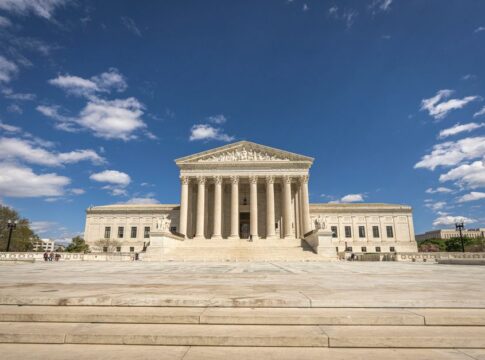
Photo: Mark Stebnicki / Pexels
By New Way News Newsroom, National Desk — Published November 7, 2026
Table of Contents
- Key Takeaways
- The Background & Context
- Why This Matters
- Reactions & Analysis
- What Happens Next
- Frequently Asked Questions
The Department of Justice has intensified its criminal investigation into one of the most extraordinary breaches in Supreme Court history. The leak of a draft opinion overturning Roe v. Wade—first published by Politico in May 2022—sent shockwaves through the federal government and the nation. Now, according to multiple reports, federal prosecutors are pursuing the matter with renewed vigor, treating it as a serious criminal probe that could have lasting implications for the judiciary and the rule of law.
The DOJ steps leak investigation forward at a time when public trust in institutions remains fragile. This isn’t merely an internal administrative matter. It strikes at the heart of how the Supreme Court operates, how justices deliberate in confidence, and whether the integrity of the nation’s highest court can withstand political pressure and internal betrayal. For American citizens, the outcome of this probe could reshape expectations around judicial independence and accountability.
The investigation targets the unprecedented disclosure of Justice Samuel Alito’s draft majority opinion in Dobbs v. Jackson Women’s Health Organization. That leak, which revealed the Court’s intention to overturn nearly 50 years of abortion rights precedent, ignited protests, political battles, and intense national debate months before the official ruling was released. The question now: who broke the court’s sacred confidentiality, and what consequences will they face?
Key Takeaways
- The Department of Justice has escalated its criminal investigation into the Supreme Court leak that exposed the draft Dobbs decision overturning Roe v. Wade.
- The leak, first reported by Politico in May 2022, represented an unprecedented breach of Supreme Court confidentiality and sparked nationwide controversy.
- Federal prosecutors are treating the matter as a serious criminal probe, signaling potential legal consequences for those involved.
- The investigation touches on fundamental questions about judicial integrity, institutional trust, and the security of the nation’s highest court.
- The outcome could set precedents for how future breaches of judicial confidentiality are handled and prosecuted.
- Public interest remains high as the probe continues, with implications for both the Supreme Court’s internal operations and broader debates about transparency versus confidentiality in government.
The Background & Context
On May 2, 2022, Politico published a bombshell story: a complete draft of Justice Alito’s majority opinion in Dobbs v. Jackson Women’s Health Organization. The document made clear the Court was poised to overturn Roe v. Wade, the 1973 landmark decision that had established a constitutional right to abortion. The leak was stunning. Never before in modern Supreme Court history had a draft opinion of such magnitude been disclosed before official publication.
Chief Justice John Roberts immediately ordered an internal investigation led by the Court’s Marshal. That probe, which concluded in January 2023, failed to identify the leaker. Investigators interviewed all law clerks and Court employees, conducted forensic analysis of electronic devices, and examined phone records. Despite these efforts, no culprit was named. The inconclusive result left many questions unanswered and raised concerns about the thoroughness of the inquiry.
The Department of Justice’s involvement represents a significant escalation. While the Supreme Court conducted its own internal review, the DOJ brings federal law enforcement resources and criminal investigative powers to bear. This shift suggests authorities view the leak not merely as an ethical breach but as a potential violation of federal criminal statutes. The exact legal theories being pursued remain unclear, but the intensification of the probe indicates prosecutors believe they have grounds to continue.
The Dobbs decision itself, officially released on June 24, 2022, eliminated the federal constitutional right to abortion and returned the issue to individual states. The ruling triggered immediate legal and political consequences across the country. Abortion became illegal or severely restricted in numerous states, while others moved to protect access. The leaked draft gave activists, politicians, and citizens months of advance warning, fundamentally altering the political landscape ahead of the 2022 midterm elections.
Why This Matters
For ordinary Americans, this investigation carries weight far beyond Washington intrigue. The Supreme Court operates on a foundation of confidentiality. Justices must be able to debate, draft, and revise opinions without external pressure or premature public scrutiny. This protected deliberative process allows for careful legal reasoning, the possibility of justices changing their minds, and the crafting of nuanced opinions that can shape American law for generations.
When that confidentiality is breached, the entire system is threatened. Justices may become more guarded in their internal communications. Law clerks—young attorneys who serve one-year terms and gain invaluable experience—may face increased suspicion and surveillance. The free exchange of ideas that produces sound jurisprudence could be chilled. Trust among the justices themselves may erode, making consensus-building more difficult.
The leak also raised immediate safety concerns. Following the disclosure, protests erupted outside justices’ homes. One man was arrested near Justice Brett Kavanaugh’s residence and charged with attempted murder. While peaceful protest is a constitutional right, the leak arguably escalated tensions and put judicial officers at risk. The investigation, therefore, has implications for judicial security and the ability of judges to perform their duties without intimidation.
From a legal perspective, the DOJ’s criminal probe tests the boundaries of prosecutorial authority. What federal crimes, if any, does leaking a Supreme Court draft opinion violate? Theft of government property? Obstruction of justice? Conspiracy? The answers could establish new legal precedents and clarify the extent to which federal law protects judicial confidentiality. These are not abstract questions. They affect how future breaches will be handled and deterred.
Public trust in institutions is already near historic lows. Americans increasingly view the Supreme Court through a political lens, with approval ratings fluctuating based on high-profile decisions. An unresolved leak investigation—or one that appears incomplete or politically motivated—risks further eroding confidence. Citizens need to believe the judiciary operates with integrity, insulated from partisan manipulation. The DOJ’s handling of this probe will either reinforce or undermine that belief.
Reactions & Analysis
The intensified investigation has drawn varied reactions across the political spectrum. Some conservatives have demanded accountability, viewing the leak as a deliberate attempt to pressure the Court or mobilize opposition to the Dobbs decision. They argue that whoever disclosed the draft committed a serious offense that undermines the rule of law and must face consequences.
Others, particularly on the left, have expressed more ambivalence. While acknowledging the leak was inappropriate, some commentators have suggested the focus on finding the leaker distracts from the substance of the Dobbs decision itself and its impact on reproductive rights. They worry the investigation could be used to intimidate Court employees or create a culture of fear that stifles legitimate whistleblowing.
Legal experts have debated what charges, if any, could be brought. Unlike classified national security information, Supreme Court drafts don’t fall under traditional secrecy statutes. Prosecutors would need to identify creative legal theories or rely on more general criminal provisions. This legal ambiguity makes the DOJ’s escalation all the more noteworthy—it suggests prosecutors believe they have a viable path forward.
The Supreme Court itself has remained largely silent on the renewed investigation. Chief Justice Roberts has previously called the leak “absolutely appalling” and a “betrayal of confidences.” But the Court has not publicly commented on the DOJ’s expanded role. This silence may reflect a desire to avoid appearing to influence a criminal investigation or simply an institutional preference for discretion.
Media organizations, meanwhile, face their own considerations. Politico has not revealed its source, consistent with journalistic norms protecting confidential informants. The tension between press freedom and law enforcement interests adds another layer to the controversy. Should reporters be compelled to testify? Can prosecutors subpoena journalists’ communications? These questions could arise if the investigation progresses.
What Happens Next
The trajectory of the DOJ’s investigation remains uncertain. Federal prosecutors could ultimately bring charges if they identify a suspect and believe they can prove criminal conduct beyond a reasonable doubt. Alternatively, the probe could conclude without charges, either because investigators cannot definitively identify the leaker or because the legal basis for prosecution is deemed insufficient.
If charges are filed, the case would likely attract intense public attention and legal scrutiny. Defense attorneys would challenge the government’s legal theories, potentially arguing that no federal crime was committed. The case could wind through the courts for years, with appellate decisions shaping future understanding of judicial confidentiality and criminal law.
Even without charges, the investigation’s existence serves a deterrent function. Current and future Court employees now understand that leaking confidential information carries serious risks, including potential federal prosecution. This deterrent effect may be the DOJ’s primary goal—sending a message that such breaches will not be tolerated, even if the original leaker is never identified.
The Supreme Court, meanwhile, has reportedly tightened internal security measures. Fewer people now have access to draft opinions. Electronic communications are more closely monitored. These changes may prevent future leaks but could also affect the Court’s collaborative culture. The long-term impact on how the Court functions internally remains to be seen.
Politically, the investigation will likely continue to be a flashpoint. Republicans may use it to highlight concerns about institutional integrity and the rule of law. Democrats may emphasize reproductive rights and the substance of the Dobbs decision. As the 2024 election cycle unfolds, the leak and its investigation could resurface as campaign issues, particularly in debates over judicial appointments and Court reform.
Frequently Asked Questions
What exactly was leaked from the Supreme Court?
In May 2022, Politico published a complete draft of Justice Samuel Alito’s majority opinion in Dobbs v. Jackson Women’s Health Organization. The draft revealed the Court’s intention to overturn Roe v. Wade, the 1973 decision establishing a constitutional right to abortion. This represented an unprecedented breach of Supreme Court confidentiality, as draft opinions are typically kept strictly confidential until official release.
Why is the Department of Justice investigating a Supreme Court leak?
The DOJ is treating the leak as a potential federal crime. While the Supreme Court conducted its own internal investigation that failed to identify the leaker, the Justice Department brings criminal investigative powers and resources to the matter. Federal prosecutors may be exploring whether the leak violated statutes related to theft of government property, obstruction of justice, or other federal offenses. The investigation signals that authorities view the breach as a serious matter with potential criminal implications.
Has anyone been charged in connection with the leak?
No charges have been filed as of this reporting. The Supreme Court’s internal investigation concluded without identifying the leaker. The DOJ’s intensified criminal probe is ongoing, but no arrests or indictments have been announced. Whether charges will ultimately be brought remains uncertain and depends on whether investigators can identify a suspect and establish that federal crimes were committed.
How does this investigation affect ordinary Americans?
The investigation matters because it concerns the integrity and independence of the Supreme Court, which affects every American. The Court’s ability to deliberate confidentially is essential to sound legal reasoning and public trust in the judiciary. If confidentiality cannot be protected, the Court’s decision-making process could be compromised. Additionally, the investigation raises important questions about judicial security, press freedom, and the balance between transparency and confidentiality in government institutions that shape American law and life.
As federal prosecutors continue their work, the nation watches to see whether this extraordinary breach will result in accountability or remain an unsolved mystery. Either outcome will shape how the Supreme Court operates and how Americans view the institution entrusted with interpreting the Constitution. The stakes extend beyond any single case or decision. They touch the very foundation of judicial independence and the rule of law in American democracy.