
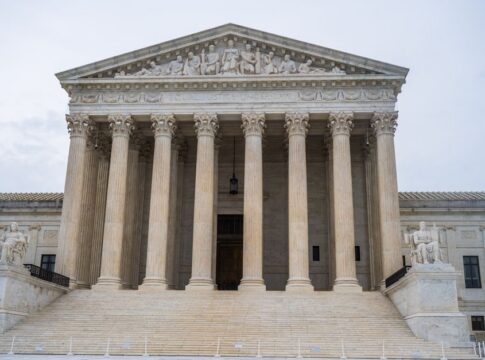
Photo: Guohua Song / Pexels
By New Way News Newsroom, National Desk — Published November 5, 2026
Table of Contents
- Key Takeaways
- The Background & Context
- Why This Matters
- Reactions & Analysis
- What Happens Next
- Frequently Asked Questions
The conservative Supreme Court now faces intense scrutiny following a sweeping Democratic electoral victory that has reshaped the balance of power in Washington. Justices Clarence Thomas and Samuel Alito, two of the court’s most stalwart conservative voices, find themselves at the center of a brewing political storm as newly empowered Democrats consider their options for addressing what they view as an ideologically imbalanced judiciary.
The spotlight on these two jurists comes at a moment when the federal government stands poised for significant change. With Democrats securing control across multiple branches, questions about the future composition and direction of the nation’s highest court have moved from theoretical debate to practical political calculation. The conservative Supreme Court, which has delivered a string of landmark rulings on abortion, gun rights, and regulatory power in recent years, may soon face its most significant challenge yet.
For millions of Americans, the court’s decisions touch everything from healthcare access to environmental protection, from voting rights to religious liberty. What happens next could define the judicial landscape for a generation.
Key Takeaways
- Justices Clarence Thomas and Samuel Alito are under heightened scrutiny following a major Democratic electoral victory that shifts the political landscape in Washington.
- The conservative Supreme Court’s recent decisions on contentious issues have made it a focal point for Democratic reform efforts.
- Democrats now possess increased leverage to potentially reshape the federal judiciary, though any action faces significant political and constitutional hurdles.
- The situation highlights the enduring tension between judicial independence and democratic accountability in American governance.
- Public attention on the court’s conservative majority raises fundamental questions about the role of lifetime appointments in a changing democracy.
- The outcome could have far-reaching implications for national news coverage, legal precedent, and the separation of powers doctrine.
The Background & Context
The Supreme Court has long served as the final arbiter of American law, but its role has grown increasingly controversial as partisan divisions have deepened. Thomas, appointed in 1991, and Alito, who joined the bench in 2006, represent the intellectual backbone of the court’s conservative wing. Both have authored or joined opinions that have fundamentally reshaped American jurisprudence on issues from affirmative action to campaign finance.
The current 6-3 conservative majority emerged after a series of appointments that themselves sparked political firestorms. Senate Republicans blocked President Obama’s nomination of Merrick Garland in 2016, arguing that voters should decide through the upcoming election. Yet four years later, the same Republicans rushed through Justice Amy Coney Barrett’s confirmation just weeks before the 2020 election. These maneuvers left many Democrats convinced that the court’s composition reflects political hardball rather than constitutional principle.
Recent terms have seen the conservative majority overturn Roe v. Wade, expand gun rights, curtail federal regulatory authority, and limit affirmative action in college admissions. Each decision energized different segments of the electorate. For conservatives, these rulings represented the vindication of originalist constitutional interpretation. For progressives, they marked the dangerous politicization of what should be an impartial institution.
Thomas and Alito have also faced ethics controversies that have amplified calls for reform. Reports of undisclosed gifts, luxury travel funded by wealthy benefactors, and potential conflicts of interest have raised questions about judicial conduct standards. Unlike other federal judges, Supreme Court justices are not bound by the same formal ethics code, a gap that reform advocates argue demands immediate attention.
Why This Matters
The Supreme Court touches nearly every aspect of American life, often in ways citizens don’t immediately recognize. Its decisions determine whether environmental regulations can limit pollution, whether workers can sue employers for discrimination, and whether states can restrict voting access. When the court shifts direction, the effects ripple through communities across the nation.
For ordinary Americans, the composition of the court can mean the difference between affordable healthcare and crushing medical debt, between workplace protections and at-will termination, between reproductive autonomy and state control. These aren’t abstract legal questions. They’re kitchen-table issues that affect families in Topeka and Tampa, in Portland and Phoenix.
The current political moment raises profound questions about democratic governance. Should nine unelected justices, serving for life, wield the power to override decisions made by elected representatives? When the court’s ideological composition results from political maneuvering rather than neutral principles, does it retain its legitimacy? These questions matter because they strike at the heart of what kind of democracy Americans want to live in.
The defense of judicial independence has long been a cornerstone of American constitutionalism. Lifetime appointments were designed to insulate judges from political pressure, allowing them to make unpopular but correct decisions. Yet that independence assumes good faith and ethical conduct. When justices appear to align consistently with partisan preferences or fail to disclose potential conflicts, the independence argument weakens.
Economic implications also loom large. The court’s decisions on regulatory authority affect everything from Wall Street oversight to worker safety rules. Its labor rulings shape union power and wage laws. Its environmental decisions influence energy markets and climate policy. Business leaders, investors, and workers all have stakes in the court’s direction.
Reactions & Analysis
The Democratic landslide has emboldened progressive activists who have long advocated for court reform. Proposals range from expanding the number of justices—so-called “court packing”—to implementing term limits or mandatory retirement ages. Some advocates push for a binding ethics code with enforcement mechanisms. Others call for structural changes like rotating judges from lower courts onto the Supreme Court for limited terms.
Conservative legal scholars and Republican politicians have responded with alarm, warning that any attempt to reshape the court would undermine judicial independence and set a dangerous precedent. They argue that court expansion would trigger an endless cycle of retaliation, with each party adding justices whenever it gains power. This tit-for-tat scenario, they contend, would destroy public confidence in the judiciary as an impartial branch.
Constitutional law experts remain divided on both the wisdom and legality of various reform proposals. While Congress clearly has authority to set the number of justices—which has changed multiple times throughout history—term limits might require a constitutional amendment. The political feasibility of any reform depends on whether Democrats are willing to eliminate the Senate filibuster, a move that carries its own risks and rewards.
Public opinion polls show Americans increasingly view the court through a partisan lens, a troubling development for an institution that derives its authority from perceived legitimacy rather than electoral mandate or military force. When citizens see the court as just another political actor, its power to settle contentious disputes peacefully diminishes.
What Happens Next
The immediate future depends on Democratic calculations about political capital and long-term consequences. Expanding the court or imposing term limits would require legislation that could consume months of congressional time and political energy. Democrats must weigh whether such efforts are worth the cost, especially when other priorities like healthcare, climate change, and economic policy demand attention.
Even without structural reform, the court’s trajectory could shift. Justices sometimes evolve ideologically over time, as history shows. Political pressure, changing social norms, and evolving legal arguments can influence judicial thinking, even for lifetime appointees. The conservative majority may moderate some positions to preserve institutional legitimacy.
Ethics reform appears more likely than expansion. A binding code of conduct with real enforcement mechanisms could attract bipartisan support, especially if framed as protecting the court’s integrity rather than punishing specific justices. Such reform would address public concerns about conflicts of interest without fundamentally altering the court’s structure.
The 2024 election cycle and beyond will test whether the court remains a central political issue or fades as other concerns take precedence. If the conservative majority continues issuing controversial rulings on hot-button issues, pressure for reform will intensify. If the court adopts a lower profile or issues more consensus-based decisions, the urgency may dissipate.
Legal challenges to any reform efforts seem inevitable. Ironically, the Supreme Court itself might ultimately decide whether Congress can expand the court or impose term limits, creating a scenario where justices rule on their own fate. That prospect underscores the complexity of reforming an institution designed to be insulated from political pressure.
Frequently Asked Questions
Can Congress legally expand the Supreme Court?
Yes. The Constitution does not specify the number of Supreme Court justices, leaving that determination to Congress. The court’s size has changed seven times throughout American history, ranging from as few as five justices to as many as ten. Congress could pass legislation expanding the court, though such a move would face fierce political opposition and potential legal challenges on other grounds.
What are term limits for Supreme Court justices?
Term limits would replace lifetime appointments with fixed service periods, such as 18 years, after which justices would retire or move to senior status. Proponents argue this would reduce the stakes of individual appointments and ensure regular turnover. However, implementing term limits might require a constitutional amendment, as the Constitution grants justices tenure “during good Behaviour,” which courts have interpreted as lifetime service.
Why are Justices Thomas and Alito specifically in the spotlight?
Thomas and Alito represent the intellectual core of the court’s conservative majority and have authored some of its most consequential recent opinions. Both have also faced ethics controversies involving undisclosed financial relationships and gifts from wealthy donors. Their long tenures and consistent conservative voting records make them focal points for Democrats seeking to reshape the court’s ideological balance.
How would court reform affect average Americans?
Court reform could significantly impact Americans’ daily lives by changing how the judiciary rules on issues like healthcare access, environmental protection, voting rights, gun regulations, and workplace protections. A reformed court might uphold more federal regulations, protect more civil rights, or take different approaches to constitutional interpretation. However, the specific effects would depend on which reforms are implemented and how future justices are selected.
As Washington enters this new political chapter, the Supreme Court stands at a crossroads. The tension between judicial independence and democratic accountability has never been more apparent. Whatever happens next will shape not just the court’s future, but the future of American democracy itself. The decisions made in coming months will echo for decades, affecting citizens who haven’t yet been born. That’s the weight of this moment.