
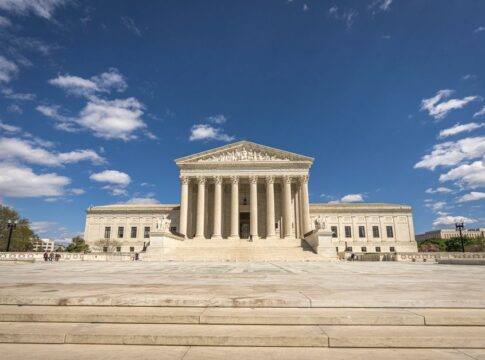
Photo: Mark Stebnicki / Pexels
By New Way News Newsroom, National Desk — Published November 3, 2026
Table of Contents
- Key Takeaways
- The Background & Context
- Why This Matters
- Reactions & Analysis
- What Happens Next
- Frequently Asked Questions
The Supreme Court‘s latest decision has cleared the path for the Trump administration to implement changes to federal voter verification systems. Yet despite the high-profile nature of the ruling and its timing, election law experts and officials suggest the practical impact on upcoming contests will be minimal.
The decision allows the administration to proceed with modifications to a voter database used by federal agencies. While the ruling represents a legal victory for the White House, the mechanisms at play are unlikely to reshape electoral dynamics in time for the 2026 midterm elections. The gap between legal authorization and operational reality is wider than many observers initially assumed.
This development arrives amid broader tensions over voting rights, election security, and the role of federal courts in shaping electoral policy. Understanding why this supreme court latest ruling carries less weight than its headlines suggest requires examining both the technical details of voter verification systems and the timeline constraints facing any large-scale administrative changes.
Key Takeaways
- The Supreme Court has authorized the Trump administration to use a modified voter verification database, removing a legal obstacle that had temporarily blocked implementation.
- Despite the ruling, practical and logistical challenges make it highly unlikely the changes will affect the 2026 midterm elections in any meaningful way.
- The decision represents the latest intersection of the judiciary with election administration, continuing a pattern of legal challenges over voting procedures.
- Federal voter databases serve a limited role compared to state-run election systems, which maintain primary control over voter registration and verification.
- The timeline required for federal agencies to implement database modifications extends well beyond the preparation period for the 2026 electoral cycle.
- Election officials at state and local levels have expressed skepticism that federal database changes would alter their existing verification protocols in the near term.
The Background & Context
Federal voter verification databases exist as tools for cross-checking citizenship and eligibility information, primarily used by agencies rather than directly by state election officials. These systems have long operated in the background of American democracy, rarely attracting public attention until recent years brought heightened scrutiny to every aspect of election administration.
The Trump administration sought to modify these databases as part of broader efforts to tighten verification requirements. Lower courts had initially blocked these changes, prompting the administration to appeal to the nation’s highest court. The Supreme Court’s decision to allow the modifications represents a reversal of those earlier judicial restraints.
However, the practical application of such databases remains limited. State governments retain constitutional authority over their own election systems. They operate independent voter registration databases, conduct their own verification processes, and manage the mechanics of voting within their borders. Federal databases serve primarily as reference tools rather than operational systems that directly determine who can vote.
The 2026 midterm elections are now less than two years away. For election administrators, this timeline is remarkably short. Voter registration deadlines, ballot preparation, poll worker training, and countless other logistical requirements operate on schedules that begin many months before Election Day. Any federal system changes would need to be finalized, tested, and integrated into state systems well in advance to have real-world impact.
Why This Matters
For American voters, the disconnect between legal rulings and electoral reality carries important implications. Court decisions often generate immediate headlines suggesting dramatic changes to voting procedures. The actual implementation, however, follows a much slower trajectory constrained by bureaucratic processes, technical requirements, and the federalist structure of American elections.
This case illustrates how the Supreme Court can authorize government action without that authorization translating into immediate practical consequences. Citizens concerned about voting access or election security need to understand that legal victories for any administration do not automatically reshape the voting experience. The machinery of election administration moves at its own pace, governed by calendars, budgets, and the complex coordination between federal, state, and local authorities.
The ruling also reflects ongoing debates about the proper role of federal oversight in elections. Supporters of enhanced verification argue that federal databases help ensure only eligible citizens participate in choosing national leaders. Critics counter that such systems risk creating barriers to legitimate voters and represent federal overreach into areas traditionally managed by states.
For taxpayers, the financial dimensions deserve attention. Modifying federal databases requires funding. Integrating those changes with state systems demands resources at multiple levels of government. Whether these expenditures deliver meaningful improvements to election integrity or merely add administrative layers without substantive benefit remains a point of contention among election policy analysts.
Reactions & Analysis
The response to the Supreme Court’s decision has divided along predictable lines, though with notable nuance among election administrators themselves. Officials responsible for actually conducting elections have generally adopted a wait-and-see posture, noting that legal authorization is merely the first step in a lengthy implementation process.
State election directors, who operate at the intersection of federal requirements and local realities, have pointed out that their existing verification systems already incorporate multiple safeguards. Adding another federal database layer might provide redundancy but is unlikely to fundamentally alter how they confirm voter eligibility. Many states have invested heavily in their own verification infrastructure over the past decade, making them less dependent on federal resources.
Legal scholars specializing in election law have noted the decision’s narrow scope. The Court authorized use of a modified database without addressing broader questions about federal versus state authority in election administration. This leaves unresolved many of the constitutional questions that animate debates over voting rights and election security.
Civil rights organizations have expressed concern that any expansion of verification requirements could disproportionately affect certain voter populations. They point to historical patterns where additional documentation requirements have created obstacles for citizens in marginalized communities. However, they also acknowledge that the practical impact of this particular ruling appears limited given the implementation timeline.
What Happens Next
The immediate future involves technical and administrative work rather than dramatic electoral changes. Federal agencies must now finalize the database modifications, a process that involves data validation, system testing, and coordination with various government departments. This technical phase alone could consume many months.
Once federal systems are operational, states must decide whether and how to integrate the modified database into their existing verification workflows. This decision remains entirely within state discretion for most purposes. Some states may choose to incorporate the federal resource, while others may determine their current systems are sufficient.
For the 2026 elections specifically, the calendar works against significant impact. Most states will finalize their voter registration procedures and verification protocols for the midterms during late 2025 and early 2026. Any federal database not fully operational and tested well before that window will likely be sidelined until future election cycles.
Looking beyond 2026, the ruling could have more substantial effects. If the modified database becomes a reliable, widely-adopted tool, it might gradually reshape how verification occurs across the country. Alternatively, it could remain a marginal resource that states consult occasionally but do not rely upon for primary verification.
The political landscape will also influence outcomes. Future administrations could modify, expand, or curtail the database depending on their priorities. Congress could intervene with legislation that either mandates state use of federal verification tools or explicitly protects state autonomy. The Supreme Court’s decision settles one legal question while leaving many policy questions unresolved.
Frequently Asked Questions
What exactly did the Supreme Court decide in this ruling?
The Court cleared the way for the Trump administration to proceed with using a modified voter verification database. This removes legal obstacles that had temporarily prevented implementation of changes to federal systems used for checking voter eligibility information. The decision does not mandate that states use this database or change their own verification procedures.
Will this affect how I register to vote or cast my ballot in 2026?
Almost certainly not. The timeline for implementing federal database changes and integrating them with state election systems is too short to affect the 2026 midterms in any meaningful way. Your voter registration process will continue to be governed by your state’s existing procedures, which remain unchanged by this ruling.
Why do experts say this ruling won’t impact the 2026 elections?
Implementation of database modifications requires extensive technical work, testing, and coordination between federal agencies and state governments. This process takes considerable time, and states must finalize their election procedures well in advance of voting. The gap between legal authorization and operational reality means the changes cannot be implemented in time to affect the 2026 cycle.
Does this give the federal government more control over state elections?
Not directly. States retain constitutional authority over their election systems, including voter registration and verification. The ruling allows the federal government to operate a modified database that states may choose to consult, but it does not compel states to change their procedures or cede control over their election administration.
As with many Supreme Court decisions touching on election administration, the gap between legal authorization and practical implementation proves substantial. While the ruling represents a win for the Trump administration in court, the realities of database development, intergovernmental coordination, and election calendars mean voters are unlikely to notice any difference when they head to the polls in 2026. The true test of this decision’s significance will unfold over years, not months, as federal and state systems gradually adapt to new legal permissions.