
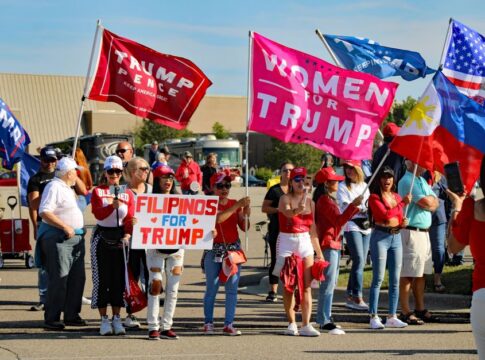
Photo: Michael Anthony / Pexels
By New Way News Newsroom, Politics Desk — Published August 28, 2026
Table of Contents
- Key Takeaways
- The Background & Context
- Why This Matters
- Reactions & Analysis
- What Happens Next
- Frequently Asked Questions
In a striking turn of political rhetoric, former President Donald Trump has publicly praised a Supreme Court decision on mail-in ballots as beneficial for the Republican Party—even though the ruling itself appears to represent a legal setback for his longstanding campaign against expanded mail voting. The apparent contradiction has captured attention across the political landscape, raising questions about messaging strategy, election law, and the ongoing battle over voting access that continues to shape American politics.
The Supreme Court’s recent decision upholds a law allowing mail-in ballots that arrive after election day to be counted, a practice Trump and many Republican officials have long criticized as vulnerable to fraud and abuse. Yet Trump’s characterization of the ruling as “great” for his party suggests a more nuanced calculation—or perhaps a reframing effort—as the 2024 election cycle intensifies and both major parties recalibrate their strategies around mail voting.
This development arrives at a pivotal moment in American electoral politics. Mail-in voting expanded dramatically during the 2020 election amid the COVID-19 pandemic, and has remained a contentious flashpoint ever since. Republicans in numerous state legislatures have pushed to restrict mail voting, while Democrats have fought to preserve and expand access. The Supreme Court’s involvement underscores how deeply these questions have penetrated the judiciary.
Key Takeaways
- The Supreme Court has upheld a law permitting mail-in ballots arriving after election day to be counted, marking a defeat for Trump’s legal position on mail voting restrictions.
- Despite the ruling going against his previous advocacy, Trump publicly called the decision “great” for the Republican Party in remarks that have drawn widespread attention.
- The case represents the latest chapter in ongoing litigation over mail ballot deadlines and counting procedures that have divided the two major political parties.
- The decision carries significant implications for election administration and campaign strategy as the 2024 presidential race accelerates.
- Trump’s response highlights a potential shift in Republican messaging on mail voting, or reflects an attempt to reframe what might otherwise be viewed as a legal loss.
- The ruling affects how states handle ballots postmarked by election day but arriving in subsequent days, a practice that varies widely across jurisdictions.
The Background & Context
Mail-in voting has existed in American elections for decades, primarily serving military personnel stationed overseas and voters with disabilities or other circumstances preventing them from casting ballots in person. But the practice exploded in 2020 when the coronavirus pandemic prompted states to dramatically expand mail voting options to protect public health.
That expansion became immediately controversial. Trump began attacking mail voting months before the 2020 election, claiming without evidence that it would lead to widespread fraud. He continued those attacks after losing to Joe Biden, making unfounded allegations about mail ballots central to his false claims that the election was stolen. Dozens of lawsuits challenging those results failed in court.
Since then, Republican-controlled state legislatures have passed numerous bills tightening mail voting rules. These measures have included stricter identification requirements, limitations on ballot drop boxes, and narrower windows for requesting and returning mail ballots. Democrats have characterized these efforts as voter suppression aimed at reducing turnout among constituencies that lean Democratic.
The specific question of when mail ballots must arrive to be counted has generated particular controversy. Some states count ballots that are postmarked by election day but arrive days later. Others require ballots to be received by election day regardless of postmark. The variation has led to confusion among voters and spawned litigation in multiple jurisdictions.
Trump and Republican officials have generally argued that all ballot counting should conclude on election night or shortly thereafter, claiming that extended counting periods create opportunities for manipulation. Election administrators counter that mail delays are common and that rejecting properly cast ballots due to postal service timing punishes voters for factors beyond their control.
Why This Matters
The Supreme Court’s decision carries profound implications for American democracy and election administration. At the most basic level, it affects whether thousands of legitimately cast ballots will be counted in future elections. Citizens who follow the rules, request ballots in advance, and return them before election day could see their votes discarded if postal delays prevent timely arrival.
For election officials, the ruling provides clarity on a question that has generated confusion and inconsistent practices across states. Clear standards help administrators plan their operations, allocate resources, and communicate expectations to voters. Uncertainty breeds mistakes and erodes public confidence.
The political stakes are equally significant. Mail voting has become deeply polarized along partisan lines, with Democrats far more likely than Republicans to vote by mail in recent elections. Any change to mail ballot rules potentially affects turnout patterns and electoral outcomes. Both parties understand this reality, which explains the intensity of the legislative and legal battles.
Trump’s response to the ruling adds another layer of complexity. His characterization of a decision that appears to contradict his previous position as “great” for Republicans could signal several possibilities. He may be attempting to claim victory regardless of the actual outcome, a familiar tactic from his political playbook. Alternatively, Republicans may be recognizing that their voters also use mail ballots and that overly restrictive rules could backfire.
There’s also the matter of public trust. Polls consistently show that Republicans have grown far more skeptical of election integrity since 2020, largely due to Trump’s repeated false claims. How party leaders discuss election rules and court decisions shapes whether their supporters view the system as legitimate or rigged. Trump’s framing of this ruling may influence whether Republican voters accept future election results.
Reactions & Analysis
The divergent headlines covering this story reveal the complexity of interpreting both the ruling and Trump’s response. While Trump himself characterized the decision as favorable, multiple news organizations described it as a defeat for the former president and his party’s broader efforts to restrict mail voting.
This disconnect illustrates a broader phenomenon in contemporary politics: the same event can be spun in radically different ways depending on messaging strategy and audience. Trump has long demonstrated skill at reframing setbacks as victories, and his supporters often accept his characterizations regardless of underlying facts.
Legal experts note that the Supreme Court’s decision to uphold the mail ballot law represents a rejection of arguments that Trump and his allies have advanced in numerous cases since 2020. The Court’s willingness to let the law stand suggests that the conservative-majority bench does not view late-arriving ballots as the constitutional crisis that some Republicans have portrayed.
Election law specialists emphasize that the ruling affects not just presidential races but countless down-ballot contests for Congress, state legislatures, and local offices. In close races, even small numbers of ballots can determine outcomes. The question of which ballots get counted is never merely technical—it’s fundamentally about whose voices are heard in American democracy.
Democratic officials and voting rights advocates have generally welcomed the Supreme Court decision as protecting voter access. They argue that penalizing voters for postal service delays is unjust and that the real goal of restrictive legislation is to reduce turnout among populations that tend to support Democratic candidates.
What Happens Next
The Supreme Court’s ruling provides a precedent, but it does not end the debate over mail voting. State legislatures continue to consider bills that would tighten or expand mail ballot access. More litigation is virtually certain as both parties seek favorable rules heading into 2024 and beyond.
Trump’s reaction may influence how other Republican candidates and officials discuss mail voting. If the party’s dominant figure is calling this ruling “great,” other Republicans may follow his lead rather than continuing to attack mail ballots. That could represent a significant strategic shift with implications for campaign tactics and voter mobilization efforts.
Alternatively, Trump’s comment may simply be rhetorical spin that other Republicans ignore as they continue pursuing restrictive legislation. The disconnect between Trump’s characterization and the actual legal outcome leaves room for different factions of the party to interpret the situation according to their own preferences.
For voters, the immediate impact depends on where they live. States will continue to have varying rules about mail ballot deadlines, and citizens need to understand their local requirements. Election officials will likely intensify public education efforts to ensure voters know the specific rules in their jurisdictions.
The 2024 election will provide the first major test of how these rules play out under the Supreme Court’s guidance. Both parties will be watching closely to see whether mail voting patterns shift and whether Trump’s messaging affects Republican voter behavior. The outcome could shape election law debates for years to come.
Frequently Asked Questions
What exactly did the Supreme Court rule regarding mail-in ballots?
The Supreme Court upheld a law that allows mail-in ballots arriving after election day to be counted. This ruling permits states to count ballots that are postmarked by election day but arrive in the days following, rather than requiring all ballots to be received by election day itself. The decision represents a defeat for those who have argued for stricter mail ballot deadlines.
Why is Trump calling this ruling “great” for Republicans if it appears to go against his previous position?
Trump’s characterization of the ruling as beneficial for the Republican Party is puzzling given his long history of criticizing mail voting and pushing for restrictions. His comment may represent an attempt to reframe what would otherwise be seen as a legal setback, or it could signal a strategic shift in how Republicans approach mail voting as they recognize their own voters also use these methods. The apparent contradiction has generated significant attention and analysis.
How does this ruling affect voters in upcoming elections?
The ruling provides legal backing for states that choose to count mail ballots arriving after election day, as long as they were postmarked by the deadline. This means voters in those states can have greater confidence that their ballots will be counted even if postal delays occur. However, specific rules still vary by state, and voters should familiarize themselves with their local requirements for requesting, completing, and returning mail ballots to ensure their votes are counted.
Will this decision end the legal battles over mail voting?
No, this ruling is unlikely to end litigation over mail voting procedures. Election law remains highly contested, with ongoing disputes about voter identification requirements, ballot drop box locations, signature verification processes, and numerous other aspects of election administration. Both political parties continue to pursue favorable rules through legislation and court challenges, meaning more legal battles are virtually certain as the 2024 election approaches.
The intersection of law, politics, and election administration continues to generate friction in American democracy. As Trump and other political figures respond to court decisions with messaging that may or may not align with the actual legal outcomes, citizens face the challenge of understanding both what the rules actually say and how political leaders are framing them. The stakes—nothing less than the integrity and accessibility of the democratic process—demand careful attention from voters, journalists, and officials alike.