
Participatory Budgeting: How Citizens Direct Public Funds
By Newsroom, Innovation Desk — Published August 20, 2026
Table of Contents
- How Participatory Budgeting Citizens Shape Spending Decisions
- Where the Model Works and Where It Struggles
- Evidence of Impact Beyond Infrastructure
- Integration With Broader Democratic Reforms
- Frequently Asked Questions
- Rethinking the Social Contract
Most residents never see the inside of a budget hearing. They pay taxes, watch infrastructure crumble or improve, and wonder why their neighborhood gets overlooked while another gets a new park. Participatory budgeting citizens turn that passive frustration into active decision-making. This policy innovation hands residents real authority over how a portion of public money gets spent, transforming the relationship between government and governed.
The concept is straightforward: a city, county, or other public body sets aside a defined sum and invites residents to propose projects, debate priorities, and vote on what gets funded. No intermediaries. No waiting for officials to interpret community needs. The people who live in a place decide whether it needs better streetlights, playground equipment, or community gardens. This approach represents a significant shift in government modernization, moving beyond consultation toward genuine shared power.
How Participatory Budgeting Citizens Shape Spending Decisions
The process typically unfolds in stages. First, officials designate a budget amount and geographic area. Then comes outreach: town halls, social media campaigns, door-knocking to spread the word. Any resident can pitch an idea. A crossing guard might propose safer crosswalks. A teacher might suggest library upgrades. A teenager might want a skate park.
Next, volunteer committees vet proposals for feasibility. Can the city legally spend money this way? Does the proposal fit within budget? Technical staff provide cost estimates and identify any regulatory barriers. This stage blends civic technology with old-fashioned deliberation, often using online platforms where residents comment, refine ideas, and build coalitions.
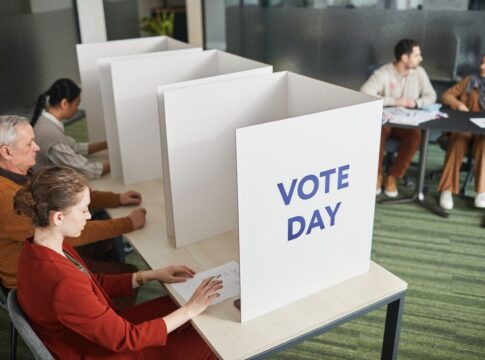
Then comes the vote. Depending on the jurisdiction, this might happen at polling sites, through mail ballots, or via secure online systems. Some places allow anyone above a certain age to vote. Others restrict voting to residents of the affected district. The proposals with the most support get funded. Within months, tangible changes appear: new benches, repaved basketball courts, upgraded bus shelters.
The Role of Structured Deliberation
What separates participatory budgeting from a simple popularity contest is the deliberation phase. Before voting, many programs host assemblies where proponents present their cases and residents ask questions. Someone advocating for bike lanes must explain how they connect to transit. Someone pushing for youth programs must address concerns about supervision and insurance.
This structured exchange forces participants to think beyond their immediate self-interest. A homeowner without children might initially dismiss a playground proposal, but hearing from working parents about childcare challenges can shift perspectives. The process itself becomes civic education, teaching negotiation, compromise, and the messy reality of public administration.
Where the Model Works and Where It Struggles
Participatory budgeting thrives in places with strong community organizations and residents accustomed to civic engagement. Neighborhoods with active tenant associations, block clubs, or community development groups can mobilize quickly. They already have networks for spreading information and turning out votes.
The model faces challenges in areas with high mobility, language barriers, or deep political distrust. If residents move frequently, they may not invest time in a multi-month process. If meetings happen only in English, immigrant communities get sidelined. If past promises went unfulfilled, people dismiss the exercise as performative.
Funding levels matter too. When the budget represents a meaningful share of discretionary spending, participation surges. When it amounts to pocket change, cynicism follows. A city that allocates half a percent of its capital budget sends a different message than one committing five percent. Scale signals seriousness.
Equity and Access Concerns
Critics point out that participatory processes can replicate existing inequalities. Wealthier, more educated residents often have more time to attend meetings and navigate bureaucratic language. They know how to write compelling proposals and lobby neighbors for votes. Without intentional design, participatory budgeting can amplify the voices of those already heard while marginalizing the vulnerable.
Progressive governance advocates argue for targeted outreach: childcare at meetings, translation services, voting sites in public housing, partnerships with grassroots organizations that already have trust in marginalized communities. Some jurisdictions weight votes by district to prevent affluent areas from dominating. Others reserve funds specifically for proposals benefiting low-income neighborhoods.
Evidence of Impact Beyond Infrastructure
The tangible outcomes are easy to measure: miles of sidewalk, number of trees planted, youth programs launched. Harder to quantify but potentially more significant are the changes in civic culture. Participants report feeling more connected to their neighbors and more confident engaging with government. They learn budget constraints firsthand, which can temper unrealistic demands elsewhere.
For public administrators, participatory budgeting offers ground-level intelligence. Residents know which storm drains flood, which alleys attract illegal dumping, which intersections feel unsafe. This knowledge rarely reaches city planners through traditional channels. Administrative innovation here means treating residents as experts on their own lived experience.
The process also builds social capital. Working on a proposal together, neighbors form relationships that outlast any single project. A group that successfully campaigned for park improvements might later organize around school issues or public safety. Civic technology platforms developed for budget voting get repurposed for other participatory efforts, creating infrastructure for ongoing engagement.
Limitations on Scope and Authority
Participatory budgeting typically applies only to capital spending on physical projects, not operating budgets for salaries, services, or debt payments. Residents can vote for a new community center but not for how many social workers the city employs. This limitation reflects both legal constraints and practical realities. Operating budgets involve complex, ongoing commitments. Capital projects have defined costs and endpoints.
Some advocates push for expanding the model to policy areas beyond budgets: land use decisions, policing priorities, environmental regulations. Others caution that not every government function suits direct democracy. Regulatory reform requires technical expertise. Institutional transformation demands long-term planning. The question becomes where citizen authority enhances outcomes versus where it creates gridlock or unintended consequences.
Integration With Broader Democratic Reforms
Participatory budgeting rarely exists in isolation. Jurisdictions that adopt it often pursue other forms of policy experimentation: citizens’ assemblies on climate action, participatory planning for housing, community oversight of police. These efforts share a common thread: skepticism that representative democracy alone captures public will, and belief that deeper engagement produces better governance.
This trend reflects broader debates about government legitimacy. When turnout in local elections hovers around twenty percent, do elected officials truly speak for their communities? When complex policy gets made in closed-door negotiations between officials and lobbyists, how do ordinary residents exert influence? Public sector innovation increasingly means creating multiple entry points for civic participation, not just voting every few years.
The movement also intersects with next-generation public administration training. A generation ago, city managers saw themselves as neutral experts implementing council directives. Today’s public administrators increasingly view facilitation and community engagement as core competencies. They study conflict resolution, equity frameworks, and how to design processes that build trust across difference.
Frequently Asked Questions
How much money typically gets allocated through participatory budgeting?
The amount varies widely depending on jurisdiction size and political commitment. Some neighborhoods work with a few hundred thousand dollars, while large cities might allocate several million. The key factor is whether the sum feels meaningful to residents. Too small, and it seems tokenistic. The budget usually represents a slice of capital funds designated for infrastructure and community improvements, not the entire municipal budget.
Can participatory budgeting be manipulated by organized interest groups?
Any democratic process faces this risk. A well-organized group can mobilize votes for projects that benefit them disproportionately. Safeguards include transparent rules, broad outreach to ensure diverse participation, and sometimes geographic distribution requirements so one area cannot monopolize funds. The deliberation phase also helps, as other residents can question proposals and build competing coalitions. Perfect neutrality is impossible, but thoughtful design reduces capture.
What happens if a winning project turns out to be infeasible?
Technical review happens before voting to screen out impossible proposals, but surprises still occur. Unexpected permitting issues, cost overruns, or changed circumstances can derail a project. Most programs include contingency plans: funding rolls to the next-highest vote-getter, or officials return to the community with alternatives. Transparency about why something failed matters enormously. Residents tolerate setbacks if they understand the reasons, but opacity breeds distrust.
Does participatory budgeting work in rural or suburban areas, or only cities?
While urban neighborhoods pioneered the model, the principles apply anywhere. A rural county might use participatory budgeting for park improvements or broadband expansion. A suburb could apply it to downtown revitalization or trail systems. The logistics differ—fewer polling sites, different outreach strategies—but the core idea of resident-directed spending translates across geographies. Lower population density can actually make deliberation easier, as smaller groups build consensus more readily.
Rethinking the Social Contract
Participatory budgeting does not solve every governance challenge. It cannot fix structural budget shortfalls, overcome state-level constraints, or eliminate ideological disagreement. What it offers is a different premise: that democracy means more than electing representatives and hoping for the best. It treats residents as capable partners in shaping their communities, not passive consumers of government services.
The model will keep evolving. Digital tools will streamline voting and proposal development. New jurisdictions will adapt the framework to local conditions. Debates will continue about how much authority to devolve and which decisions benefit from broad participation versus expert judgment. But the underlying question remains urgent: how do we build government systems that reflect the people they serve? Participatory budgeting offers one practical answer, imperfect but tangible, that puts money where democratic ideals live.