
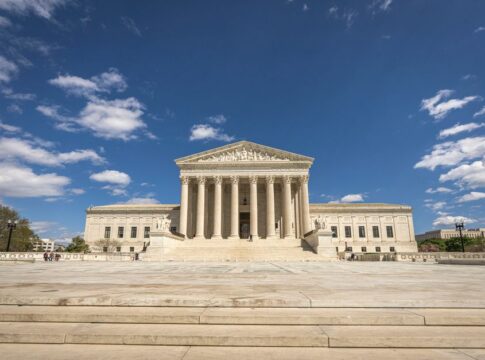
Photo: Mark Stebnicki / Pexels
By New Way News Newsroom, National Desk — Published September 10, 2026
Table of Contents
- Key Takeaways on Trump asks supreme court for construction approval
- The Background & Context
- Why This Matters
- Reactions & Analysis
- What Happens Next
- Frequently Asked Questions
In a high-stakes legal maneuver that underscores the tension between executive authority and judicial oversight, former President Donald Trump has turned to the nation’s highest court seeking permission to proceed with a controversial construction project. Trump asks supreme court justices to greenlight continued work on an ambitious $400 million White House ballroom addition while his administration appeals lower court rulings that have raised questions about the project’s legality and scope.
The request landed before Chief Justice John Roberts, who holds emergency jurisdiction over such matters. According to multiple reports, Roberts has allowed the construction to move forward temporarily, a decision that keeps cranes operating and contractors working on what would be one of the most significant expansions of the White House complex in modern history.
The legal battle represents more than a construction dispute. It touches fundamental questions about presidential power, federal spending authority, and the role courts play in checking executive branch decisions that affect national landmarks and taxpayer resources.
Key Takeaways on Trump asks supreme court for construction approval
- Trump formally requested the Supreme Court permit ongoing construction of a White House ballroom project estimated to cost $400 million
- Chief Justice Roberts granted temporary permission for the work to continue while the broader appeal proceeds through the judicial system
- The construction project represents one of the largest proposed expansions to the White House complex in recent decades
- Lower courts had previously raised concerns about the project, prompting the emergency appeal to the nation’s highest judicial body
- The case highlights ongoing tensions between executive branch prerogatives and judicial review of federal government actions
- The temporary ruling allows contractors to maintain momentum on the project during what could be a lengthy appeals process
The Background & Context
The White House has stood as the iconic residence and workplace of American presidents since John Adams first occupied it in 1800. Over more than two centuries, the building has undergone numerous renovations, expansions, and reconstructions. The Truman renovation of the late 1940s essentially rebuilt the interior structure. The West Wing, East Wing, and various office spaces have been added incrementally.
What makes this current proposal remarkable is its scale and ambition. A $400 million ballroom addition would rank among the most expensive single construction projects ever undertaken at the executive mansion. The price tag alone raises questions about fiscal priorities and the appropriate use of federal resources during times when many Americans struggle with economic pressures.
The project apparently moved forward under Trump’s direction, but encountered legal obstacles when challengers questioned whether proper procedures had been followed. Federal construction projects, particularly those involving historic properties and national symbols, typically require extensive review processes. Environmental assessments, historic preservation consultations, and congressional appropriations oversight all play roles in major federal building initiatives.
When lower courts signaled concerns about the project’s authorization, construction faced potential shutdown. That prospect prompted Trump’s legal team to seek emergency relief from the Supreme Court, arguing that halting work would cause irreparable harm, waste resources already invested, and create unnecessary delays for what they characterize as a legitimate executive branch facility improvement.
Why This Matters
For ordinary Americans, this case carries significance that extends far beyond Washington’s marble corridors and legal briefs. First, it involves a substantial sum of taxpayer money. Four hundred million dollars could fund countless other priorities: infrastructure repairs in struggling communities, educational programs, veterans’ services, or deficit reduction. When federal spending reaches this magnitude, citizens deserve transparency about decision-making processes and legal authority.
Second, the case tests boundaries of presidential power. Can a chief executive unilaterally authorize massive construction projects at the nation’s most symbolic residence? What checks exist to ensure such decisions undergo proper vetting? The balance between executive efficiency and democratic accountability hangs in the question.
Third, the Supreme Court’s role in this dispute matters. When Chief Justice Roberts grants temporary permission for construction to continue, he exercises the Court’s emergency powers—a mechanism designed for urgent situations requiring immediate judicial intervention. Critics worry such powers can be invoked too readily, allowing controversial actions to proceed before full legal review occurs. Supporters counter that stopping legitimate government operations based on preliminary legal challenges would paralyze federal functions.
The White House itself carries symbolic weight. It belongs not to any individual president but to the American people. Significant alterations to this national treasure affect the country’s architectural heritage and historical continuity. A massive ballroom addition would permanently change the character and footprint of a building that has hosted everything from state dinners to crisis meetings that shaped world history.
For the construction industry, the case also matters practically. Stopping and restarting major projects wastes resources, disrupts supply chains, and creates inefficiencies that ultimately cost more money. Contractors and workers caught in legal limbo face uncertainty about employment and project completion.
Reactions & Analysis
The Supreme Court’s decision to allow construction to proceed temporarily has generated mixed responses across the political spectrum. Supporters of the project view Roberts’ ruling as a pragmatic recognition that halting work would cause unnecessary disruption and expense. They argue that the ballroom addition serves legitimate governmental purposes, providing expanded space for diplomatic functions, state events, and official ceremonies that enhance America’s ability to conduct international relations.
Critics, however, express alarm at what they perceive as inadequate scrutiny of a project with enormous price tag and symbolic implications. Legal scholars note that emergency Supreme Court interventions have become increasingly common in recent years, sometimes allowing controversial policies to take effect before lower courts fully examine their legality. This trend, they warn, risks undermining the deliberative process that should characterize major government decisions.
Fiscal conservatives question whether a $400 million ballroom represents responsible stewardship of public funds. Even if legally authorized, they ask whether the expenditure aligns with national priorities during an era of trillion-dollar deficits and competing demands for limited resources.
Historic preservation advocates worry about alterations to an iconic structure that has been carefully maintained for generations. The White House complex already includes substantial event space; they question whether a massive new ballroom justifies the architectural and historical trade-offs.
Constitutional law experts see the case as another chapter in ongoing debates about separation of powers. The Supreme Court’s willingness to intervene quickly in disputes involving executive branch actions reflects broader questions about judicial deference to presidential decisions versus courts’ responsibility to ensure legal compliance.
What Happens Next
With construction now permitted to continue temporarily, the legal battle moves to its next phase. Lower courts will proceed with full hearings on the merits of challenges to the project’s authorization. Those proceedings could take months or even years, depending on the complexity of legal issues and the pace of litigation.
Meanwhile, contractors will keep working, pouring foundations, erecting structures, and investing resources into a project that conceivably could still face ultimate legal rejection. This creates a complicated dynamic: the more complete the ballroom becomes, the harder it may be for courts to order its removal, even if legal deficiencies are found. Critics call this “fait accompli” strategy—building so much that reversal becomes impractical.
The case could eventually return to the Supreme Court for a final ruling on the underlying legal questions. Would the full Court uphold presidential authority to commission such projects? Would justices find procedural defects that invalidate the authorization? The answers could set precedents affecting future presidential actions and federal construction initiatives.
Congress may also weigh in. Lawmakers hold power of the purse and could theoretically cut funding for the project or pass legislation explicitly authorizing or prohibiting it. Whether sufficient political will exists for such action remains unclear, particularly in a divided government where partisan considerations often shape responses to Trump-related controversies.
Public opinion will likely influence the outcome as well. If Americans broadly view the ballroom as wasteful or inappropriate, political pressure could mount to halt the project regardless of narrow legal technicalities. Conversely, if the public sees it as a reasonable facility improvement, opposition may fade.
Frequently Asked Questions
What exactly is Trump asking the Supreme Court to do?
Trump requested that the Supreme Court allow construction on a proposed $400 million White House ballroom to continue while his legal team appeals lower court decisions that raised questions about the project’s authorization. Chief Justice Roberts granted this request temporarily, permitting work to proceed during the appeals process.
How much will the White House ballroom cost taxpayers?
According to reports, the proposed ballroom project carries an estimated price tag of $400 million. This substantial sum makes it one of the most expensive single construction initiatives ever proposed for the White House complex, raising questions about fiscal priorities and appropriate use of federal resources.
Can a president unilaterally authorize major White House construction projects?
This question sits at the heart of the legal dispute. While presidents have authority over executive branch facilities, major construction projects typically require proper authorization procedures, congressional appropriations, and compliance with various federal laws governing historic properties and public spending. The courts will ultimately determine whether proper procedures were followed in this case.
What happens if courts ultimately rule against the project after construction is complete?
This scenario presents a complicated legal and practical dilemma. If construction proceeds to completion during the appeals process and courts later find the project was improperly authorized, judges would face difficult choices about remedies. Ordering demolition of a completed structure would waste resources already spent, but allowing it to stand might reward procedural violations. This uncertainty makes the temporary construction permission particularly consequential.
As this legal drama unfolds, Americans watch to see whether presidential ambition, judicial restraint, or congressional oversight will ultimately determine the fate of what could become the most controversial addition to the White House in modern times. The construction continues for now, but the final chapter remains unwritten.