
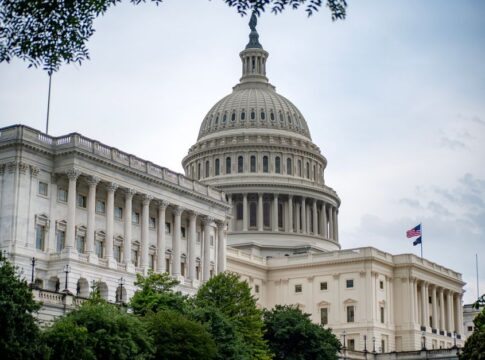
Photo: Ramaz Bluashvili / Pexels
By New Way News Newsroom, National Desk — Published September 10, 2026
Table of Contents
- Trump administration threatens election integrity framework with unprecedented demands
- The Background & Context
- Why This Matters
- Reactions & Analysis
- What Happens Next
- Frequently Asked Questions
The Trump administration threatens state election officials across multiple states with criminal prosecution, marking an aggressive escalation in the federal government’s pursuit of alleged voter fraud. Letters from the Department of Justice have landed on the desks of election administrators in Utah, Nevada, Washington, and potentially other states, demanding voter data and election records while warning of potential criminal liability.
The coordinated federal effort represents one of the most direct confrontations between the Trump administration and state election officials since the president returned to office. Election chiefs who refuse to comply face the prospect of federal charges.
This collision between federal authority and state sovereignty over elections has ignited fierce debate about constitutional boundaries, voter privacy, and the integrity of America’s decentralized election system. States are pushing back, citing their legal obligations to protect voter information and questioning the legitimacy of the federal demands.
Trump administration threatens election integrity framework with unprecedented demands
- The Department of Justice has sent threatening letters to state election officials in Utah, Nevada, Washington, and potentially other states demanding voter data and election records.
- Utah’s election chief is under federal investigation for refusing to hand over voter data to the Trump administration, according to official correspondence.
- Nevada has been ordered by the Trump administration to preserve all records from the 2024 election, suggesting a broad federal probe into voting practices.
- Washington state officials have publicly condemned what they describe as a dramatic ramp-up in voter fraud investigations by the federal government.
- The federal pressure campaign threatens criminal charges against state officials who decline to cooperate with Justice Department demands.
- The standoff raises fundamental questions about the balance of power between federal and state governments in administering elections.
The Background & Context
Elections in the United States have traditionally been managed at the state and local level, with federal oversight limited to ensuring compliance with constitutional protections and civil rights laws. Each state maintains its own voter registration systems, sets its own rules for ballot access, and employs its own election administrators to conduct voting.
This decentralized structure has long been considered both a strength and a complexity of American democracy. Proponents argue it makes elections harder to manipulate on a national scale. Critics contend it creates inconsistencies and vulnerabilities.
The Trump administration has made allegations of noncitizen voting a centerpiece of its election integrity agenda. President Trump has repeatedly claimed, without substantive evidence accepted by courts or independent analysts, that widespread illegal voting by noncitizens has affected election outcomes. These claims have been contested by election officials from both parties, cybersecurity experts, and multiple judicial reviews.
State voter registration systems already include safeguards designed to prevent noncitizens from registering. Applicants must attest to citizenship under penalty of perjury. Many states cross-reference registration data with other government databases. Actual documented cases of noncitizen voting are exceedingly rare, typically involving individuals who misunderstood eligibility requirements rather than deliberate fraud.
The current federal push appears designed to force states to turn over comprehensive voter data for federal scrutiny. This data often includes sensitive personal information protected by state privacy laws. Election officials in multiple states have expressed concern that complying with federal demands could violate their own state statutes, placing them in an impossible legal bind.
Why This Matters
The confrontation between federal authorities and state election officials carries profound implications for American democracy and the rule of law. At stake is not merely a dispute over data sharing, but the fundamental question of who controls the machinery of elections in the United States.
For ordinary voters, the immediate concern centers on privacy. Voter registration files contain names, addresses, dates of birth, and sometimes driver’s license numbers and partial Social Security numbers. States have enacted laws limiting who can access this information and for what purposes. A federal demand that overrides these protections could expose millions of Americans to potential identity theft or harassment.
The threat of criminal prosecution against state officials introduces a chilling dynamic. Election administrators are civil servants tasked with following state law. If federal authorities can threaten them with jail time for doing their jobs as state law requires, the independence of election administration is fundamentally compromised. Officials may feel compelled to choose between loyalty to state law and fear of federal prosecution.
This power struggle also tests the Supreme Court‘s federalism jurisprudence. The Constitution grants states broad authority to conduct elections, while also giving Congress power to regulate federal elections. Where exactly the line falls has been litigated for decades. The current standoff may force the Supreme Court to clarify these boundaries in ways that could reshape election administration for generations.
For defenders of the administration’s approach, the federal investigation represents necessary oversight to ensure only eligible citizens vote. They argue that states have been lax in policing their voter rolls and that federal intervention is required to restore confidence in election outcomes. The threat of prosecution, in this view, is simply enforcement of existing law against officials who obstruct legitimate federal inquiries.
Critics counter that the real goal is voter intimidation and the creation of a pretext for federal interference in state election processes. They point to the lack of evidence supporting claims of widespread noncitizen voting and argue the administration is manufacturing a crisis to justify unprecedented federal control over voting.
Reactions & Analysis
Washington state officials have been particularly vocal in their criticism of the Trump administration’s intensified focus on voter fraud investigations. Their public denunciations reflect broader anxiety among election administrators who view the federal pressure as politically motivated rather than grounded in genuine evidence of wrongdoing.
In Utah, the investigation of the state’s election chief for refusing to provide voter data has created a constitutional standoff. Utah officials must weigh their obligations under state law against the risk of federal criminal charges. The situation places career public servants in an untenable position, forced to navigate competing legal mandates with their personal freedom potentially at stake.
Nevada’s directive to preserve all 2024 election records signals that the federal inquiry extends beyond voter registration to encompass the entire election process. Such preservation orders are typically issued when investigators anticipate litigation or criminal proceedings. The breadth of the Nevada demand suggests the administration is building cases that could eventually target not just individual officials but entire state election systems.
Legal experts have noted that the administration’s strategy appears designed to create maximum pressure on state officials while avoiding immediate court challenges. By framing the demands as criminal investigations rather than civil enforcement actions, the Justice Department may be attempting to circumvent normal judicial review processes that would allow states to challenge the requests before complying.
Civil liberties organizations have raised alarms about the precedent being set. If a presidential administration can threaten state officials with prosecution for protecting voter privacy, the implications extend far beyond elections. The same logic could be applied to other areas where state and federal law conflict, from immigration enforcement to environmental regulation.
What Happens Next
The standoff between the Trump administration and state election officials appears headed for federal court. States faced with impossible choices between violating their own laws and risking federal prosecution will likely seek declaratory judgments from judges about their legal obligations. These cases could move quickly given the urgency and constitutional significance.
The Supreme Court may ultimately need to resolve the conflict. With its current conservative majority, the Court’s federalism decisions have been mixed, sometimes favoring state autonomy and sometimes federal power. How the justices would rule on election-related demands is uncertain, though the Court has historically been reluctant to intervene in election administration absent clear constitutional violations.
In the near term, some states may capitulate to federal pressure, particularly those with Republican leadership sympathetic to the administration’s voter fraud concerns. Others, especially those led by Democratic officials or with strong voter privacy laws, are likely to resist. This patchwork response could create a two-tiered system where federal authorities have access to voter data in some states but not others.
The political ramifications will reverberate through the 2026 midterm elections and beyond. Voters in states targeted by federal investigations may feel their privacy has been violated or that their state officials are being unfairly persecuted. Alternatively, some voters may view federal action as necessary accountability for lax election security. How these sentiments play out could influence turnout and electoral outcomes.
Congress could potentially intervene, though partisan divisions make legislative solutions unlikely. Democrats might propose bills to protect state election officials from federal prosecution for following state law. Republicans might seek to codify federal authority to investigate election administration. Neither approach appears likely to gain bipartisan support in the current political environment.
Frequently Asked Questions
Can the federal government legally prosecute state election officials for not sharing voter data?
The legal authority is disputed and untested in this context. While the federal government has power to enforce certain election-related laws, states maintain broad constitutional authority over election administration. Whether federal prosecutors can criminally charge state officials for following state privacy laws while allegedly obstructing federal investigations is a question likely to be resolved in court. No clear precedent exists for prosecuting state election officials under these circumstances.
How common is noncitizen voting in US elections?
Documented cases of noncitizen voting are extremely rare. Multiple studies and investigations have found that noncitizen voting occurs at negligible rates, typically involving isolated cases of individuals who misunderstood eligibility requirements rather than coordinated fraud. Election officials from both parties have consistently stated that existing safeguards effectively prevent noncitizens from registering and voting. Claims of widespread noncitizen voting have not been substantiated by credible evidence.
What information is contained in voter registration databases?
Voter registration files typically include names, addresses, dates of birth, and voting history (whether someone voted in particular elections, though not how they voted). Depending on the state, files may also contain driver’s license numbers, partial Social Security numbers, and other identifying information. States have varying laws about who can access this data and for what purposes, with most states restricting access to protect voter privacy while allowing limited use for election administration, campaign purposes, and research.
Could this dispute affect how future elections are conducted?
Yes, the outcome could significantly reshape election administration. If federal authorities successfully compel states to share voter data and submit to federal oversight, it would represent a major shift toward centralized election control. If states successfully resist, it would reinforce their autonomy over election processes. The dispute could also make election officials more cautious or risk-averse, potentially affecting how they perform their duties. Voter confidence in election integrity and privacy could be affected regardless of the outcome.
As this constitutional confrontation unfolds, millions of Americans watch to see whether the decentralized election system that has defined US democracy will survive intact or be fundamentally transformed. The resolution will shape not only how votes are counted, but who holds power over the most essential function of self-governance.