
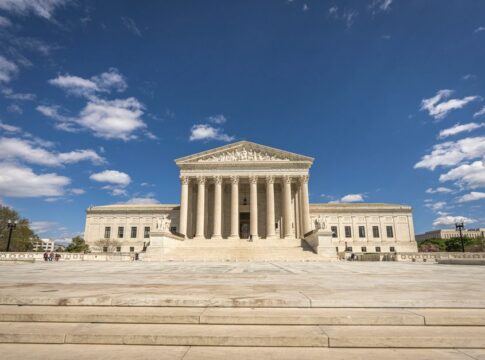
Photo: Mark Stebnicki / Pexels
By New Way News Newsroom, National Desk — Published October 23, 2026
Table of Contents
- Key Takeaways
- The Background & Context
- Why This Matters
- Reactions & Analysis
- What Happens Next
- Frequently Asked Questions
Supreme Court Justice Elena Kagan has mounted a vigorous defense of the high court’s independence, pushing back against persistent claims that the tribunal has become a tool of former President Donald Trump. The liberal justice’s remarks come as public trust in the federal government’s judicial branch faces unprecedented scrutiny, with critics pointing to controversial rulings and the court’s conservative supermajority as evidence of partisan bias.
Speaking publicly about the relationship between the Supreme Court and Trump, Kagan dismissed allegations that the justices operate as an extension of the former president’s political agenda. She characterized such accusations as a “bum rap”—unfair criticism that misrepresents how the court actually functions. Her comments arrive at a moment when Americans across the political spectrum are questioning whether the nation’s highest court can remain above the partisan fray that has engulfed much of Washington.
The defense comes with a twist. While Kagan rejected the notion that the court serves Trump’s interests, she also issued warnings about certain conservative rulings that she believes have damaged democratic institutions. This nuanced position reflects the complex reality facing the Supreme Court as it navigates an era of intense polarization and public skepticism.
Key Takeaways
- Justice Elena Kagan publicly rejected claims that the Supreme Court operates as an extension of Donald Trump’s political interests, calling such characterizations a “bum rap.”
- Kagan pointed to Trump’s own critical remarks about justices as evidence of the court’s independence from the former president.
- The liberal justice simultaneously warned that some conservative Supreme Court rulings have been “destructive of our democracy,” highlighting ongoing ideological tensions within the court.
- The remarks come amid declining public confidence in the Supreme Court as a nonpartisan institution capable of rendering impartial justice.
- Kagan’s defense suggests that even justices on opposite ends of the ideological spectrum recognize the importance of maintaining the court’s legitimacy in the eyes of the American public.
The Background & Context
The Supreme Court has faced mounting criticism since Trump appointed three justices during his single term in office—Neil Gorsuch, Brett Kavanaugh, and Amy Coney Barrett. These appointments solidified a 6-3 conservative majority that has reshaped American law on issues ranging from abortion rights to gun regulations, environmental protections to affirmative action.
Public perception of the court has shifted dramatically. Once viewed as the least political branch of the federal government, the Supreme Court now finds itself at the center of partisan warfare. Polling data consistently shows that Americans increasingly view the justices through a political lens rather than as neutral arbiters of constitutional law.
The accusations that the court serves Trump’s interests intensified after several high-profile decisions. Critics pointed to rulings on presidential immunity, election-related cases, and other matters where the conservative majority’s decisions appeared to align with Trump’s political interests. The perception problem grew more acute as Trump himself claimed credit for appointing justices who would rule in his favor.
Yet Kagan’s argument hinges on a telling detail: Trump has not always been pleased with the court’s decisions. The former president has publicly criticized justices, including his own appointees, when rulings did not go his way. According to reports, Kagan cited these “not very nice” remarks from Trump as proof that the justices maintain their independence rather than functioning as loyal political operatives.
Why This Matters
The Supreme Court’s legitimacy rests on public acceptance of its authority. Unlike the executive branch with its law enforcement powers or the legislative branch with its electoral mandate, the court depends entirely on the perception that its decisions flow from legal reasoning rather than political preference.
When citizens lose faith in the court’s impartiality, the consequences extend far beyond abstract constitutional theory. Communities across America rely on federal courts to resolve disputes, protect rights, and check government overreach. If substantial portions of the population view Supreme Court decisions as predetermined by partisan loyalty, compliance with those rulings becomes voluntary rather than obligatory.
For taxpayers and voters, the stakes are enormous. The Supreme Court shapes policies affecting healthcare access, voting rights, environmental regulations, criminal justice, and economic opportunity. When the court’s conservative majority strikes down federal regulations, businesses and workers face new uncertainties. When it expands gun rights or restricts abortion access, state and local governments must adapt their laws and budgets accordingly.
Kagan’s dual message—defending the court’s independence while warning about destructive rulings—captures the dilemma facing American democracy. Can an institution be both independent and wrong? Can justices act in good faith while reaching conclusions that undermine democratic values? These questions matter because they determine whether Americans will accept Supreme Court authority even when they disagree with specific outcomes.
Reactions & Analysis
Kagan’s public comments represent an unusual moment of transparency from a sitting justice. Members of the Supreme Court typically avoid discussing their institution’s relationship with political figures, preferring to let their written opinions speak for themselves. That Kagan felt compelled to address these concerns directly suggests the depth of the legitimacy crisis facing the court.
Her warning about rulings that are “destructive of our democracy” reveals the internal tensions within the Supreme Court. While Kagan defended her colleagues against accusations of serving Trump, she made clear that she views some of their legal conclusions as fundamentally harmful to American governance. This distinction matters: she is arguing that conservative justices reach their decisions through genuine legal analysis, even when those decisions produce terrible policy outcomes.
The evidence Kagan cited—Trump’s own criticism of the justices—cuts both ways. Yes, it demonstrates that the court does not simply rubber-stamp Trump’s preferences. But it also highlights how the former president views the judiciary as an extension of politics, expecting loyalty from his appointees and expressing anger when they disappoint him. This transactional view of judicial appointments itself threatens the court’s independence.
Legal experts and court observers have noted the difficult position in which Kagan finds herself. As one of the court’s three remaining liberal justices, she frequently dissents from the conservative majority’s most significant rulings. Yet she also recognizes that attacking her colleagues’ motives would further erode public confidence in the institution she serves.
What Happens Next
The Supreme Court’s legitimacy crisis will not be resolved by a single justice’s public comments, no matter how thoughtful. The coming months will test whether the court can maintain public confidence as it confronts new controversies involving presidential power, federal regulatory authority, and individual rights.
Several factors will shape the court’s trajectory. First, the justices’ behavior matters. Ethics scandals involving undisclosed gifts and financial relationships have damaged the court’s reputation. Whether the justices embrace meaningful ethics reforms will signal their commitment to accountability.
Second, the substance of future rulings will determine whether concerns about the court’s direction prove justified. If the conservative majority continues striking down long-established precedents and federal programs, critics will find validation for their warnings. If the justices demonstrate restraint and respect for institutional norms, skeptics may reconsider their assessments.
Third, political developments will influence public perception. Should Trump return to the White House, questions about the court’s independence from his influence will intensify. If Democrats gain power, they may pursue structural reforms such as term limits or court expansion—proposals that themselves raise concerns about judicial independence.
For American citizens, the message is clear: the Supreme Court’s future depends not just on the justices themselves but on the public’s willingness to accept their authority. Kagan’s defense of the court’s independence represents an appeal to Americans across the political spectrum to distinguish between disagreeing with decisions and questioning the legitimacy of the institution itself.
Frequently Asked Questions
Why does Justice Kagan say the Supreme Court is not in Trump’s pocket?
Kagan pointed to Trump’s own critical and “not very nice” remarks about Supreme Court justices as evidence that the court maintains its independence. If the justices were simply doing Trump’s bidding, he would not publicly criticize them when their rulings disappoint him. This demonstrates that the justices make decisions based on their legal analysis rather than political loyalty to the former president.
What did Justice Kagan mean by calling some rulings “destructive of our democracy”?
While defending the court’s independence, Kagan warned that certain conservative majority decisions have undermined democratic institutions and values. She appears to distinguish between questioning justices’ motives and criticizing the substance of their rulings. This suggests she believes her conservative colleagues reach their conclusions through genuine legal reasoning, even when those conclusions produce harmful effects on American democracy.
How did Trump’s Supreme Court appointments change the court?
Trump appointed three justices during his presidency—Neil Gorsuch, Brett Kavanaugh, and Amy Coney Barrett—creating a 6-3 conservative supermajority. This shift has enabled the court to overturn long-standing precedents and reshape American law on major issues including abortion, gun rights, environmental regulation, and affirmative action. The rapid transformation has fueled concerns about the court’s political nature.
Why does Supreme Court legitimacy matter to ordinary Americans?
The Supreme Court lacks enforcement powers and depends on public acceptance of its authority. When citizens believe the court makes decisions based on law rather than politics, they comply with rulings even when they disagree. If substantial portions of the population view the court as a partisan institution, its decisions lose moral force and practical effectiveness, threatening the rule of law that protects everyone’s rights and resolves disputes peacefully.
Justice Kagan’s defense of the Supreme Court arrives at a pivotal moment for American democracy. Her message balances institutional loyalty with substantive critique, acknowledging real concerns while pushing back against the most damaging accusations. Whether her colleagues can maintain the delicate equilibrium between ideological conviction and institutional restraint will determine the court’s place in American life for generations to come. The conversation she has sparked matters because it forces citizens to grapple with uncomfortable questions about power, legitimacy, and the foundations of constitutional government.