
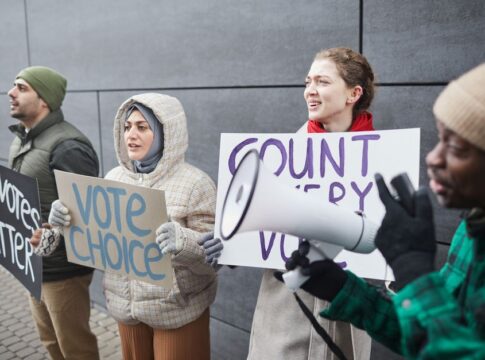
Photo: Edmond Dantès / Pexels
By New Way News Newsroom, Politics Desk — Published September 5, 2026
Table of Contents
- Key Takeaways
- The Background & Context
- Why This Matters
- Reactions & Analysis
- What Happens Next
- Frequently Asked Questions
Access to the ballot box stands as one of the most fundamental guarantees in American democracy. Yet the question of who can vote, how they can vote, and what obstacles they face remains a subject of fierce debate across the country. Understanding why voting rights matters has never been more critical as state legislatures, Congress, and courts grapple with legislation that will shape elections for generations to come.
The right to cast a ballot determines who holds power in city halls, statehouses, and the nation’s capital. When citizens face barriers—whether through restrictive ID laws, limited polling locations, or purges of voter rolls—the very foundation of representative government weakens. The stakes extend beyond politics into every policy realm that touches American lives.
From campaign finance rules to redistricting fights, the mechanics of voting directly influence which voices get heard and which issues receive attention. For millions of Americans, these are not abstract constitutional questions but practical concerns that affect their ability to participate in democracy.
Key Takeaways
- Voting rights protections have evolved through constitutional amendments, federal legislation, and court decisions over more than two centuries of American history.
- Recent years have seen competing efforts to expand ballot access through measures like early voting and automatic registration alongside restrictions such as stricter identification requirements.
- State legislatures hold significant power over election administration, creating a patchwork of rules that vary dramatically across the country.
- Debates over election security, voter fraud prevention, and ballot access reflect deeper disagreements about the balance between safeguarding elections and ensuring broad participation.
- Court rulings continue to reshape the legal landscape, determining which voting policies pass constitutional muster and which violate civil rights protections.
- The composition of the electorate—who votes and who doesn’t—directly influences policy outcomes on healthcare, education, criminal justice, and economic issues.
The Background & Context
The American story of voting rights is one of gradual expansion punctuated by periods of retrenchment. The original Constitution left voting qualifications largely to states, which initially limited the franchise primarily to white male property owners. Over time, formal barriers fell through constitutional amendments and federal action.
The Fifteenth Amendment, ratified after the Civil War, prohibited denying the vote based on race. The Nineteenth Amendment extended suffrage to women in 1920. The Twenty-Fourth Amendment banned poll taxes in federal elections. The Twenty-Sixth Amendment lowered the voting age to eighteen.
Yet constitutional guarantees did not automatically translate into equal access. Southern states employed literacy tests, poll taxes, and grandfather clauses to disenfranchise Black voters for nearly a century after the Civil War. Intimidation and violence reinforced these legal barriers.
The Voting Rights Act of 1965 represented a watershed moment. This legislation attacked discriminatory practices and established federal oversight of election changes in jurisdictions with histories of discrimination. For decades, the law required certain states and localities to receive federal approval before altering voting procedures—a provision known as preclearance.
The legal framework shifted significantly in 2013 when the Supreme Court struck down the formula determining which jurisdictions required preclearance. That decision freed states to implement election changes without prior federal review, sparking a new wave of legislation affecting voter identification, registration, early voting, and ballot access.
Why This Matters
Voting rights shape American democracy in concrete ways that touch every citizen’s life. When participation drops or certain groups face disproportionate barriers, elected officials become less accountable to the full population. Policy priorities shift to reflect the preferences of those who successfully navigate the voting process rather than the broader public interest.
Consider the practical impacts. Communities with lower turnout often see less investment in infrastructure, schools, and public services. Politicians focus campaign attention and policy promises on reliable voters. Issues affecting people who face voting obstacles receive less legislative attention. The feedback loop reinforces itself: less representation leads to policies that further disadvantage already marginalized communities.
Economic consequences flow from these political realities. Tax policy, minimum wage laws, healthcare access, and workplace regulations all depend on which legislators hold office. When significant portions of the population cannot easily vote, the resulting policies may not reflect majority preferences or serve broad economic interests.
The question extends beyond partisan advantage. Regardless of political affiliation, most Americans share an interest in legitimate elections where eligible citizens can participate without undue burden. Trust in democratic institutions depends on confidence that the system operates fairly and that outcomes reflect the genuine will of the people.
National security considerations also enter the equation. Foreign adversaries seek to exploit divisions and undermine faith in American democracy. When citizens question election integrity—whether due to access concerns or security worries—the resulting polarization weakens the country’s social fabric and international standing.
Reactions & Analysis
The contemporary debate over voting rights breaks along predictable but deeply felt lines. Advocates for expanded access argue that democracy works best when participation is maximized. They point to research showing that voter fraud occurs at negligible rates and contend that restrictions solve a largely nonexistent problem while creating real obstacles for legitimate voters.
These voices emphasize the discriminatory impact of certain policies. Strict photo identification requirements, they argue, disproportionately burden elderly citizens, low-income individuals, and racial minorities who may lack driver’s licenses or other accepted documents. Reductions in early voting periods and polling locations in certain neighborhoods create longer lines and force difficult choices between voting and work obligations.
Civil rights organizations have challenged numerous state laws in court, arguing they violate constitutional protections or remaining provisions of federal voting rights legislation. Some of these legal challenges have succeeded in blocking or modifying restrictive policies. Others have failed as courts deferred to state authority over election administration.
Proponents of stricter voting requirements frame their position around election security and public confidence. They contend that measures like identification requirements, citizenship verification, and voter roll maintenance prevent fraud and ensure only eligible individuals cast ballots. Even if documented fraud remains rare, they argue, safeguards maintain public trust in election outcomes.
Republican-controlled legislatures have generally moved toward tighter restrictions, while Democratic lawmakers have pushed for expanded access through measures like same-day registration, automatic voter registration, and restored voting rights for people with criminal convictions who have completed their sentences. These divergent approaches reflect genuine philosophical differences about the proper balance between access and security.
Election administrators—the county clerks, registrars, and election officials who actually run elections—often find themselves caught between competing pressures. They must implement state laws while managing practical challenges like funding constraints, aging equipment, and recruitment of poll workers. Many emphasize that election security and voter access need not conflict if systems receive adequate resources and thoughtful design.
What Happens Next
The trajectory of voting rights policy remains uncertain and will likely continue generating controversy. Several factors will shape the landscape in coming years.
State legislatures will keep adjusting election laws, responding to political pressures and perceived problems in their systems. Some states will expand access while others impose new requirements. This patchwork approach means American citizens face dramatically different voting experiences depending on where they live.
Congress periodically considers federal voting rights legislation, though partisan divisions make major reforms difficult. Any significant federal action would need to navigate constitutional questions about state authority over elections while addressing concerns about ballot access and election security. The composition of Congress after each election cycle directly influences whether such legislation gains traction.
Courts will continue serving as crucial arbiters. Legal challenges to state voting laws wind through the judicial system, with outcomes depending partly on the philosophical leanings of appointed judges. Supreme Court decisions carry particular weight, establishing precedents that guide lower courts and constrain legislative options.
Technology introduces both opportunities and challenges. Online registration can increase access, but electronic systems raise security concerns. Voting by mail expands convenience while creating new verification requirements. Election officials must balance innovation with safeguards against interference.
Public engagement will prove decisive. When citizens pay attention to voting rights issues, attend local election board meetings, and hold officials accountable, policy tends to reflect community values. Apathy or ignorance about election administration allows decisions to proceed without broad input.
Demographic changes will influence these debates as the American population grows more diverse and generational attitudes shift. Younger voters often support expanded access, while older citizens may prioritize security concerns. How these preferences translate into political pressure will shape policy outcomes.
Frequently Asked Questions
What are the most common voting restrictions states have implemented?
States have adopted various policies that affect ballot access, including requirements to present specific forms of photo identification at polling places, limits on early voting periods, restrictions on mail ballot distribution and collection, and regular purges of voter registration rolls. Some states have also reduced the number of polling locations in certain areas or limited the availability of ballot drop boxes. The specific combination of policies varies significantly by state.
How do voting rights affect people who are not directly impacted by restrictions?
Voting rights influence everyone because they determine the composition of government and the policies officials pursue. When significant portions of the population face obstacles to voting, elected representatives may not reflect the full community’s interests. This affects decisions on taxation, public services, infrastructure investment, and countless other issues that touch all residents regardless of whether they personally encounter voting barriers. Democracy functions best when participation is broad and representative.
What role does the federal government play in protecting voting rights?
The federal government’s role includes enforcing constitutional amendments that prohibit discrimination in voting, administering remaining provisions of the Voting Rights Act, and potentially passing new legislation to set national standards for election administration. Federal courts hear challenges to state voting laws and determine whether they violate constitutional protections. However, states retain primary authority over election administration, creating tension between federal oversight and state sovereignty.
Why do different states have such different voting rules?
The Constitution grants states broad authority to administer elections and set voter qualifications within constitutional limits. This decentralized system reflects federalism principles that reserve certain powers to states rather than concentrating all authority in the national government. State legislatures respond to local political pressures, historical practices, and varying philosophies about election administration. The result is fifty different approaches to registration, identification requirements, early voting, and ballot access.
The future of American democracy depends partly on how the nation resolves tensions between ballot access and election security. Citizens who understand these issues and engage with election policy help ensure that voting rights protections reflect democratic values rather than partisan advantage. The conversation continues in legislatures, courtrooms, and communities across the country—a conversation in which every American holds a stake.