
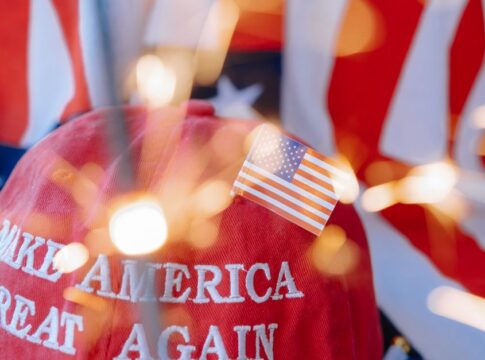
Photo: Polina Zimmerman / Pexels
By New Way News Newsroom, Politics Desk — Published September 10, 2026
Table of Contents
- Key Takeaways
- The Background & Context
- Why This Matters
- Reactions & Analysis
- What Happens Next
- Frequently Asked Questions
Former President Donald Trump made a bold promise at a Republican National Committee midterm convention this week, dangling $5,000 checks before American voters with a significant catch: the GOP must sweep both chambers of Congress. The proposal, floated during a Dallas gathering that also featured support for Texas Attorney General Ken Paxton’s campaign, injects a high-stakes financial incentive into an already contentious election season.
Trump’s pledge arrives as Republicans and Democrats battle for control of the legislative branch, with both parties viewing the midterms as a referendum on current governance and future policy direction. The $5,000 payment proposal represents an aggressive campaign tactic that ties direct financial relief to electoral outcomes—a strategy that raises questions about campaign promises, legislative feasibility, and the politics of economic populism.
The timing and venue underscore Trump’s continued influence within Republican politics. By making this announcement at the RNC midterm convention in Texas, the former president positions himself as kingmaker and policy architect for the party’s congressional ambitions, while simultaneously rallying the base around concrete, tangible benefits tied to voting outcomes.
Key Takeaways
- Trump proposed $5,000 direct payments to U.S. citizens contingent on Republican victories in both the House and Senate during the upcoming midterm elections.
- The announcement came at an RNC midterm convention held in Dallas, where Trump also voiced support for Ken Paxton’s campaign.
- The proposal represents a direct financial incentive explicitly tied to electoral outcomes, a campaign strategy that blurs the line between policy promise and voter inducement.
- Republicans would need to secure majorities in both chambers of Congress to advance any such legislation, making the proposal dependent on midterm results.
- The pitch reflects Trump’s ongoing influence over Republican campaign messaging and his ability to shape the party’s economic policy platform.
- Questions remain about funding mechanisms, legislative viability, and whether such payments could realistically pass through the congressional budget process.
The Background & Context
Direct payments to Americans have become a familiar tool in recent years. During the COVID-19 pandemic, Congress authorized multiple rounds of stimulus checks—$1,200 in spring 2020, $600 in December 2020, and $1,400 in March 2021. These payments enjoyed bipartisan support initially, though divisions emerged over amounts, eligibility, and economic impact.
Trump himself championed stimulus payments during his presidency, at one point insisting his signature appear on Treasury checks. The popularity of direct relief created a political template: voters remember cash payments, and politicians remember that voters remember.
The current proposal differs fundamentally from pandemic relief. Rather than responding to an economic emergency, Trump frames the $5,000 checks as a benefit of Republican governance—a reward for electoral choice rather than crisis intervention. This transforms a policy tool into an explicit campaign promise, conditioned entirely on partisan electoral success.
Midterm elections typically function as referendums on the party controlling the White House. Historical patterns show the president’s party often loses congressional seats. Republicans hope to capitalize on economic concerns, inflation worries, and dissatisfaction with current leadership. Trump’s cash proposal attempts to translate those concerns into a concrete alternative: vote Republican, receive $5,000.
The Dallas convention setting also matters. Texas remains a Republican stronghold, but demographic shifts and urban growth have intensified competition. By appearing alongside Ken Paxton—a controversial but influential state attorney general—Trump signals his commitment to mobilizing the conservative base in a state that could shape national political trends.
Why This Matters
For American voters, the proposal raises fundamental questions about campaign promises and governing reality. Five thousand dollars represents substantial money for most households—roughly equivalent to two months’ rent in many markets, a down payment on a vehicle, or meaningful debt reduction. The appeal is obvious and intentional.
But feasibility matters. Any such payment would require congressional legislation, presidential signature, and funding through the federal budget. With the national debt exceeding $31 trillion, financing universal $5,000 payments would cost hundreds of billions of dollars, assuming all citizens qualify. Even with Republican control of both chambers, budget hawks within the party might balk at such expenditure without corresponding spending cuts or revenue increases.
The proposal also tests democratic norms around campaign promises. Politicians routinely pledge tax cuts, spending programs, and policy changes contingent on election. Yet explicitly conditioning direct cash payments on partisan victory ventures into territory that some observers might view as transactional—less a policy debate than a financial quid pro quo.
For Congress, the stakes involve institutional credibility. Voters increasingly express frustration with promises made during campaigns that evaporate after elections. If Republicans win both chambers and fail to deliver the $5,000 checks, backlash could be severe. Conversely, if they attempt to pass such legislation, Democrats would likely frame it as fiscally irresponsible, setting up confrontations over budget priorities, deficit spending, and economic management.
The proposal also illuminates broader tensions in American politics between populist appeals and fiscal conservatism. Republicans traditionally campaign on reducing government spending and limiting deficits. A universal $5,000 payment challenges that brand, suggesting the party’s evolution toward economic populism that prioritizes direct voter benefits over traditional fiscal discipline.
Reactions & Analysis
Trump’s announcement at the RNC midterm convention represents his continued dominance over Republican messaging. Despite no longer holding office, he commands attention, shapes policy discussions, and influences candidate fortunes. His appearance alongside Ken Paxton’s campaign demonstrates his willingness to engage in state-level politics while maintaining a national platform.
Political analysts note the proposal’s tactical brilliance and strategic risk. Tactically, it gives voters a concrete reason to support Republicans—not abstract policy arguments but actual money. It simplifies complex economic debates into a single, memorable figure. And it allows Trump to position himself as champion of working Americans, countering Democratic claims on economic fairness.
Strategically, however, the promise creates accountability. If Republicans win and don’t deliver, Trump and the party face credibility damage. If they attempt delivery and Democrats block it, Republicans can blame obstruction—but voters may grow cynical about both parties. If they somehow pass it, questions about fiscal responsibility and inflation could undermine other economic messaging.
The proposal also reflects evolving campaign finance and messaging strategies. Rather than relying solely on advertising, ground game, and traditional outreach, Trump offers a direct value proposition. This approach treats elections less as ideological contests than as transactions where voters evaluate competing offers.
Within Republican circles, reactions likely vary. Populist-leaning members may embrace the proposal as exactly what working-class voters need. Traditional conservatives may worry about deficit implications and precedent. Moderate Republicans in competitive districts might appreciate the appeal but fear Democratic attacks on fiscal irresponsibility.
What Happens Next
The midterm elections will determine whether Trump’s promise becomes relevant. If Republicans fail to win both chambers, the proposal becomes moot—a campaign talking point without legislative path. If they succeed, pressure mounts to deliver.
Should Republicans control Congress after the midterms, several scenarios emerge. They could attempt to pass legislation authorizing the payments, forcing a confrontation with the White House and testing their ability to override a veto. They could modify the proposal—perhaps reducing the amount, limiting eligibility, or phasing implementation—to address fiscal concerns while claiming partial fulfillment. Or they could quietly abandon it, hoping voters’ attention shifts to other issues.
Democrats, meanwhile, will use the proposal as a campaign weapon regardless of outcome. If Republicans win and don’t deliver, Democrats will cite broken promises. If Republicans push the legislation, Democrats will emphasize fiscal recklessness and inflation risks. The proposal thus becomes a political football that both parties can kick toward their respective goals.
For Trump personally, the announcement reinforces his role as Republican kingmaker and policy innovator. Whether the promise materializes matters less than the attention it generates and the loyalty it builds among supporters who see him fighting for their economic interests.
Longer term, the proposal could influence how campaigns approach economic policy. If voters respond enthusiastically, other politicians may adopt similar direct-benefit promises. If backlash emerges over perceived vote-buying, campaigns might retreat to traditional policy arguments. Either way, Trump has again shifted the conversation, forcing both parties to respond on his terms.
Frequently Asked Questions
How would the $5,000 payments be funded if Republicans win Congress?
Trump has not detailed a specific funding mechanism for the proposed payments. Any such program would require congressional appropriation, meaning Republicans would need to identify revenue sources, authorize deficit spending, or cut other programs to finance the payments. Given the cost—potentially hundreds of billions of dollars for universal distribution—funding represents a significant challenge that would require budget reconciliation or bipartisan cooperation to overcome Senate procedural hurdles.
Would all U.S. citizens receive the $5,000, or would there be income limits?
The proposal as announced does not specify eligibility criteria, income thresholds, or phase-out structures. Previous stimulus payments included income limits that reduced or eliminated payments for higher earners. Without additional details, it remains unclear whether Trump envisions universal distribution or targeted relief for specific income brackets, families, or demographic groups.
Is it legal to promise direct payments contingent on election outcomes?
Campaign promises tied to electoral success are standard in democratic politics—candidates routinely pledge tax cuts, spending programs, or policy changes if voters elect them. However, the explicit framing of direct cash payments as rewards for partisan victory raises ethical questions about the line between policy advocacy and voter inducement. While likely legal as a campaign promise, such proposals test norms around how politicians should frame benefits and obligations in democratic systems.
What precedent exists for direct payments to American citizens?
The federal government has issued direct payments in various forms, most recently the COVID-19 stimulus checks authorized by Congress in 2020 and 2021. Earlier precedents include the 2008 economic stimulus payments during the financial crisis and various tax rebates. Alaska’s Permanent Fund Dividend provides annual payments to state residents from oil revenue. However, none of these programs were explicitly tied to partisan electoral outcomes in the manner Trump’s proposal suggests.
As the midterm elections approach, Trump’s $5,000 proposal will test whether American voters respond to direct economic appeals or view them as unrealistic promises. The outcome may reshape how campaigns discuss money, benefits, and the relationship between voting and governance—a shift with implications far beyond this election cycle.