
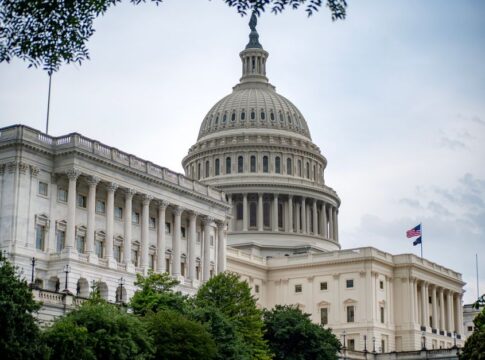
Photo: Ramaz Bluashvili / Pexels
By New Way News Newsroom, National Desk — Published October 24, 2026
Table of Contents
- Key Takeaways
- The Background & Context
- Why This Matters
- Reactions & Analysis
- What Happens Next
- Frequently Asked Questions
The Trump administration has taken the extraordinary step of filing a lawsuit against the state of Alaska, seeking to block certification of the U.S. Senate election results if Republican incumbent Dan Sullivan loses his seat. The move represents an unprecedented federal intervention into state election procedures and has ignited a constitutional firestorm over states’ rights and the separation of powers.
According to multiple reports, the Department of Justice filed the suit at President Trump’s direction. The legal action targets Alaska’s election certification process specifically in the event that Sullivan, who has served in the Senate since 2015, is defeated. Trump himself confirmed that he ordered the DOJ to pursue the litigation, framing it as necessary to protect what he characterized as election integrity concerns.
The lawsuit arrives at a moment of heightened tension between federal and state authorities over election administration. It raises fundamental questions about the limits of executive power and whether the federal government can dictate how states certify their own election results. Legal experts across the political spectrum have expressed alarm at the implications of such a precedent.
Key Takeaways
- The Trump administration sues Alaska through the Department of Justice to prevent certification of Senate race results if Republican Dan Sullivan loses to his challenger.
- President Trump publicly stated he personally ordered the Justice Department to file the lawsuit, making the intervention explicitly political in nature.
- The legal action represents an unprecedented federal attempt to interfere with state election certification procedures, raising serious constitutional questions.
- The lawsuit is contingent on Sullivan’s potential defeat, meaning it would only take effect if the Republican incumbent loses his Senate seat.
- The case could set a dangerous precedent for federal interference in state-run elections, potentially reaching the Supreme Court for resolution.
- Constitutional scholars and election law experts have raised concerns about the separation of powers and federalism principles at stake in the dispute.
The Background & Context
Alaska operates under a unique election system that has drawn national attention in recent years. The state uses ranked-choice voting for federal elections, a reform that was adopted by voters in 2020. Under this system, voters rank candidates in order of preference, and if no candidate receives a majority of first-choice votes, the candidate with the fewest votes is eliminated and their supporters’ second choices are redistributed. This process continues until one candidate achieves a majority.
Dan Sullivan won his first Senate term in 2014, defeating Democratic incumbent Mark Begich. He secured reelection in 2020 and has been a reliable Republican vote in the chamber. His seat is considered crucial for the balance of power in the Senate, where Republicans currently hold a narrow majority. Any loss would shift the political calculus in Washington and could affect the administration’s legislative agenda.
The Trump administration’s decision to preemptively sue over potential election results breaks new ground in American politics. Historically, the federal government has deferred to states on election administration, a principle enshrined in the Constitution and reinforced by centuries of legal precedent. While federal law does govern certain aspects of federal elections, the certification of results has traditionally remained a state function.
This lawsuit comes against the backdrop of ongoing debates over election integrity and federal versus state authority. Since the 2020 presidential election, these tensions have intensified, with various legal challenges and legislative efforts aimed at changing how elections are conducted and certified. The Alaska case, however, stands apart because it involves direct federal litigation to prevent a state from certifying its own election results based on a hypothetical outcome.
Why This Matters
The implications of this lawsuit extend far beyond Alaska’s borders. For American voters and taxpayers nationwide, the case raises fundamental questions about who controls elections and under what circumstances the federal government can intervene in state processes.
First, there’s the constitutional dimension. The Constitution grants states broad authority over election administration. The Elections Clause gives state legislatures primary responsibility for determining the “times, places and manner” of congressional elections, subject to congressional override. Federal courts have historically been reluctant to interfere with state election procedures absent clear violations of federal law or constitutional rights.
If the Trump administration prevails, it could establish a precedent allowing future presidents to use the Justice Department to challenge state election certifications whenever the results displease them. This would fundamentally alter the balance of power between federal and state governments, centralizing control over elections in a way the framers of the Constitution explicitly sought to avoid.
Second, the lawsuit affects public confidence in democratic institutions. When citizens see the federal government suing to prevent certification of election results before those results are even known, it undermines faith in the electoral process itself. Elections depend on public trust that outcomes will be respected and that disputes will be resolved through established legal channels, not preemptive litigation targeting hypothetical defeats.
Third, the case has immediate political ramifications. The Senate’s composition affects everything from judicial confirmations to legislative priorities to foreign policy. A single seat can determine which party controls committees, sets the agenda, and confirms Supreme Court justices. The administration’s willingness to deploy the Justice Department to protect that seat reveals how high the stakes have become.
Reactions & Analysis
The lawsuit has generated intense reaction from legal scholars, political observers, and government officials. Constitutional law experts have expressed deep concern about the precedent being set. The use of the Justice Department for what appears to be a partisan political objective—preventing the certification of an election only if a Republican loses—raises questions about the department’s independence and its role as guardian of the rule of law rather than instrument of political strategy.
Election law specialists point out that the contingent nature of the lawsuit is particularly troubling. The administration is not alleging that Alaska’s election procedures are unconstitutional or that fraud has occurred. Instead, it is seeking to prevent certification of results that have not yet happened, and only if those results are unfavorable to the incumbent Republican. This suggests the lawsuit is less about protecting election integrity than about protecting a particular political outcome.
State officials in Alaska and elsewhere are watching the case closely. If federal courts allow this kind of preemptive intervention, it could open the door to similar lawsuits targeting other states and other races. State election administrators, who already face enormous pressure and scrutiny, could find themselves subject to federal litigation every time a close race appears likely to go against the party controlling the White House.
Political analysts note that the lawsuit could backfire by drawing more attention to the race and energizing opposition voters who see it as federal overreach. Alaska has a strong independent streak, and voters there may resent what they perceive as Washington interference in their state’s affairs. The very act of suing to prevent certification could become a campaign issue that works against the candidate the administration is trying to protect.
What Happens Next
The legal trajectory of this case remains uncertain, but several scenarios are possible. Federal district courts in Alaska will likely be the first to consider the lawsuit’s merits. Judges will need to determine whether the administration has standing to sue, whether the case is ripe for adjudication given that the election results are still unknown, and whether federal law provides any basis for blocking state certification of federal election results.
Given the novel and controversial nature of the lawsuit, appeals are virtually certain regardless of the initial ruling. The case could move quickly through the Ninth Circuit Court of Appeals and potentially reach the Supreme Court. The high court has shown some willingness in recent years to intervene in election-related disputes, particularly when they involve federal elections or constitutional questions.
The Supreme Court’s eventual involvement could prove decisive. The justices would need to balance principles of federalism and state sovereignty against any federal interests in ensuring fair and lawful elections. The Court’s conservative majority might be sympathetic to election integrity concerns, but it has also shown respect for state authority and skepticism of federal overreach in certain contexts.
Meanwhile, the political fallout will continue to unfold. The lawsuit has already become a national story, drawing attention to a Senate race that might otherwise have received less scrutiny. Voters across the country are watching to see whether federal courts will allow this kind of preemptive intervention, and the outcome could influence how future administrations approach election disputes.
Frequently Asked Questions
Why is the Trump administration suing Alaska over election results that haven’t happened yet?
The administration filed a preemptive lawsuit designed to block certification of the Senate race results if Republican incumbent Dan Sullivan loses. This contingent legal strategy is unprecedented in American politics, as it seeks to prevent a state from certifying its own election based on a hypothetical outcome rather than alleging specific wrongdoing or constitutional violations in the election process itself.
Does the federal government have the authority to stop states from certifying their own elections?
This is the central constitutional question at the heart of the lawsuit. Traditionally, states have broad authority to administer and certify their own elections, including federal races. While federal law governs certain aspects of federal elections, the certification process has historically been a state function. Federal courts will need to determine whether the administration has identified any legal basis for this extraordinary intervention.
What would happen if the courts allow the lawsuit to proceed and block certification?
If federal courts blocked Alaska from certifying its Senate election results, it could create a constitutional crisis. The state would be unable to fulfill its constitutional duty to report its election results to Congress. The Senate itself might need to determine whether to seat a senator from Alaska, and the precedent could encourage future administrations to use similar tactics in other states and races they wish to contest.
How does Alaska’s ranked-choice voting system factor into this dispute?
While the lawsuit’s specific legal arguments have not been fully detailed in available reports, Alaska’s ranked-choice voting system has been controversial among some Republicans who prefer traditional plurality voting. The system can produce outcomes different from those that would occur under conventional voting methods, which may be part of the administration’s concern. However, Alaska voters adopted ranked-choice voting through a ballot initiative, making it the product of direct democracy.
As this legal battle unfolds in the courts and in the court of public opinion, Americans are confronting difficult questions about the health of their democratic institutions. The outcome will help determine whether states retain their traditional authority over elections or whether federal power can be deployed to shape political outcomes. Whatever the courts decide, the case has already revealed how fragile the norms surrounding election certification have become.