
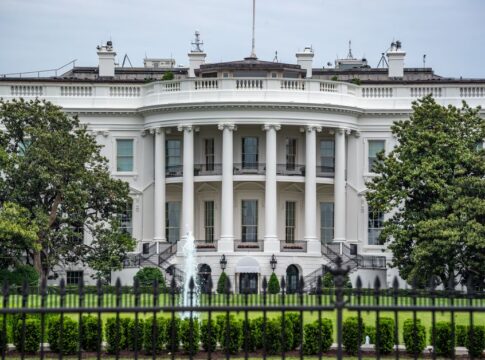
Photo: Dominik Gryzbon / Pexels
By New Way News Newsroom, Politics Desk — Published November 21, 2026
Table of Contents
- Key Takeaways
- The Background & Context
- Why This Matters
- Reactions & Analysis
- What Happens Next
- Frequently Asked Questions
The Trump administration has removed the nation’s top cybersecurity official following a series of major technology disruptions that paralyzed critical infrastructure across the United States. The White House cyber director’s sudden departure comes as flights were grounded, banking systems faltered, and even the National Security Agency experienced technical failures—raising urgent questions about America’s digital resilience and the political calculus behind leadership changes during a crisis.
The shake-up at the highest levels of the nation’s cyber defense apparatus arrives at a precarious moment. Millions of Americans found themselves stranded at airports, unable to access their bank accounts, or cut off from essential government services. The timing has sparked debate in Congress about whether the personnel change reflects accountability for the outages or a broader reshuffling of national security priorities under the current administration.
What remains unclear is whether the leadership change will strengthen or weaken the country’s ability to prevent future digital catastrophes. For ordinary citizens, the stakes couldn’t be higher: our economy, our security, and our daily lives now depend on systems that proved alarmingly fragile.
Key Takeaways
- The White House has replaced the National Cyber Director following widespread technology outages affecting flights, banks, and government agencies including the NSA.
- Multiple critical infrastructure sectors experienced simultaneous disruptions, exposing vulnerabilities in systems millions of Americans rely on daily.
- The personnel change raises questions about accountability and whether leadership turnover will improve or hinder cybersecurity preparedness.
- Congress is likely to scrutinize the administration’s handling of both the outages and the subsequent leadership decision.
- The incident highlights the fragile nature of interconnected digital systems that underpin modern American life.
- Political implications extend to broader debates about executive branch competence in managing national security infrastructure.
The Background & Context
The Office of the National Cyber Director was established relatively recently to coordinate the federal government’s sprawling cybersecurity efforts across dozens of agencies. Created through legislation, the position represents Congress’s recognition that cyber threats require high-level White House attention—someone with direct access to the president who can break through bureaucratic silos when digital crises emerge.
The recent wave of outages tested that coordination in real time. Air travel ground to a halt as airline systems failed. Customers couldn’t withdraw cash or process payments when banking networks went dark. Most troubling for national security professionals: even the NSA, America’s premier signals intelligence agency, reportedly experienced disruptions.
These weren’t isolated incidents. They formed a pattern that suggested either cascading technical failures across interconnected systems or coordinated attacks exploiting common vulnerabilities. Either scenario represents a nightmare for cybersecurity officials tasked with protecting critical infrastructure.
The cyber director role sits at the intersection of technology, national security, and politics. The position requires technical expertise to understand complex digital threats, bureaucratic skill to coordinate across agencies, and political acumen to navigate White House priorities. When systems fail on this scale, the person in that chair inevitably faces scrutiny.
Previous administrations have grappled with similar challenges. Cybersecurity incidents rarely respect political boundaries or election cycles. What makes this situation distinctive is the speed of the leadership change and its proximity to the disruptions themselves. In Washington, timing often reveals as much as official explanations.
Why This Matters
For the average American, abstract discussions about cybersecurity become viscerally real when you can’t board your flight home or access your paycheck. These outages translated technical vulnerabilities into human consequences. Parents missed important events. Businesses lost revenue. Emergency services faced communication challenges.
The economic impact alone merits attention. Every hour of banking system downtime costs financial institutions millions. Grounded flights cascade into days of schedule disruptions. Supply chains dependent on just-in-time digital coordination fracture when networks fail. Taxpayers ultimately bear these costs through higher fees, reduced services, or emergency appropriations.
National security implications cut even deeper. If the NSA—an agency that operates some of the world’s most secure networks—experienced outages, what does that say about vulnerabilities across government systems? Adversaries watch these incidents carefully, probing for weaknesses they can exploit. America’s competitors invest heavily in cyber capabilities precisely because digital attacks offer asymmetric advantages against a technology-dependent superpower.
The leadership change itself matters because continuity and expertise are crucial in cybersecurity. Institutional knowledge about threat actors, system vulnerabilities, and interagency relationships takes years to develop. Rapid turnover can create dangerous gaps in situational awareness exactly when steady hands are needed most.
Voters should care because this touches fundamental questions of governance. Can the federal government protect the digital infrastructure modern life requires? Does the administration prioritize technical competence or political loyalty in national security positions? How Congress responds—through oversight hearings, legislation, or budget decisions—will shape America’s cyber posture for years.
Reactions & Analysis
The White House has not provided detailed public explanation for the personnel decision. In Washington’s current political climate, that silence invites speculation. Some observers see accountability—a leader replaced after systems failed on their watch. Others perceive scapegoating, with a career official shouldering blame for vulnerabilities that predate their tenure and require resources beyond any single office’s control.
Congressional reactions will likely split along familiar political lines, though cybersecurity has historically enjoyed bipartisan support. Lawmakers from both parties recognize that hackers don’t check voter registration before attacking. Campaign rhetoric aside, members of Congress understand their own districts depend on functioning digital infrastructure.
Expect oversight committees to demand briefings. Senators and representatives will want to know what caused the outages, whether they resulted from attacks or system failures, and what steps are being taken to prevent recurrence. The cyber director’s departure will feature prominently in those inquiries, with legislators questioning whether the change serves national security or political expediency.
Cybersecurity professionals outside government are watching closely. The community is relatively small, and reputation matters. How the administration treats senior officials sends signals about whether talented technologists should serve in government roles. If experts perceive the position as politically precarious, recruiting top talent becomes harder.
Industry leaders whose companies operate critical infrastructure face their own questions. Did the outages stem from vulnerabilities in commercial systems that government relies upon? Should private sector companies invest more heavily in resilience even if it cuts into profit margins? The blurred lines between public and private cyber responsibilities complicate accountability.
What Happens Next
The immediate priority is installing new leadership and ensuring continuity of operations. The incoming cyber director faces a daunting inbox: investigating recent outages, reassuring allies about American digital defenses, and coordinating with agencies that may be demoralized by the leadership churn. First impressions matter, and the new director’s initial decisions will signal priorities.
Congress will almost certainly hold hearings. Expect pointed questions about the outages themselves—their causes, their scope, and lessons learned. Legislators will also probe the personnel decision, seeking assurances that politics didn’t compromise national security. Appropriations season offers additional leverage, with lawmakers potentially conditioning cybersecurity funding on reforms or transparency measures.
The broader policy debate will intensify. Should critical infrastructure face stricter federal oversight? Do current information-sharing arrangements between government and industry work effectively? Should the cyber director position gain additional authorities or resources? These aren’t new questions, but crisis often catalyzes legislative action that stalls during calmer periods.
International dimensions bear watching. America’s allies coordinate closely on cyber threats, sharing intelligence and best practices. Leadership instability can fray those relationships if partners question whether their American counterparts will be around long enough to follow through on commitments. Adversaries may perceive opportunity in transition periods, testing defenses while new officials get oriented.
For citizens, the question is whether this leadership change makes future outages more or less likely. The answer depends partly on factors beyond any single official’s control—the sophistication of threats, the complexity of systems, the adequacy of resources. But leadership matters. The right person can drive improvements in coordination, investment, and preparedness. The wrong choice, or simply instability itself, can leave vulnerabilities unaddressed.
Frequently Asked Questions
What does the National Cyber Director actually do?
The National Cyber Director serves as the president’s principal advisor on cybersecurity policy and strategy, coordinating efforts across federal agencies to protect government networks, critical infrastructure, and the broader digital ecosystem. The position was created to provide high-level White House leadership on cyber issues that span multiple departments and require unified national strategy. The director works with agencies ranging from the Department of Homeland Security to the Pentagon, as well as with private sector partners who operate much of America’s critical infrastructure.
Were the recent outages caused by cyberattacks?
The specific causes of the recent outages affecting airlines, banks, and government agencies have not been publicly disclosed in detail. Such disruptions can result from various factors including cyberattacks, software failures, human error, or cascading technical problems across interconnected systems. Investigations typically take time to determine root causes with certainty. Government officials often withhold details during active investigations to avoid compromising security or tipping off potential adversaries. Citizens should expect more information to emerge as investigations conclude and officials brief Congress.
Will this leadership change affect my personal cybersecurity?
Leadership changes at the federal level primarily affect government coordination and policy rather than individual cybersecurity practices. However, the National Cyber Director’s office does influence broader digital safety through initiatives that set standards, facilitate information sharing, and coordinate responses to major threats. Individuals should continue following basic cybersecurity hygiene—strong passwords, multi-factor authentication, software updates, and caution with suspicious links—regardless of who holds government positions. Your personal security depends more on your own practices and the security measures implemented by companies you use than on federal leadership, though government policy shapes the broader environment.
How does Congress oversee cybersecurity issues?
Multiple congressional committees share jurisdiction over cybersecurity, including the Homeland Security, Armed Services, and Intelligence committees in both chambers. Congress conducts oversight through hearings where officials testify under oath, through classified briefings on sensitive threats, and through budget appropriations that fund cybersecurity programs. Legislators can pass laws requiring specific security measures, creating new authorities, or mandating reports on cyber incidents. The fragmented committee structure sometimes complicates coherent policy, but it also ensures multiple perspectives and prevents any single committee from monopolizing this critical issue. Expect congressional activity to increase following high-profile incidents like the recent outages.
The coming weeks will reveal whether this leadership transition marks a turning point toward stronger cyber defenses or simply another chapter in Washington’s revolving door. For now, Americans are left wondering whether the officials charged with protecting our digital infrastructure can provide the stability and expertise the moment demands. The next crisis may not wait for the new team to settle in.