
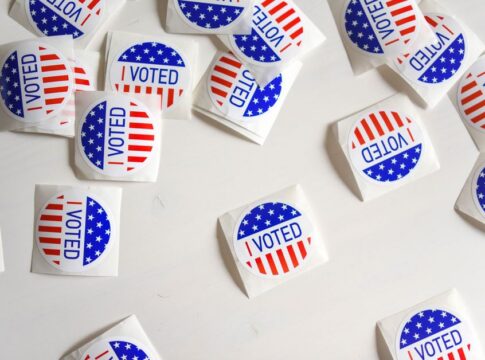
Photo: Element5 Digital / Pexels
By New Way News Newsroom, National Desk — Published August 29, 2026
Table of Contents
- Key Takeaways
- The Background & Context
- Why This Matters
- Reactions & Analysis
- What Happens Next
- Frequently Asked Questions
The nation’s highest court is now eyeing a contentious executive order from former President Donald Trump targeting mail-in voting procedures. The Trump mail voting directive has sparked a cascade of legal challenges that are rapidly climbing through the federal judiciary, with significant implications for election administration as the country heads toward the midterm elections. Recent court rulings have lifted some obstacles to the order’s implementation even as states mount fresh constitutional challenges.
This legal battle sits at the intersection of executive power, election integrity debates, and federalism. At stake is the balance between federal authority and states’ traditional control over their own election systems. The controversy has already reached the Supreme Court‘s docket, where justices are considering whether and how to intervene.
Justice Ketanji Brown Jackson has emerged as a vocal critic of the court’s approach to voting rights cases. Her dissenting opinion offers a sharp analysis of what she characterizes as the court’s broader assault on voting protections, providing a window into the deep divisions on the bench over election law.
Key Takeaways
- A Trump-era executive order restricting mail voting procedures has become the subject of Supreme Court scrutiny as legal challenges accelerate through federal courts.
- A federal judge recently removed a major legal barrier to the order’s enforcement, even as multiple states file new constitutional challenges ahead of crucial midterm elections.
- Justice Ketanji Brown Jackson authored a solo dissenting opinion that frames the Supreme Court’s handling of voting rights cases as part of a systematic weakening of electoral protections.
- The dispute centers on the fundamental question of whether federal executive authority can override state control of election administration, a power traditionally reserved to states.
- The timing of these legal developments places courts in the difficult position of making consequential rulings on election procedures as voters prepare to cast ballots.
- The case highlights ongoing national tensions over mail-in voting, which expanded dramatically during the pandemic but remains politically divisive.
The Background & Context
Mail-in voting became a flashpoint in American politics during the 2020 election cycle. The COVID-19 pandemic prompted states across the country to expand vote-by-mail options to protect public health. What had been a relatively noncontroversial voting method used by millions of Americans for decades suddenly became intensely partisan.
Trump repeatedly questioned the security and legitimacy of mail balloting during his presidency. He made unsubstantiated claims about widespread fraud and suggested that expanded mail voting favored Democrats. These assertions persisted despite election officials from both parties affirming that mail voting is secure and that fraud is exceedingly rare.
The executive order in question appears to have imposed restrictions or requirements on mail-in voting procedures. While the specific details of the order’s provisions are not fully outlined in available reporting, its mere existence has triggered a multi-front legal war. States that view the directive as federal overreach have challenged it in court, arguing that the Constitution reserves election administration to state governments.
The federal judiciary has been divided on how to handle these challenges. Some judges have been receptive to arguments that the executive branch exceeded its authority. Others have ruled that the order falls within legitimate federal powers to ensure election integrity and uniform standards. This split has created a patchwork of rulings that the Supreme Court may need to resolve.
Why This Matters
For ordinary Americans, this legal battle has concrete consequences. How you vote matters. Mail-in ballots provide crucial access for elderly voters, people with disabilities, rural residents far from polling places, and workers who cannot take time off on Election Day.
Any restrictions on mail voting could affect millions of ballots. In the 2020 election, nearly half of all votes were cast by mail or absentee ballot. Even as in-person voting has returned to pre-pandemic levels, many voters have come to prefer the convenience of voting from home. Sudden changes to these procedures, especially close to an election, can create confusion and potentially disenfranchise voters who make plans based on existing rules.
The federalism questions are equally significant. The Constitution gives states broad authority to conduct elections, even for federal offices. If the executive branch can unilaterally impose voting rules on states, it would represent a substantial shift in the balance of power. State election officials—both Republican and Democratic—have historically guarded this authority jealously.
There are also separation-of-powers concerns. Congress, not the president, has primary constitutional authority to regulate federal elections. An executive order that effectively rewrites voting rules could be seen as an end-run around the legislative process. This matters to anyone concerned about constitutional checks and balances.
The Supreme Court’s handling of this dispute will likely set precedents that extend far beyond this particular order. The justices’ decisions could shape voting rights litigation for years to come and signal how much deference courts will give to state election systems versus federal intervention.
Reactions & Analysis
Justice Ketanji Brown Jackson’s dissenting opinion has drawn particular attention. According to reporting, her clear-eyed analysis characterizes the Supreme Court’s recent voting rights jurisprudence as an assault on electoral protections. Writing alone, without other justices joining her dissent, Jackson laid out her concerns about the court’s direction on these fundamental democratic questions.
Her willingness to dissent solo on such a high-profile issue demonstrates the depth of her concerns. Supreme Court justices often try to build coalitions and join each other’s opinions to present a united front. A solo dissent signals that a justice feels compelled to speak individually, even without the institutional weight that comes from multiple signatures.
Jackson’s framing of the issue as part of a broader “voting assault” suggests she sees a pattern in the court’s recent decisions. Over the past several years, the Supreme Court has issued rulings that critics say have weakened the Voting Rights Act and made it harder to challenge discriminatory voting laws. Supporters of these decisions argue the court is simply applying the law as written and respecting state prerogatives.
Meanwhile, the lower court ruling that lifted a major obstacle to the Trump order represents a significant development for the executive branch. That a federal judge found in favor of implementing the order, even as new challenges emerge, indicates that the legal arguments supporting the directive have some judicial traction. This creates urgency for states opposing the order to pursue their cases aggressively.
The fact that states are filing new challenges specifically ahead of the midterms underscores the practical stakes. Election officials need clarity on what rules will govern the upcoming vote. Legal uncertainty this close to an election creates administrative nightmares and risks voter confusion.
What Happens Next
The Supreme Court now faces difficult choices about timing and substance. The justices could issue an emergency ruling to either block or allow the order to take effect while litigation continues. They could also decide to take up the case for full briefing and oral argument in their regular docket, which would likely push final resolution into next year.
Emergency applications in election cases have become increasingly common and controversial. The court’s “shadow docket”—rulings issued quickly without full briefing or argument—has drawn criticism from legal scholars and some justices themselves. These decisions can have enormous impact but offer little explanation of the court’s reasoning.
If the court allows the order to proceed, states will need to quickly adjust their election procedures. This could mean changes to ballot request processes, signature verification requirements, or deadlines. Election officials would face the challenge of implementing new rules while early voting may already be underway in some jurisdictions.
If the court blocks the order, the legal fight will continue in lower courts but without immediate effect on the midterms. This would preserve the status quo and give states more time to litigate the constitutional questions. However, it would leave the fundamental legal issues unresolved.
Congress could theoretically step in to clarify federal authority over voting procedures, but in the current polarized environment, legislation seems unlikely. The political divisions over voting rules mirror the legal disputes, making compromise difficult.
Advocacy groups on both sides are preparing for an extended battle. Voting rights organizations are likely to challenge any implementation of restrictive measures, while election integrity advocates will defend the order as necessary safeguards. This litigation could span multiple election cycles.
Frequently Asked Questions
What exactly does the Trump mail voting executive order require?
While specific provisions have not been fully detailed in available reporting, the executive order imposes restrictions or requirements on mail-in voting procedures. The order has been controversial enough to trigger multiple legal challenges from states that view it as federal overreach into their constitutional authority to administer elections. The precise requirements would determine how significantly it affects voters’ ability to cast mail ballots.
Can the president really change voting rules through an executive order?
This is the central legal question courts are now addressing. The Constitution gives states primary authority to conduct elections, while Congress has some power to regulate federal elections. Presidential authority in this area is more limited. Whether an executive order can impose voting requirements on states depends on whether it exceeds constitutional boundaries or conflicts with congressional statutes. The Supreme Court’s eventual ruling will clarify these limits.
How would this affect voters in the upcoming midterm elections?
The impact depends on whether courts allow the order to take effect and what specific requirements it contains. Potential effects could include changes to how voters request mail ballots, requirements for verifying voter identity, or altered deadlines for returning ballots. Any changes implemented close to an election create risks of voter confusion and could affect turnout, particularly among populations that rely heavily on mail voting such as elderly voters and those with disabilities.
Why did Justice Jackson write a solo dissent?
According to reporting, Justice Ketanji Brown Jackson authored a dissenting opinion without other justices joining her, explaining her view that the Supreme Court’s approach to voting rights represents a systematic assault on electoral protections. Solo dissents are relatively rare and signal that a justice feels strongly enough about an issue to speak individually. Jackson’s clear-eyed analysis provides insight into concerns about the court’s direction on voting rights, even if other justices did not share her specific framing or conclusions.
As this legal drama unfolds, Americans will be watching to see whether the nation’s highest court intervenes before voters head to the polls. The outcome will shape not just the upcoming midterms but the future of election administration and the boundaries of executive power. For now, uncertainty reigns, and election officials across the country are preparing for multiple scenarios while voters deserve clarity about how they can exercise their fundamental right to vote.