
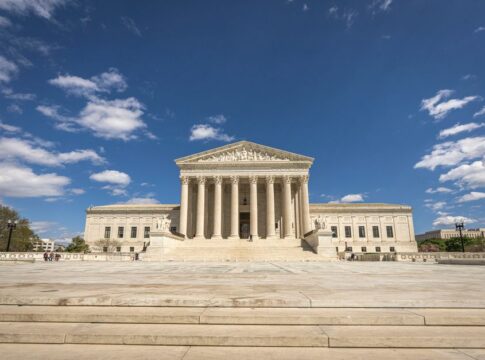
Photo: Mark Stebnicki / Pexels
By New Way News Newsroom, National Desk — Published October 26, 2026
Table of Contents
- Key Takeaways
- The Background & Context
- Why This Matters
- Reactions & Analysis
- What Happens Next
- Frequently Asked Questions
The Trump administration has escalated its border security agenda to the nation’s highest court. In a move that underscores the administration’s commitment to expanding physical barriers along the southern frontier, officials have asked the US Supreme Court to permit construction of border wall segments in the Big Bend region of Texas. The request comes as Trump asks supreme court justices to intervene in what has become one of the most contentious national security debates of the past decade.
The Big Bend area, a remote and rugged stretch of the Texas-Mexico border characterized by dramatic desert landscapes and the winding Rio Grande, has long been a flashpoint in immigration enforcement discussions. The administration’s appeal to the Supreme Court signals that federal government lawyers believe lower court decisions have improperly blocked construction efforts that officials deem critical to border security.
This legal maneuver arrives at a time when immigration policy dominates headlines and divides communities across the country. The outcome could reshape how future administrations approach border infrastructure projects and the balance of power between executive action and judicial oversight.
Key Takeaways
- The Trump administration has formally requested the US Supreme Court to allow border wall construction to proceed in Texas’s Big Bend region, a remote area along the Rio Grande.
- The appeal represents an effort to overcome lower court rulings that have halted or restricted construction activities in the environmentally sensitive area.
- The Big Bend region encompasses some of the most challenging terrain along the entire southern border, raising questions about construction feasibility and environmental impact.
- The Supreme Court’s decision could set precedent for how executive branch border security initiatives interact with judicial review and environmental regulations.
- This case reflects broader tensions between national security priorities and concerns about federal overreach, environmental protection, and land use in border communities.
The Background & Context
Border wall construction has defined political discourse since the 2016 presidential campaign. The Trump administration made physical barriers a centerpiece of its immigration enforcement strategy, arguing that walls and fencing provide essential tools for controlling illegal crossings and drug trafficking.
The Big Bend region presents unique challenges. Spanning roughly 1,000 miles of the Texas-Mexico border, this area includes Big Bend National Park, one of the nation’s most remote and least-visited national parks. The terrain varies from steep canyon walls carved by the Rio Grande to vast desert expanses where summer temperatures regularly exceed 110 degrees. Wildlife biologists have documented the region as critical habitat for numerous species, some found nowhere else on Earth.
Previous administrations approached border security in this region with caution. The remote location, extreme environmental conditions, and protected federal lands created natural obstacles to large-scale construction. Local ranchers, environmental groups, and some law enforcement officials questioned whether physical barriers made operational sense in areas where the river itself and sheer geography already limit crossing points.
Legal challenges to border wall construction have multiplied over recent years. Opponents have argued that the administration circumvented normal environmental review processes, violated laws protecting public lands, and exceeded executive authority by redirecting military funds toward construction. Several federal courts issued injunctions blocking or limiting work in various locations, creating a patchwork of permitted and prohibited construction zones.
The current Supreme Court appeal represents the administration’s attempt to cut through this legal thicket. By taking the case directly to the justices, officials hope to secure a definitive ruling that would allow construction to resume without further delays.
Why This Matters
For American taxpayers, this case carries significant financial implications. Border wall construction costs billions of dollars. Every mile requires not just materials and labor but ongoing maintenance, access roads, and supporting infrastructure. Citizens deserve transparency about how their money gets spent and whether these investments deliver promised security benefits.
Border communities face direct consequences. Residents in Texas counties adjacent to the Big Bend region live with the daily realities of immigration enforcement. Some support expanded barriers as necessary protection. Others worry about disrupted ecosystems, restricted access to the river, and damage to the tourism economy that sustains many small towns.
The environmental stakes extend beyond one region. The Big Bend ecosystem supports black bears, mountain lions, and over 450 bird species. Scientists have documented how barriers fragment habitat and prevent wildlife migration patterns that have existed for millennia. What happens here could influence how future infrastructure projects balance security needs against ecological preservation.
Constitutional questions loom large. This case tests the limits of executive power during declared national emergencies. Can a president redirect funds appropriated by Congress for other purposes? How much deference do courts owe to executive branch claims about national security? The Supreme Court’s answers will guide presidents and lawmakers for generations.
Political ramifications ripple through both parties. Immigration remains among the most polarizing issues in American politics. How the Supreme Court rules could energize or deflate political bases heading into future election cycles. The decision may also affect how voters perceive the Court’s role as either a neutral arbiter or a political actor.
Reactions & Analysis
The administration’s move to the Supreme Court reflects confidence in the current judicial landscape. With a conservative majority on the bench, officials likely calculate that they have better odds of securing a favorable ruling than in lower courts where judges appointed by various administrations have issued mixed decisions.
Legal experts note the strategic timing. By bringing the case now, the administration aims to establish precedent while it still controls the executive branch. A Supreme Court decision in favor of construction would make it harder for future administrations to reverse course, even if political winds shift.
Environmental organizations have consistently opposed border wall construction in sensitive areas. These groups argue that federal law requires thorough environmental impact assessments before major construction projects on public lands. They contend that the administration has sought to waive or shortcut these requirements, setting a dangerous precedent that could undermine environmental protections across the board.
Border security advocates counter that delays cost lives. They point to data showing that even remote areas experience drug smuggling and human trafficking. Supporters argue that physical barriers, combined with surveillance technology and personnel, create a layered defense that makes law enforcement more effective and communities safer.
Local officials in border counties express mixed views. Some sheriffs and mayors support the construction as a necessary tool. Others question whether the investment makes sense given the terrain and limited crossing activity in the most remote stretches. Ranchers whose land sits along the border worry about losing access to water sources and grazing areas.
What Happens Next
The Supreme Court will decide whether to take up the case. The justices receive thousands of petitions annually and accept only a fraction for full review. They may choose to hear oral arguments and issue a comprehensive ruling, or they might dispose of the matter through a brief order without extended consideration.
If the Court agrees to hear the case, the timeline could stretch months. Briefs would be filed by both sides, along with friend-of-the-court submissions from interested parties. Oral arguments would follow, then deliberations among the justices before a decision emerges. The Court’s current term runs through June, but complex cases sometimes carry over.
A ruling in favor of the administration would likely trigger rapid construction activity. Contractors would mobilize equipment and personnel to begin work before another legal challenge could materialize. The administration would seek to complete as much construction as possible to create facts on the ground that would be difficult to reverse.
Should the Court side with opponents, or decline to hear the case, construction would remain blocked. The administration would need to pursue alternative legal strategies or seek legislative solutions through Congress. Environmental reviews would need completion, and new permits might require years to obtain through normal channels.
Beyond this specific case, the decision will influence how future presidents approach border security and emergency powers. A broad ruling could either expand or constrain executive authority in ways that affect policy areas far removed from immigration. The justices’ reasoning will be parsed by lawyers, scholars, and officials planning future initiatives.
Frequently Asked Questions
What makes the Big Bend region significant for border wall construction?
The Big Bend region represents one of the last major stretches of the southern border without extensive physical barriers. Its remote location, dramatic topography, and inclusion of protected federal lands make it both strategically important for border security advocates and symbolically significant for environmental protection efforts. The area’s unique ecological characteristics and sparse population create challenges that differ from more urban border zones.
How long might it take for the Supreme Court to decide this case?
The timeline varies depending on whether the Court accepts the case for full review. If the justices agree to hear arguments, the process typically takes several months from petition to decision. The Court might also issue a brief order without extended proceedings. Given the current term’s schedule and the case’s complexity, a resolution could come within months or potentially extend into the next term if the Court requests additional briefing or schedules arguments for later dates.
What legal authority does the administration cite for border wall construction?
The administration has invoked national emergency declarations and laws governing border security to justify construction and fund reallocation. Officials argue that the executive branch has broad authority to protect national borders and that statutory provisions allow redirecting military construction funds during declared emergencies. Opponents dispute these interpretations, arguing that Congress must appropriate funds for specific purposes and that emergency declarations cannot circumvent normal legal requirements for environmental review and land use approvals.
Could this decision affect border policy beyond the Trump administration?
Yes, significantly. Supreme Court precedents establish legal frameworks that bind future administrations regardless of political party. A ruling that broadly affirms executive authority over border construction could enable future presidents to pursue similar projects with less judicial interference. Conversely, a decision limiting executive power would constrain how future administrations approach border security infrastructure. The case’s implications extend to questions about emergency powers, environmental law, and the separation of powers between branches of government.
As the Supreme Court considers whether to accept this case, the nation watches how nine justices will balance security concerns, environmental protection, executive authority, and the rule of law. The Big Bend region, long a symbol of untamed American wilderness, has become the latest battleground in debates that will shape the country’s borders and its constitutional order for years to come. Whatever the outcome, this legal fight represents more than construction permits—it reflects fundamental questions about what kind of nation America aspires to be.