
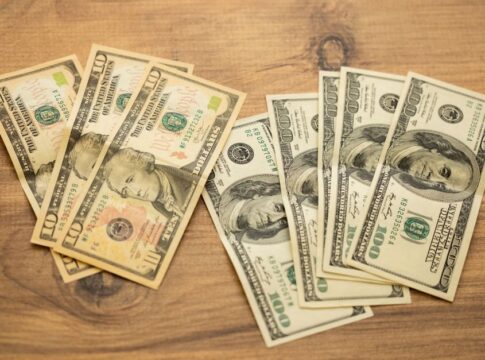
Photo: Engin Akyurt / Pexels
By New Way News Newsroom, Economy Desk — Published September 18, 2026
Table of Contents
- Key Takeaways
- The Background & Context
- Why This Matters
- Reactions & Analysis
- What Happens Next
- Frequently Asked Questions
The Federal Reserve raises interest rates for the first time in more than a year, marking a dramatic reversal in monetary policy that will ripple through every corner of the American economy. The decision, announced this week, ends a lengthy pause during which the central bank held rates steady while watching inflation data and employment figures with hawk-like intensity.
This shift comes at a moment of uncertainty for millions of Americans. Mortgage rates will climb. Credit card balances will cost more. Business loans will tighten. Yet the Fed’s calculus reflects a deeper concern: that price pressures may be reaccelerating, threatening the hard-won progress against inflation achieved over the past two years.
For households still reeling from years of elevated prices on groceries, gas, and rent, the move signals that relief may take longer than hoped. Wall Street reacted swiftly, with markets recalibrating expectations for corporate profits and consumer spending in the months ahead.
Key Takeaways
- The Federal Reserve has raised interest rates for the first time since 2023, ending an extended period of rate stability.
- This policy shift represents a significant change in the central bank’s approach to managing the economy and controlling inflation.
- Borrowing costs for consumers and businesses are expected to rise, affecting mortgages, auto loans, credit cards, and business investment.
- The decision reflects renewed concerns about inflationary pressures despite previous progress in bringing prices under control.
- Markets and financial institutions are adjusting their strategies in response to the new interest rate environment.
- The move will have widespread implications for jobs, economic growth, and the financial wellbeing of American families.
The Background & Context
To understand the significance of this rate hike, we need to rewind to the tumultuous economic period that began in 2021. Inflation surged to levels not seen in four decades, driven by pandemic-era supply chain disruptions, massive fiscal stimulus, and a rapid reopening of the economy. The Federal Reserve responded with one of the most aggressive tightening campaigns in its history, raising rates eleven times between March 2022 and July 2023.
That campaign brought the federal funds rate from near zero to a range of 5.25 to 5.50 percent. The medicine worked, albeit slowly. Inflation cooled from a peak above 9 percent to levels closer to the Fed’s 2 percent target. But the process was painful. Mortgage rates doubled. Small businesses struggled with higher borrowing costs. Recession fears loomed large.
Throughout 2023 and into this year, the Fed held rates steady. Officials wanted to see sustained evidence that inflation was truly beaten, not merely taking a temporary breather. They also monitored the labor market carefully, wary of triggering unnecessary job losses. The pause gave the economy time to adjust and allowed policymakers to assess whether their previous rate increases were sufficient.
Yet recent economic data appears to have shifted the calculus. While specific figures were not detailed in the available reports, the decision to resume rate increases suggests that inflation readings or other economic indicators have raised fresh concerns at the central bank. The Fed’s dual mandate—maximum employment and stable prices—requires constant balancing, and the scales may have tipped toward prioritizing price stability once again.
Why This Matters
Interest rates are the economy’s thermostat. When the Fed turns the dial, everyone feels the temperature change. For ordinary Americans, this rate hike translates into real money leaving their wallets.
Homebuyers face the most immediate impact. Mortgage rates, which loosely track Fed policy, will edge higher. A family shopping for a $400,000 home could see their monthly payment increase by hundreds of dollars compared to just weeks ago. First-time buyers, already squeezed by high home prices and limited inventory, may find homeownership slipping further out of reach.
Credit card holders will also feel the pinch. Most cards carry variable rates tied to the Fed’s benchmark. With Americans collectively holding more than $1 trillion in credit card debt, even a modest rate increase means billions more in interest payments flowing from households to financial institutions. For families living paycheck to paycheck, that’s money that won’t go toward groceries, healthcare, or saving for emergencies.
Small business owners face tougher choices too. Expansion plans may be shelved. Equipment purchases delayed. Hiring decisions reconsidered. Higher borrowing costs make it harder for entrepreneurs to take the risks that drive innovation and job creation. In rural communities and underserved areas, where access to capital is already limited, the impact can be especially severe.
Yet there’s another side to this story. Savers finally get a break. Bank account yields and certificate of deposit rates will tick upward. Retirees living on fixed incomes may see better returns on conservative investments. And if the rate hike succeeds in tamping down inflation, everyone benefits from more stable prices and greater economic predictability.
The broader economic implications are equally significant. Higher rates can slow consumer spending, which accounts for roughly 70 percent of U.S. economic activity. Businesses may cut back on investment. Economic growth could decelerate. In the worst case, the Fed risks triggering the very recession it hopes to avoid—a phenomenon economists call “overtightening.”
Reactions & Analysis
The financial community has been bracing for this moment. According to reports, expectations had been building that the Federal Reserve would resume raising rates, suggesting that economists and market participants saw warning signs in recent economic data.
Wall Street’s reaction reflects both concern and recalibration. Stock prices are sensitive to interest rate changes because higher rates make bonds more attractive relative to equities, and because borrowing costs affect corporate profitability. Technology companies, which often rely on cheap capital to fund growth, tend to be particularly vulnerable to rate increases.
Bond markets have also adjusted. Treasury yields, which move inversely to prices, have likely risen as investors price in a higher-rate environment. This affects everything from government borrowing costs to the yields on municipal bonds that fund schools, roads, and public infrastructure.
For the banking sector, the picture is mixed. Higher rates can boost profit margins on loans, but they also increase the risk of defaults as borrowers struggle with larger payments. Regional banks, which tend to have higher exposure to commercial real estate and local businesses, may face particular challenges.
Economic analysts are divided on whether the Fed is making the right call. Some argue that inflation risks remain real and that the central bank is correctly prioritizing price stability. Others worry that the economy is more fragile than headline numbers suggest, and that additional rate increases could tip the balance toward contraction.
Consumer confidence, already shaky after years of economic turbulence, may take another hit. When people feel uncertain about the future, they tend to pull back on spending and increase saving. That caution, while prudent for individual households, can become a self-fulfilling prophecy that slows the entire economy.
What Happens Next
The Federal Reserve does not operate on autopilot. Each rate decision depends on incoming data about inflation, employment, economic growth, and financial stability. This latest increase is unlikely to be the last word.
If inflation continues to show signs of reaccelerating, additional rate hikes may follow in subsequent meetings. The Fed typically moves in quarter-percentage-point increments, though it can adjust the pace based on economic conditions. Officials will be watching core inflation measures—which exclude volatile food and energy prices—particularly closely.
The labor market will also be critical. Strong job growth and rising wages can fuel inflation by putting more money in consumers’ pockets. But too much cooling in the jobs market risks pushing unemployment uncomfortably higher. The Fed aims for a “soft landing”—slowing the economy enough to control inflation without causing a recession—but history shows such outcomes are rare.
For American families, the practical advice is straightforward but not easy. Now is the time to review household budgets, pay down variable-rate debt where possible, and build emergency savings. Homebuyers might consider locking in rates sooner rather than later if additional increases are coming. Business owners should stress-test their finances against higher borrowing costs.
Political ramifications are also likely. Interest rates and inflation are kitchen-table issues that influence elections. With a presidential campaign season approaching, economic policy will be front and center. Incumbent politicians will face tough questions about affordability and economic management, while challengers will seize on any signs of economic weakness.
Internationally, U.S. rate policy has global consequences. Higher American rates attract foreign capital, strengthening the dollar and making U.S. exports more expensive. Emerging market economies that borrow in dollars may face increased debt burdens. Central banks around the world watch the Fed closely and often adjust their own policies in response.
Frequently Asked Questions
Why did the Federal Reserve decide to raise rates now after pausing for so long?
The Federal Reserve held rates steady throughout most of 2023 and into this year to assess whether previous rate increases were sufficient to control inflation. The decision to resume raising rates suggests that recent economic data—likely showing persistent inflation pressures or other concerning indicators—convinced policymakers that additional tightening was necessary to meet their price stability mandate. The Fed operates based on incoming data rather than a predetermined schedule, adjusting policy as economic conditions evolve.
How will this rate increase affect my mortgage and credit card payments?
For existing fixed-rate mortgages, your payment will not change. However, if you have an adjustable-rate mortgage or home equity line of credit, your rate will likely increase when it next resets. Credit card rates, which are typically variable, will rise within one or two billing cycles. If you’re shopping for a new mortgage, rates will be higher than they were before the Fed’s decision. On a $300,000 mortgage, even a quarter-point rate increase can add tens of thousands of dollars in interest over the life of the loan.
Could this rate hike push the economy into recession?
There is always a risk that interest rate increases will slow the economy too much, potentially triggering a recession. Higher borrowing costs reduce consumer spending and business investment, which can lead to slower growth and job losses. However, the Federal Reserve carefully analyzes economic data to try to avoid overtightening. The central bank’s goal is a “soft landing”—bringing inflation under control without causing a significant economic downturn. Whether they succeed depends on many factors, including how consumers and businesses respond to the rate change and what happens with global economic conditions.
What does this mean for my savings and retirement accounts?
Higher interest rates are generally good news for savers. Banks typically raise yields on savings accounts, money market funds, and certificates of deposit when the Fed increases rates, though the increases may be modest and take some time to appear. For retirement accounts invested in stocks, the impact is more complex. Higher rates can put downward pressure on stock prices, particularly for growth-oriented companies, but may benefit more conservative investments like bonds and dividend-paying stocks. Diversification remains important regardless of the interest rate environment.
As this rate increase takes effect in the coming weeks, millions of Americans will feel its impact in ways both obvious and subtle. The Federal Reserve has made its move. Now comes the hard part: watching to see whether the gamble pays off, or whether the economy requires yet another recalibration. For a nation still recovering from years of economic upheaval, the stakes could hardly be higher.