
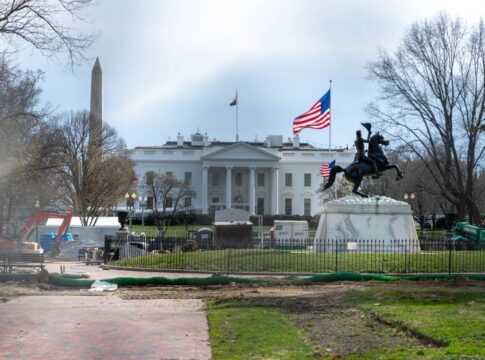
Photo: Quang Vuong / Pexels
By New Way News Newsroom, National Desk — Published October 17, 2026
Table of Contents
- Key Takeaways
- The Background & Context: How the DOJ defends White House access policies
- Why This Matters: Stakes for democracy and accountability
- Reactions & Analysis: Legal and political responses
- What Happens Next: Implications and future scenarios
- Frequently Asked Questions
The Department of Justice is mounting a vigorous defense of the Trump administration’s decision to bar certain journalists from White House access, arguing in federal court that entry to the presidential residence is a privilege, not a constitutional right. The legal battle, which pits press freedom advocates against executive power, has landed before a judge who must now weigh whether the media ban violates First Amendment protections or falls within the president’s authority to control access to government facilities.
As the DOJ defends White House policies in court filings, the case has ignited debate about the balance between national security concerns and the public’s right to information. The dispute centers on whether the federal government can selectively exclude journalists from covering the president without running afoul of constitutional protections that have historically shielded the press from government retaliation.
The lawsuit represents one of the most significant confrontations between the executive branch and the news media in recent years, with implications that could reshape how future administrations interact with reporters and manage access to information vital to democratic accountability.
Key Takeaways
- The Department of Justice is defending the Trump administration’s ban on certain journalists from White House access, arguing the issue involves national security considerations.
- Government lawyers contend that White House access is a privilege that can be revoked at the discretion of executive officials, not an absolute constitutional right.
- A federal judge is currently considering whether to restore journalists’ access to the White House after the ban was imposed.
- The case raises fundamental questions about press freedom, First Amendment protections, and the limits of presidential authority over media access.
- Legal experts view the lawsuit as a potential precedent-setting case that could influence executive-press relations for years to come.
The Background & Context: How the DOJ defends White House access policies
The collision between press rights and executive privilege is hardly new in American governance. Throughout history, presidents have clashed with journalists over access, coverage, and the boundaries of acceptable criticism. What distinguishes this case is the explicit legal framework now being constructed around those tensions.
The Department of Justice’s defense rests on two pillars. First, officials argue that national security considerations justify restricting who can enter the White House complex. Second, they maintain that access to the president and his staff is fundamentally different from the right to report on government activities from outside the gates.
This legal strategy reflects a broader philosophy about executive power. The administration’s position suggests that while the press cannot be prevented from publishing stories or gathering information through other means, the government retains discretion over who receives the privilege of physical proximity to the president. That distinction may sound technical, but it carries enormous practical consequences.
Journalists who lose White House credentials lose more than a building pass. They lose the ability to question officials directly, to observe events firsthand, and to cultivate sources within the administration. For news organizations, exclusion can mean falling behind competitors in breaking stories and providing comprehensive coverage of national news.
The affected journalists and their employers argue that selective exclusion based on coverage decisions or critical reporting violates the First Amendment’s protection against government censorship. They contend that once the White House establishes a press credentialing system, it cannot use that system to punish disfavored outlets or reward friendly ones.
Why This Matters: Stakes for democracy and accountability
For ordinary Americans who may never set foot in the White House, this legal battle might seem like an inside-the-Beltway squabble. It is not. The outcome will help determine how much the public knows about what their elected leaders are doing in their name.
Democracy depends on information flow. Voters cannot hold officials accountable if they lack access to reliable reporting about government actions, policies, and decision-making processes. When administrations can exclude journalists who ask difficult questions or publish unflattering stories, the entire accountability mechanism weakens.
The Supreme Court has long recognized that the First Amendment protects not just the right to speak, but the right to gather news. Without that gathering function, the press cannot fulfill its role as a check on government power. Yet the courts have also acknowledged that this right is not absolute, particularly when security concerns or operational necessities come into play.
The challenge for judges is drawing lines. Where does legitimate security screening end and viewpoint discrimination begin? Can the federal government cite national security to justify decisions that appear motivated by editorial disagreements? These questions extend far beyond one administration or one set of banned reporters.
Taxpayers fund the White House and employ the president. The building belongs, in a fundamental sense, to the American people. When access becomes a tool for managing coverage rather than ensuring security, citizens lose their window into government operations. That loss affects everyone, regardless of political affiliation or media consumption habits.
Reactions & Analysis: Legal and political responses
The judge presiding over the case faces a delicate balancing act. Restoring journalists’ access could be seen as judicial interference with executive branch operations. Upholding the ban might appear to endorse government retaliation against critical press coverage.
Legal scholars watching the case note that precedents cut both ways. Courts have historically granted presidents considerable latitude in managing their own security and controlling access to executive facilities. But they have also struck down government actions that punish speech or discriminate based on viewpoint.
The DOJ’s invocation of national security adds complexity. Security concerns carry weight in legal analysis, and courts typically defer to executive judgments about threats and protective measures. Yet critics argue that national security has become a catch-all justification for decisions that have little to do with actual safety risks.
Press freedom organizations have rallied behind the lawsuit, viewing it as a crucial test of whether the First Amendment retains meaningful force when confronted with executive power. They point out that authoritarian governments worldwide use security rationales to silence critical journalists, and they warn against allowing similar dynamics to take root domestically.
Political responses have largely followed partisan lines, with some lawmakers defending the administration’s right to control White House access and others condemning the ban as an attack on press freedom. That polarization itself tells a troubling story about how Americans increasingly view media and government through tribal lenses rather than shared democratic principles.
What Happens Next: Implications and future scenarios
The immediate question is whether the judge will order journalists’ credentials restored while the lawsuit proceeds. Such preliminary relief would allow reporters back into the White House pending a final decision on the merits. Alternatively, the court could allow the ban to remain in effect during litigation, potentially leaving journalists excluded for months or years.
Whatever the trial court decides, appeals are virtually certain. The case could ultimately reach the Supreme Court, where justices would have the opportunity to clarify the constitutional boundaries of press access to government officials and facilities. Given the current court’s composition and its approach to executive power questions, predicting outcomes is difficult.
Beyond the courtroom, the case will influence how future administrations think about media relations. A government victory could embolden more aggressive access restrictions, with officials feeling legally protected in excluding disfavored journalists. A ruling for the press might make administrations more cautious, knowing that arbitrary exclusions will face successful legal challenges.
The broader trajectory of press-government relations hangs in the balance. At a time when trust in both institutions has eroded, and when technological changes are reshaping how information flows through society, the legal framework governing press access feels increasingly important yet increasingly contested.
Congress could theoretically step in with legislation clarifying press access rights, but partisan divisions make such action unlikely. That leaves courts as the primary arena for resolving these fundamental questions about democracy, transparency, and power.
Frequently Asked Questions
What exactly is the Department of Justice arguing in this case?
The DOJ is defending the White House media ban by arguing that access to the White House is a privilege rather than a constitutional right, and that national security considerations justify the government’s ability to control who enters the presidential complex. Government lawyers contend that the administration has discretion to revoke credentials without violating the First Amendment.
Why does White House access matter for journalists and the public?
White House credentials allow journalists to directly question officials, observe events firsthand, and develop sources within the administration. When reporters lose this access, news organizations struggle to provide comprehensive coverage of the president and executive branch activities. For the public, this means potentially less information about government decisions that affect their lives, weakening democratic accountability.
Has this type of media ban happened before?
While tensions between presidents and the press are as old as the republic, explicit bans on specific journalists or news organizations from White House access are relatively rare in modern times. Previous administrations have clashed with reporters and occasionally restricted access in specific circumstances, but the legal framework around these disputes continues to evolve through cases like this one.
What could the judge decide in this case?
The judge must determine whether to restore the journalists’ White House access while the lawsuit proceeds, and ultimately whether the ban violates First Amendment protections. The court could rule that the government has broad discretion over credentials, or it could find that selective exclusion based on coverage decisions constitutes unconstitutional viewpoint discrimination. Any decision is likely to be appealed, potentially reaching the Supreme Court.
As this legal battle unfolds, Americans watching from outside the courtroom should recognize what hangs in the balance. The ability of journalists to ask hard questions and report uncomfortable truths depends partly on their physical ability to reach the people and places where power is exercised. Whether courts will protect that access, or defer to executive claims of privilege and security, will help define the relationship between government and governed for years to come.