
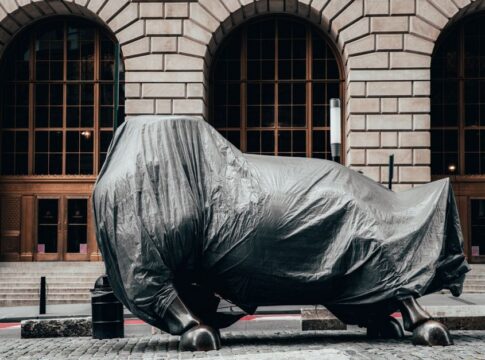
By New Way News Newsroom, Economy Desk — Published August 30, 2026
Table of Contents
- Key Takeaways
- The Background & Context
- Why This Matters
- Reactions & Analysis
- What Happens Next
- Frequently Asked Questions
Investors watched their portfolios shrink Tuesday as Wall Street ends lower following fresh signals from Federal Reserve Chair Kevin Warsh that the central bank remains committed to its battle against stubborn inflation. The day’s trading session reflected mounting anxiety among market participants about the path ahead for interest rates and the broader economy.
Stock indexes retreated across the board as Warsh’s remarks reinforced expectations that borrowing costs will remain elevated longer than many had hoped. The message was clear: policymakers aren’t ready to declare victory over inflation, even as economic data paints an increasingly complex picture of growth, jobs, and consumer prices.
For millions of Americans with retirement accounts, mortgages, and business loans, the implications extend far beyond ticker symbols and trading floors. Higher interest rates mean costlier credit cards, more expensive car loans, and tougher decisions for companies weighing whether to hire or hold back.
Key Takeaways
- Wall Street closed in negative territory following remarks from Federal Reserve Chair Kevin Warsh emphasizing continued focus on fighting inflation
- The market decline reflects investor concerns about the duration and intensity of the Fed’s restrictive monetary policy stance
- Warsh’s reaffirmation signals that interest rates may remain elevated for an extended period, affecting borrowing costs across the economy
- The Fed’s commitment to price stability comes amid ongoing debates about the health of the labor market and overall economic growth
- Investors are recalibrating expectations for when the central bank might pivot toward more accommodative policy
- The market reaction demonstrates the continued sensitivity of financial markets to Federal Reserve communications and policy direction
The Background & Context
The Federal Reserve has been walking a tightrope for more than two years now. After inflation surged to four-decade highs in 2022, the central bank launched its most aggressive campaign of interest rate increases since the early 1980s. The goal was straightforward: cool down an overheated economy without triggering a recession.
Kevin Warsh, who previously served on the Federal Reserve Board during the financial crisis, brings institutional memory and credibility to his current role as Fed Chair. His tenure has been marked by a determination to avoid the mistakes of the 1970s, when premature policy easing allowed inflation to become entrenched in the American economy for nearly a decade.
The inflation fight has already reshaped the financial landscape. Mortgage rates have climbed from historic lows near three percent to levels not seen in years. Credit card interest charges have soared. Small businesses face higher costs to finance inventory and expansion. Yet inflation itself, while down from its peak, remains above the Fed’s two percent target.
This persistence has forced policymakers into an uncomfortable position. Cut rates too soon, and inflation could roar back. Keep them high too long, and the economy risks tipping into recession, destroying jobs and livelihoods in the process. It’s a calculation with profound consequences for every American household.
Why This Matters
When Wall Street stumbles, Main Street feels it. The stock market isn’t just a playground for wealthy traders—it’s where pension funds invest for retirees, where 401(k) accounts build wealth for middle-class families, and where companies raise capital to expand and hire workers.
Tuesday’s decline matters because it signals a recalibration of expectations. Investors had been pricing in the possibility of interest rate cuts sooner rather than later. Warsh’s comments poured cold water on that hope, forcing a reassessment of everything from corporate earnings projections to the value of bonds and real estate.
For homebuyers, the news is particularly sobering. Mortgage rates tend to track expectations about Fed policy. If rates stay higher for longer, the dream of homeownership slips further from reach for first-time buyers already struggling with elevated home prices. Existing homeowners locked into low-rate mortgages find themselves trapped, unable to move without dramatically increasing their monthly payments.
The labor market connection runs deep as well. Higher interest rates slow business investment and consumer spending. Companies facing higher borrowing costs and weaker demand pull back on hiring. Job openings decline. Wage growth moderates. For workers, especially those in interest-rate-sensitive industries like construction and manufacturing, the Fed’s inflation fight translates directly into employment uncertainty.
Small business owners face their own squeeze. Many rely on credit lines and loans to manage cash flow, purchase equipment, or expand operations. As those borrowing costs rise and stay elevated, growth plans get shelved. Some businesses that thrived in the low-rate environment of recent years now struggle to service debt taken on when money was cheap.
Reactions & Analysis
Market participants have learned to parse every word from Federal Reserve officials, searching for hints about policy direction. Warsh’s reaffirmation of the inflation fight leaves little room for ambiguity. The central bank isn’t ready to pivot, and traders are adjusting their positions accordingly.
The reaction in equity markets reflected disappointment among investors who had grown hopeful that the Fed might soon shift gears. Technology stocks, which are particularly sensitive to interest rate changes, faced pressure. Financial sector shares moved as investors recalculated the outlook for lending margins and economic growth.
Bond markets told their own story. Treasury yields, which move inversely to prices, adjusted as traders revised their forecasts for how long rates would remain elevated. The yield curve—a closely watched indicator of recession risk—continued to flash warning signals that economists debate but cannot ignore.
Economic analysts noted that Warsh’s stance reflects the Fed’s determination to avoid repeating historical mistakes. In the 1970s, the central bank eased policy prematurely multiple times, allowing inflation to become deeply embedded in wage and price expectations. It took the painful recession of the early 1980s, engineered by then-Fed Chair Paul Volcker, to finally break inflation’s grip.
Consumer sentiment hangs in the balance. Americans remain frustrated by prices that, while rising more slowly, haven’t returned to pre-pandemic levels. Groceries cost more. Insurance premiums have jumped. Restaurant meals strain budgets. The Fed’s message—that it will keep fighting until inflation truly retreats—offers cold comfort to families already feeling squeezed.
What Happens Next
The path forward remains uncertain, shaped by incoming economic data and global developments beyond the Fed’s control. Central bankers will continue scrutinizing employment reports, inflation readings, and consumer spending patterns, searching for signals that their medicine is working without causing undue harm.
Investors face a period of continued volatility. Markets hate uncertainty, and the Fed’s commitment to data-dependent policymaking means each new economic release carries the potential to move prices sharply. Trading strategies built on assumptions of imminent rate cuts must now be reconsidered.
For policymakers, the challenge is communication as much as policy. The Fed must balance transparency about its inflation-fighting resolve with flexibility to respond if the economy weakens more than expected. Warsh and his colleagues walk a narrow path, trying to maintain credibility while keeping options open.
The real economy will adjust, as it always does. Businesses will adapt to the higher-rate environment, finding ways to operate efficiently with more expensive capital. Consumers will continue making tradeoffs, prioritizing necessities and cutting back on discretionary spending. Housing markets will find new equilibrium points, even if at lower transaction volumes.
International dimensions cannot be ignored either. The U.S. dollar’s strength, influenced partly by higher American interest rates, affects everything from import prices to the competitiveness of American exports. Global investors watching the Fed’s moves adjust their own strategies, creating ripple effects across interconnected financial markets.
Frequently Asked Questions
Why does the Federal Reserve prioritize fighting inflation over supporting economic growth?
The Federal Reserve operates under a dual mandate to promote maximum employment and stable prices. However, history has shown that allowing high inflation to persist ultimately causes greater economic damage, including deeper recessions and higher unemployment. By maintaining price stability, the Fed creates conditions for sustainable long-term growth and job creation. Unchecked inflation erodes purchasing power, distorts economic decision-making, and disproportionately harms lower-income Americans who spend a larger share of their income on necessities.
How do Federal Reserve interest rate decisions affect ordinary Americans?
Federal Reserve rate decisions ripple through the entire economy, touching nearly every financial transaction. When the Fed raises rates, borrowing becomes more expensive for mortgages, auto loans, credit cards, and business financing. Savers benefit from higher yields on deposits and bonds. Housing affordability declines as mortgage rates rise. Companies may slow hiring or investment due to higher capital costs. Conversely, lower rates make borrowing cheaper but can fuel inflation if the economy overheats. These decisions shape job availability, wage growth, and the cost of living for all Americans.
What would happen if the Fed cut interest rates while inflation remains elevated?
Cutting rates prematurely while inflation persists risks reigniting price pressures and requiring even more aggressive tightening later. The 1970s demonstrated this danger when the Federal Reserve repeatedly eased policy before inflation was fully controlled, leading to multiple economic cycles of rising prices and ultimately necessitating the severe recession of the early 1980s to restore stability. Current Fed leadership aims to avoid this mistake by maintaining restrictive policy until confident that inflation is durably returning to the two percent target, even if that approach creates short-term economic discomfort.
How long might interest rates remain at current elevated levels?
The duration of elevated interest rates depends on inflation’s trajectory, labor market conditions, and overall economic performance. Federal Reserve officials have emphasized their data-dependent approach, meaning they will adjust policy as conditions warrant rather than following a predetermined schedule. If inflation continues declining toward the two percent target without triggering a severe recession, rates could eventually be lowered. However, if inflation proves stubborn or reaccelerates, restrictive policy may persist longer than markets currently expect. The Fed has made clear it prioritizes achieving price stability over adhering to any particular timeline.
As markets digest Warsh’s message and investors recalibrate their expectations, one thing remains certain: the Federal Reserve’s inflation fight continues to shape the economic landscape for all Americans. The road ahead may be bumpy, but the destination—a stable, sustainable economy—remains the goal that guides policy decisions echoing from Wall Street to every community across the nation.