
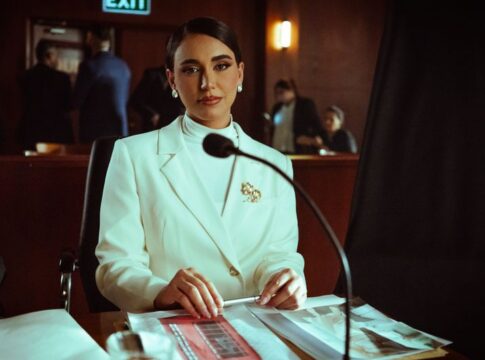
Jury Nullification Explained: When Citizens Override Law
By Newsroom, Opinion Desk — Published August 13, 2026
Table of Contents
- The Historical Roots of Jury Power
- How Nullification Works in Practice
- Contemporary Debates and Perspectives
- The Judicial Response and Limits
- Frequently Asked Questions
In courtrooms across the country, twelve ordinary citizens hold a power that legal scholars debate and judges rarely mention. Jury nullification explained simply: it’s the ability of a jury to acquit a defendant they believe is technically guilty of breaking the law, because they think the law itself is unjust or wrongly applied. This quiet act of civic resistance has shaped American justice since before the nation’s founding, yet remains one of the most controversial aspects of our legal system.
Unlike a typical not-guilty verdict based on insufficient evidence, nullification happens when jurors know full well the defendant broke the law—but refuse to convict anyway. It’s democracy’s emergency brake inside the courtroom, a check on government power that exists nowhere in statute but everywhere in practice. The topic invites fierce debate and discourse among legal experts, civil rights advocates, and political commentators who see it either as a vital safeguard or a dangerous loophole.
The Historical Roots of Jury Power
American juries inherited this power from English common law, where jurors were once punished for returning the “wrong” verdict. That changed in 1670 when a jury refused to convict Quakers for preaching in the street, despite clear evidence they had violated the law. The judge locked the jurors up without food or water. They still refused. An appeals court freed them and established that jurors could not be punished for their verdicts—ever.
Colonial Americans used this principle to resist British rule. Juries routinely acquitted colonists charged with smuggling or sedition, even when guilt was obvious. After independence, Northern juries in the 1850s refused to convict people who helped enslaved individuals escape, despite the Fugitive Slave Act making such assistance a federal crime. These acts of nullification represented political analysis in its most direct form: citizens declaring a law illegitimate through their verdict.
But the history cuts both ways. During Reconstruction and well into the twentieth century, all-white Southern juries used nullification to acquit white defendants who committed violence against Black citizens. These verdicts represented not resistance to tyranny but enforcement of it, showing how jury power reflects the values—and prejudices—of the community from which jurors are drawn.
How Nullification Works in Practice
No law grants juries the right to nullify. Courts insist jurors must follow the law as instructed. Yet two features of the American system make nullification possible. First, juries in criminal cases need not explain their verdicts. Second, the Double Jeopardy Clause prevents retrying someone acquitted by a jury, no matter how irrational the verdict seems.
A nullification verdict typically unfolds like this: prosecutors present evidence proving every element of the crime. The defense may not even dispute the facts. The judge instructs jurors to apply the law to those facts. Then, in deliberation, one or more jurors argue that convicting would be wrong—perhaps the law is unjust, the punishment too harsh, or the prosecution itself an abuse of power. If the jury agrees, they return a not-guilty verdict. The defendant walks free. No appeal is possible.
Judges and prosecutors despise nullification. Most judges refuse to inform jurors they have this power, and some explicitly instruct them they must convict if the evidence proves guilt. Activists have been arrested for handing out nullification pamphlets outside courthouses. Yet the power persists because it’s baked into the structure of jury trials themselves.
Contemporary Debates and Perspectives
Modern arguments about jury nullification often center on drug prosecutions. Guest columnists and op-ed contributors have long debated whether juries should refuse to convict defendants for marijuana possession in states where the public supports legalization but the law lags behind. Some expert commentary frames this as thought leadership on criminal justice reform—letting citizens effectively repeal laws through repeated acquittals.
Civil libertarians see nullification as a check on prosecutorial overreach. They point to cases where mandatory minimum sentences would impose decades in prison for relatively minor offenses. A jury’s refusal to convict becomes an act of mercy the law itself doesn’t permit. This perspective views nullification as essential to civil rights and justice advocacy, particularly when laws disproportionately harm marginalized communities.
Critics counter that nullification undermines the rule of law. If every jury can simply ignore statutes they dislike, laws become suggestions rather than binding rules. This concern isn’t abstract. Nullification has shielded police officers from accountability, allowed environmental violations to go unpunished when juries sympathized with industry, and protected hate crimes when community prejudice ran deep. The same mechanism that freed abolitionists also freed lynch mobs.
Legal scholars offer another concern: nullification gives unelected, unaccountable citizens the power to override democratic decisions. If a law is unjust, the proper remedy is to change it through legislative action, not jury-room rebellion. This point of view emphasizes that twelve people shouldn’t substitute their judgment for that of elected representatives, especially when those twelve may not represent the community’s full diversity.
When Nullification Gets Invoked Today
Certain categories of cases see nullification arguments more than others:
- Drug possession prosecutions, particularly for marijuana in prohibition states
- Tax resistance cases where defendants claim moral objections to government spending
- Regulatory violations involving small businesses or farmers facing technical infractions
- Assisted suicide prosecutions in jurisdictions where aid-in-dying remains illegal
- Cases involving self-defense claims that don’t quite meet legal standards but seem morally justified
- Prosecutions of whistleblowers or activists for civil disobedience
The Judicial Response and Limits
Courts have developed strategies to minimize nullification without eliminating it. During jury selection, attorneys can dismiss prospective jurors who express unwillingness to apply the law. Judges craft instructions emphasizing jurors’ duty to follow the law as given, not as they wish it to be. Some jurisdictions allow judges to question jurors after acquittal if nullification is suspected, though they still can’t overturn the verdict.
The system also contains a counterweight: if nullification favors defendants, judges can nullify in the other direction. A judge can overturn a guilty verdict if evidence was insufficient, though they cannot overturn an acquittal. Prosecutors can decline to bring charges in the first place, effectively nullifying laws they consider unjust without involving a jury at all.
These dynamics create a complex balance. Nullification isn’t a tool citizens can reliably deploy. Most jurors never learn of the power. Those who try to discuss it in deliberations may be reported by other jurors and dismissed. Defense attorneys who explicitly ask for nullification risk mistrials. The power exists, but exercising it requires either collective jury awareness or at least one stubborn holdout willing to hang the jury repeatedly.
Frequently Asked Questions
Can a judge overturn a jury’s nullification verdict?
No. Once a jury acquits a defendant in a criminal case, that verdict is final. The Double Jeopardy Clause of the Fifth Amendment prevents the government from appealing or retrying the case, regardless of whether the jury nullified or simply found insufficient evidence. Judges have no power to second-guess an acquittal, even if they’re certain the jury ignored the law. This finality is precisely what makes nullification possible.
Is it legal for jurors to nullify?
The answer is complicated. Nullification isn’t illegal—jurors cannot be punished or prosecuted for their verdict. But it’s also not a right that courts recognize. Judges typically instruct jurors that they must follow the law, and defense attorneys cannot explicitly ask jurors to nullify without risking sanctions. The practice exists in a gray zone: structurally possible, officially discouraged, legally unpunishable.
How common is jury nullification?
No one knows for certain, because juries don’t explain their verdicts and nullification looks identical to a standard acquittal in the record books. Research suggests it’s rare—most estimates put it at a small fraction of jury trials. However, some case types may see higher rates. Drug cases, particularly marijuana prosecutions in states moving toward legalization, appear more susceptible. The true frequency remains one of the criminal justice system’s unmeasured variables.
Can prosecutors or judges inform juries about nullification?
They can, but they almost never do. Prosecutors have no incentive to tell jurors they can ignore the law. Judges in most jurisdictions actively avoid mentioning nullification, viewing it as an invitation to lawlessness. A few states have considered legislation requiring judges to inform jurors of their power, but these efforts typically fail. The legal establishment generally treats nullification as something that should remain an unspoken possibility rather than an advertised option.
Jury nullification sits at the intersection of law and conscience, democracy and justice, community values and individual rights. It’s a power that can protect the vulnerable or shield the guilty, challenge injustice or perpetuate it. Whether you see it as a crucial safeguard or a dangerous flaw depends largely on whether you trust twelve citizens more than you trust the laws they’re asked to enforce. That tension isn’t likely to resolve soon, which means nullification will remain what it’s always been: the justice system’s most quietly radical feature, operating in the shadows of every criminal courtroom.