
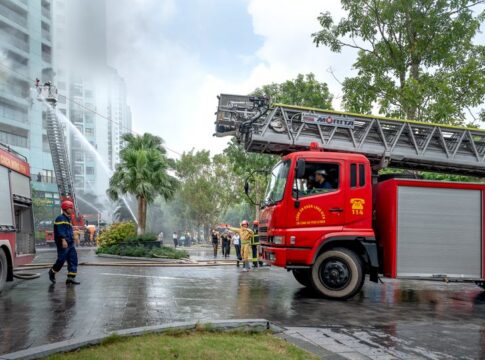
Incident Command Structure: How Responders Coordinate
By Newsroom, Breaking News Desk — Published August 19, 2026
Table of Contents
- The Origins of Unified Command
- How the Structure Actually Works
- Unified Command for Complex Situations
- Information Flow and Public Communication
- Scalability and Flexibility
- Frequently Asked Questions
When a wildfire threatens homes, a chemical spill closes a highway, or a tornado tears through a neighborhood, dozens or even hundreds of responders from different agencies converge on the scene. Police, firefighters, paramedics, public works crews, utility workers, and volunteers all arrive with different skills, equipment, and radio frequencies. Without a clear plan for who’s in charge and how decisions get made, the response can quickly devolve into chaos. That’s where the incident command structure comes in—a standardized system that allows responders from multiple organizations to work together under a unified command, even when they’ve never trained together before.
The framework has become the backbone of emergency response across the United States. It’s the reason responders can coordinate effectively during developing situations, providing real-time coverage of unfolding events to the public while managing resources behind the scenes. Understanding how this system works helps citizens make sense of official statements, emergency services deployment, and the often-confusing alphabet soup of titles and roles that emerge during a crisis.
The Origins of Unified Command
The incident command structure didn’t emerge from a think tank or federal mandate. It was born from failure. In the early 1970s, a series of catastrophic wildfires in Southern California exposed fatal flaws in how agencies responded to large-scale emergencies. Responders couldn’t communicate across different radio systems. No one knew who was ultimately in charge. Resources were wasted or duplicated. People died.
Fire agencies in California developed the first iteration of what would become the Incident Command System, or ICS. The core insight was simple: create a common organizational structure that any agency could plug into, regardless of the type of emergency. A small-town fire chief and a federal disaster coordinator could both understand their roles and relationships within the same framework.
After the September 11 attacks and Hurricane Katrina revealed continued coordination problems, the federal government mandated ICS training for all emergency responders. Today, whether you’re dealing with a hazmat spill in rural Vermont or a mass casualty incident in downtown Los Angeles, the basic command structure looks the same.
How the Structure Actually Works
At the top sits the Incident Commander, a single person with ultimate authority over the response. This might be a fire chief, a police captain, or during major disasters, a senior emergency management official. The commander doesn’t micromanage every decision—that would be impossible—but sets overall strategy and priorities.
Below the commander, the structure branches into four main sections, each handling a distinct function:
- Operations: The people actually fighting the fire, rescuing victims, or clearing debris. This is where the physical response happens.
- Planning: Responsible for collecting information, tracking resources, and thinking ahead. As a situation develops, planning staff compile incident reports and prepare situation updates for the next operational period.
- Logistics: Handles everything responders need to do their jobs—equipment, food, fuel, communications gear, transportation. During a multi-day event, logistics can become as complex as the emergency itself.
- Finance/Administration: Tracks costs, processes timesheets, handles contracts with vendors. When a city brings in private contractors to clear storm debris or puts firefighters on overtime for a week straight, someone has to manage the paperwork.
For smaller incidents, one person might wear multiple hats. A battalion chief managing a house fire acts as incident commander, operations chief, and everything else. As the situation grows, the structure expands. Each section can develop its own branches and units, growing as complex as needed while maintaining the same basic organizational chart everyone has trained on.
Unified Command for Complex Situations
Things get more interesting when an emergency crosses jurisdictional or functional boundaries. A tanker truck carrying chemicals crashes on a highway. Fire departments need to contain the spill and rescue the driver. Police must manage traffic and investigate the crash. An environmental agency has authority over hazardous materials cleanup. The highway department needs to repair damage and reopen the road. Who’s in charge?
The answer is everyone and no one. Unified command brings together senior representatives from each major agency into a single command team. They share authority and make decisions together, but each retains control over their own resources and responsibilities. The fire chief still runs fire operations. The police captain still manages law enforcement aspects. But they coordinate strategy, share information constantly, and speak with one voice to the public and media.
This approach prevents turf battles and ensures all perspectives inform decision-making. It also means official statements and press conferences reflect a genuinely coordinated response rather than competing narratives from different agencies. When you hear “the unified command reports,” you’re hearing from that coordinated leadership team.
Information Flow and Public Communication
A dedicated Public Information Officer—sometimes an entire team during major incidents—serves as the bridge between emergency responders and the public. This person doesn’t just relay whatever information comes to mind. They work within the command structure to gather verified information, coordinate messages with all agencies involved, and ensure the public receives accurate, timely updates.
During rapidly developing situations, this role becomes crucial. Social media amplifies rumors and misinformation. Eyewitness accounts and firsthand reports flood in from multiple sources, often contradictory. The PIO’s job is to provide latest developments based on what responders actually know, clearly distinguishing confirmed information from reports still being verified.
This is why official updates sometimes lag behind what citizens are seeing or posting online. The command structure prioritizes accuracy over speed. An urgent alert goes out immediately when public safety demands it—an evacuation order, a shelter-in-place directive. But detailed incident reports wait until information has been verified through proper channels.
Scalability and Flexibility
The genius of the system lies in its ability to scale. The same structure manages a car accident with injuries and a hurricane affecting millions. The same principles apply whether the incident lasts two hours or two months.
During extended operations, the structure typically works in operational periods—often twelve or twenty-four hours. At the end of each period, the planning section produces a detailed action plan for the next shift. Commanders and section chiefs may rotate to prevent fatigue. Resources get reassigned based on changing priorities. Throughout, the organizational framework remains constant even as individuals move in and out of roles.
This flexibility extends to mutual aid situations, where responders from outside the affected area come to help. A firefighter from another state can arrive at a major wildfire and immediately understand where they fit in the organization, who they report to, and how to request resources or report problems. They’ve trained on the same system back home.
Frequently Asked Questions
Who decides who becomes the incident commander?
Generally, the first senior responder on scene assumes command initially, then transfers it as more appropriate personnel arrive. For a structure fire, the first-arriving fire officer takes command, possibly transferring to a battalion chief later. The decision often follows pre-established protocols based on incident type, jurisdiction, and agency responsibility. During unified command situations, agencies jointly select commanders or each agency designates a representative to the unified command team.
How do responders from different agencies communicate if they have different radio systems?
Interoperability remains an ongoing challenge despite decades of improvement. Solutions include dedicated interoperable radio channels that multiple agencies can access, liaison officers who physically move between command posts relaying information, and increasingly, shared digital platforms. The communications unit within the logistics section specifically tackles this problem, establishing and maintaining communication links between all responding agencies. When technology fails, responders fall back on face-to-face coordination and runners carrying messages—old-fashioned but reliable.
Does incident command structure apply to non-emergency situations?
Absolutely. The same framework manages planned events like major concerts, sporting events, or political rallies where large crowds and complex coordination are involved. Event organizers adopt ICS principles to coordinate security, medical services, traffic management, and vendor operations. Some businesses use adapted versions for managing complex projects or business continuity situations. The structure works anywhere you need clear authority, coordinated action, and systematic resource management.
What happens when state or federal agencies get involved in a local emergency?
The incident command structure accommodates outside agencies through several mechanisms. State or federal responders can integrate into existing sections based on their expertise—federal hazmat specialists joining the operations section, for instance. Alternatively, particularly during major disasters, a unified command expands to include state and federal representatives alongside local officials. The key principle holds: everyone works within the same organizational framework. A federal official might bring more resources or specialized expertise, but they coordinate through the established structure rather than creating a parallel command system.
The next time you watch responders manage an emergency, you’re seeing more than people reacting to crisis. You’re watching a carefully designed system that turns potential chaos into coordinated action. That system isn’t perfect—communication still breaks down, resources get misallocated, decisions prove wrong in hindsight. But it gives responders from different agencies, different backgrounds, and different specialties a common language and structure for working together when it matters most. For citizens trying to understand what’s happening during a crisis, knowing how the command structure works helps make sense of who’s doing what, why information flows the way it does, and how dozens of moving parts come together in response to urgent need.