
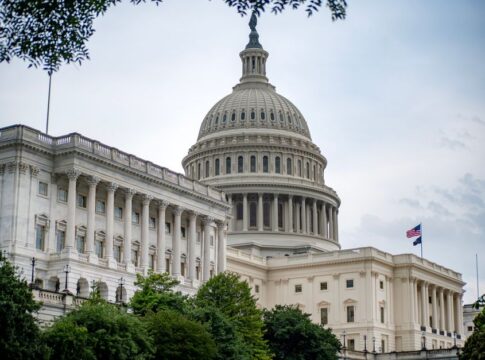
Photo: Ramaz Bluashvili / Pexels
By New Way News Newsroom, National Desk — Published October 29, 2026
Table of Contents
- Key Takeaways
- The Background & Context
- Why This Matters
- Reactions & Analysis
- What Happens Next
- Frequently Asked Questions
A wave of federal litigation is testing the boundaries of election authority in America. Across the country, courts have been forced to weigh in on an unprecedented question: Can the federal government seize control of state-run elections? What courts said Trump administration lawyers have argued in dozens of cases now provides a stark picture of constitutional conflict, with 34 separate judicial rulings addressing attempts to federalize election processes that have historically been managed by states and localities.
The collision between federal ambition and state sovereignty has landed in courtrooms from Alaska to the East Coast. Legal experts are tracking this national news story closely, as the outcomes could reshape American democracy’s foundational structure. At stake is nothing less than who decides how Americans vote, where they vote, and who counts those votes.
The Supreme Court may ultimately need to resolve these conflicts, though lower federal courts have already spoken with remarkable consistency. Election defense has become a rallying cry for state officials across the political spectrum, many of whom view federal intervention as an existential threat to their constitutional authority.
Key Takeaways
- Thirty-four separate court rulings have addressed Trump administration efforts to assert federal control over state election processes
- The litigation spans multiple states and jurisdictions, with Alaska’s Senate race emerging as a particularly complex battleground
- Legal experts have weighed in on the constitutional questions raised by federal attempts to intervene in state-managed elections
- The cases test fundamental questions about federalism and the division of powers between state and national government
- Courts have been remarkably consistent in their analysis, though the full legal landscape continues to evolve
- The outcome could permanently alter how elections are administered in the United States
The Background & Context
American elections have always been a state responsibility. The Constitution grants states broad authority to manage their own electoral processes, from setting polling locations to certifying results. This decentralized system was intentional, designed by the Framers to prevent any single entity from controlling the democratic process.
That traditional arrangement now faces its most serious challenge in modern history. The Trump administration has pursued an aggressive legal strategy aimed at bringing state elections under federal oversight. The justification varies from case to case, but the common thread is clear: federal lawyers argue that national interests require national control.
The Alaska Senate litigation illustrates the complexity. Two Dan Sullivans have become entangled in a dispute that highlights how federal intervention can create confusion rather than clarity. What began as a straightforward state election matter has mushroomed into a federal case that legal scholars are studying for its broader implications.
Other states have faced similar pressure. From voter registration databases to ballot counting procedures, federal attorneys have sought to insert themselves into processes that states have managed for centuries. The legal arguments rest on novel interpretations of federal authority, pushing boundaries that courts have traditionally respected.
The sheer volume of litigation is itself noteworthy. Thirty-four separate court decisions represent an extraordinary level of judicial activity on a single theme. Courts don’t typically need to repeat themselves this often unless something unusual is happening. The pattern suggests a coordinated federal strategy meeting coordinated judicial resistance.
Why This Matters
Every American voter has a stake in this fight. The question isn’t abstract or technical. It’s about who controls the most fundamental act of citizenship.
If federal authorities can dictate how states run elections, the entire character of American democracy shifts. Decisions about polling places, voting hours, and ballot design would move from state capitals to Washington. Local officials who currently answer to their communities would instead answer to federal bureaucrats. The connection between voters and election administrators would be severed.
State officials warn of practical chaos. Elections require local knowledge, from understanding neighborhood demographics to coordinating with county clerks. A one-size-fits-all federal approach could create bottlenecks, confusion, and errors. Rural Alaska faces different challenges than urban Connecticut. Federal mandates can’t easily accommodate that diversity.
There’s also the question of accountability. When something goes wrong with an election, voters currently know whom to blame: their state officials. Federal control would diffuse responsibility, making it harder for citizens to hold anyone accountable. The buck would stop nowhere in particular.
Legal experts point to deeper constitutional concerns. The Tenth Amendment reserves powers to the states unless specifically granted to the federal government. Election administration falls squarely in that reserved category. Allowing federal takeover would hollow out state sovereignty, potentially opening the door to federal control of other traditionally state functions.
The political implications cut across party lines. Democrats and Republicans both govern states. Both have reasons to resist federal encroachment. A Democratic administration might seek federal control today, but a Republican administration could wield that same power tomorrow. Once surrendered, state authority is difficult to reclaim.
Reactions & Analysis
The thirty-four court rulings paint a remarkably consistent picture. Judges across the ideological spectrum have expressed skepticism about federal claims to election authority. The legal reasoning varies, but the bottom line remains constant: states retain primary control.
Legal experts analyzing the Trump administration’s strategy have noted its unprecedented nature. Never before has a federal government pursued election control so aggressively across so many jurisdictions simultaneously. The approach represents a fundamental departure from historical norms.
Constitutional scholars have raised concerns about the long-term implications. Even if current litigation fails, the legal theories advanced could resurface in future cases. The arguments are now in the record, available for citation and refinement. Future administrations might build on this foundation, gradually eroding state authority through incremental victories.
State attorneys general have formed unusual coalitions to resist federal overreach. Red states and blue states have filed joint briefs, united by their shared interest in preserving state sovereignty. This bipartisan cooperation is rare in today’s polarized environment, underscoring how seriously states take the threat.
Election administrators on the ground report confusion and concern. Federal lawsuits create uncertainty during periods when certainty is essential. Election officials need to know the rules months in advance to prepare properly. Last-minute federal interventions can throw carefully laid plans into disarray.
Voters themselves remain largely unaware of the stakes. Polling suggests most Americans don’t realize their state’s control over elections is being contested. The litigation happens in courtrooms, far from public view. Only when federal changes actually take effect would most citizens notice, and by then it might be too late to reverse course.
What Happens Next
The legal battle is far from over. While thirty-four courts have spoken, more cases are in the pipeline. Each new lawsuit tests slightly different theories, probing for weaknesses in the judicial consensus.
Appeals will continue climbing through the federal court system. Circuit courts will review district court decisions. Eventually, the Supreme Court may need to provide definitive guidance. Until then, uncertainty persists.
State legislatures are considering defensive measures. Some are passing laws explicitly asserting state control over elections, creating statutory barriers to federal intervention. Others are strengthening state constitutional provisions. These efforts aim to build multiple layers of protection.
The 2024 election cycle will test these systems under fire. If federal authorities push for real-time intervention during vote counting, courts may face emergency petitions requiring immediate decisions. The pressure will be intense, the stakes enormous.
Congress could theoretically resolve the conflict through legislation. Clear statutory language defining the boundaries of federal and state authority would reduce litigation. But in today’s divided Congress, such consensus seems unlikely. The courts will probably remain the primary battleground.
International observers are watching closely. America’s federal system has long been a model for other democracies. How this conflict resolves could influence constitutional design worldwide. A federal takeover of elections would represent a dramatic centralization, contrary to the decentralizing trend in many democracies.
Frequently Asked Questions
Why are there 34 separate court cases about federal election control?
The Trump administration has pursued litigation across multiple states and jurisdictions, each raising similar questions about federal authority over state-run elections. Each case addresses specific circumstances in different states, requiring separate judicial rulings. The volume reflects a coordinated federal strategy to test election control theories in various legal contexts.
What does the Alaska Senate litigation involving two Dan Sullivans have to do with federal election control?
The Alaska case has become emblematic of how federal intervention in state elections can create unexpected complications. While details of the specific dispute vary, it represents one example of federal authorities attempting to insert themselves into what would traditionally be a state-managed electoral matter, highlighting the practical confusion that can result from divided authority.
Have any courts ruled in favor of federal control over state elections?
The pattern across the 34 rulings shows courts have been remarkably consistent in maintaining state authority over elections. While specific legal reasoning varies by jurisdiction, the judicial consensus has generally supported traditional state control, though federal authorities continue to advance novel legal theories in ongoing litigation.
Could the Supreme Court ultimately allow federal takeover of elections?
The Supreme Court could theoretically rule in favor of expanded federal authority, though it would require overturning long-standing precedents about state sovereignty and the Tenth Amendment. Such a decision would represent a dramatic shift in constitutional interpretation. Until the Court directly addresses these questions, the outcome remains uncertain, though lower court consistency suggests strong judicial skepticism toward federal claims.
The courtroom battles over election control will define American democracy for generations. Thirty-four judges have now weighed in, but the final chapter remains unwritten. Citizens, officials, and legal experts all wait to see whether the federal system that has governed American elections for more than two centuries will survive this unprecedented challenge intact.