
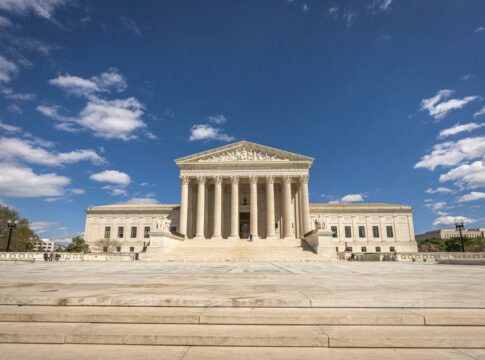
Supreme Court Term Limits: The Case For and Against
Supreme Court Term Limits: The Case For and Against
By Newsroom, Breaking News Desk — Published August 2, 2026
Table of Contents
- Why Supreme Court Term Limits Are Now Part of Current Events Headlines
- The Case for Implementing Term Limits
- The Case Against Changing the Current System
- The Practical and Political Obstacles
- What Other Democracies Do
- Frequently Asked Questions
The debate over supreme court term limits has moved from academic journals to the center of American political conversation. For more than two centuries, justices have served lifetime appointments, a tradition enshrined in the Constitution’s promise of tenure “during good Behaviour.” Yet as justices now routinely serve three decades or more, reformers argue the system has become a democratic liability. The question isn’t merely academic. It touches the legitimacy of one of government’s three coequal branches and affects how major news stories about constitutional rights, voting access, and regulatory authority get decided for generations.
Understanding the arguments requires looking at what’s changed, what’s at stake, and whether the cure might be worse than the disease.
Why Supreme Court Term Limits Are Now Part of Current Events Headlines
Justices didn’t always serve so long. Through much of American history, turnover was frequent. Health care was primitive. Retirement benefits were modest. Justices often stepped down in their sixties. The average tenure hovered around fifteen years.
That changed dramatically in recent decades. Modern medicine extends careers. Generous pensions reduce financial pressure to leave. Justices now routinely serve twenty-five to thirty-five years, with some approaching four decades on the bench. The result: fewer vacancies, higher stakes for each nomination, and appointment processes that feel less like routine government business and more like national political crises.
The timing of departures has become almost random, giving some presidents multiple appointments and others none. This randomness feeds a perception that constitutional interpretation hinges on actuarial luck rather than democratic choice. When a single vacancy can shift doctrine on abortion, gun rights, or environmental regulation for a generation, the stakes feel existential to partisans on both sides.
The Case for Implementing Term Limits
Proponents make several arguments, starting with predictability. Fixed terms would regularize appointments, ensuring each president gets the same number of nominees per term. This would reduce the incentive to treat confirmations as winner-take-all battles and might lower the temperature around judicial selection.
Democracy is another pillar of the reform argument. Lifetime tenure made sense when justices served shorter periods, but three-decade terms mean a president’s choices echo long after voters have rendered judgment on that administration’s legacy. Advocates point out that no other advanced democracy grants judges lifetime appointments. Most set mandatory retirement ages or fixed terms, often lengthy ones, but not unlimited tenure.
The age factor matters too. Critics note that justices in their eighties sometimes struggle with the workload, yet the lack of a graceful exit creates awkward situations where health becomes a political football. Term limits would provide a dignified transition without forcing justices to time retirements around election cycles.
There’s also a judicial philosophy argument. Supporters contend that fresh perspectives prevent the Court from becoming too disconnected from contemporary society. Law must respond to changing conditions, and justices who came of age in vastly different eras may struggle to apply constitutional principles to technologies and social arrangements that didn’t exist when they were appointed.
Key Benefits Reformers Cite
- Regular, predictable appointment schedule reduces politicization
- Each presidential term gets equal influence over the judiciary
- Shorter tenures mean faster correction of jurisprudential mistakes
- Reduced incentive for presidents to appoint very young justices
- Alignment with practices in other democracies
- Natural retirement mechanism avoids health-related controversies
The Case Against Changing the Current System
Constitutional traditionalists start with text. Article III states that judges “shall hold their Offices during good Behaviour,” language the Framers understood as lifetime tenure. Changing this through statute rather than constitutional amendment, they argue, violates the document’s plain meaning. Even if Congress structured term limits as a rotation to senior status rather than removal from office, critics see this as an end-run around constitutional requirements.
Judicial independence provides another powerful argument. Lifetime tenure insulates justices from political pressure. Once confirmed, they answer to no one, free to rule according to law and conscience without fear of losing their positions. This independence is precisely what the Framers intended. Regular turnover, opponents worry, would make justices more responsive to the political branches and less willing to check governmental overreach.
The remedy might create new problems. Fixed terms could intensify rather than reduce confirmation battles, as each vacancy would arrive on a predictable schedule, giving interest groups years to prepare campaigns. Presidential elections might become even more focused on Court composition, with candidates explicitly promising to use their guaranteed appointments to shift doctrine in particular directions.
There’s also the question of unintended consequences. Term limits might encourage strategic behavior, with justices timing controversial opinions or with presidents coordinating with allied justices about transition timing. The current system, for all its flaws, at least prevents such gamesmanship.
Some scholars worry about the quality of jurisprudence. Justices often do their best work after years on the bench, once they’ve mastered the institution and developed judicial wisdom. Forcing retirement at a fixed point might deprive the Court of its most experienced members precisely when their contributions matter most.
The Practical and Political Obstacles
Implementation presents thorny questions. Most proposals suggest eighteen-year terms, with appointments every two years, giving each presidential term two nominations. But what happens to current justices? Grandfathering them in means decades before the new system fully operates. Applying limits retroactively raises constitutional questions and practical chaos.
The constitutional path requires two-thirds of both houses of Congress and ratification by three-fourths of states, a threshold that seems impossible in the current political climate. The statutory path faces immediate legal challenges and a Supreme Court that would essentially rule on its own authority.
Public opinion shows support for reform in polls, but the issue rarely ranks as a top priority for voters facing more immediate economic and social concerns. Without sustained public pressure, Congress has little incentive to tackle such a contentious change.
What Other Democracies Do
Comparative context matters. Germany’s Constitutional Court judges serve twelve-year terms. Canadian Supreme Court justices must retire at seventy-five. France sets a nine-year non-renewable term. Japan mandates retirement at seventy. These systems function well, suggesting lifetime tenure isn’t necessary for judicial independence.
Yet these countries also have parliamentary systems, different constitutional traditions, and judicial review that operates differently than American-style constitutional supremacy. What works elsewhere may not translate directly.
Frequently Asked Questions
Would term limits require a constitutional amendment?
This remains hotly debated. Most constitutional scholars believe lifetime tenure is constitutionally required, making an amendment necessary. Some reformers argue Congress could create term limits by moving justices to senior status rather than removing them from office entirely, but this approach would face immediate legal challenge and likely end up before the very Court whose structure it aims to change.
How long would term limits be?
The most common proposal suggests eighteen-year terms, with a new justice appointed every two years. This would give each four-year presidential term exactly two appointments and create a nine-justice Court where the longest-serving member is eighteen years into the role. Other proposals range from twelve to twenty years, each with different implications for turnover and institutional memory.
What would happen to current justices under term limits?
Most proposals would grandfather in sitting justices, allowing them to complete their lifetime appointments while new limits apply only to future nominees. This means the transition could take decades. Alternative approaches that apply limits retroactively face serious constitutional problems and would likely be struck down, creating a paradox where the Court rules on its own restructuring.
Do term limits really reduce politicization of the courts?
The evidence is mixed. Predictable vacancies might lower stakes by eliminating the randomness of current appointments, but they could also intensify battles by giving both parties years to prepare for scheduled nomination fights. Presidential campaigns might focus even more heavily on judicial appointments if candidates could promise specific numbers of nominees. The politicization problem may be less about tenure length and more about the Court’s outsized role in settling contested policy questions.
The term limits debate ultimately asks what we want from the judiciary. A Court more responsive to contemporary values, or one insulated from passing political winds? Predictability and fairness in appointments, or independence through permanence? These aren’t easy trade-offs, and reasonable people reach different conclusions. What seems certain is that as justices continue serving longer and confirmation battles grow more intense, the conversation about reform will only get louder. Whether that talk turns into action depends on forces well beyond any single news cycle.