
A drone strike on the Arab world’s only operational nuclear power plant has left investigators scrambling for answers while the world watches to see if the Gulf will ignite into open war.
When Drones Cross the Nuclear Threshold
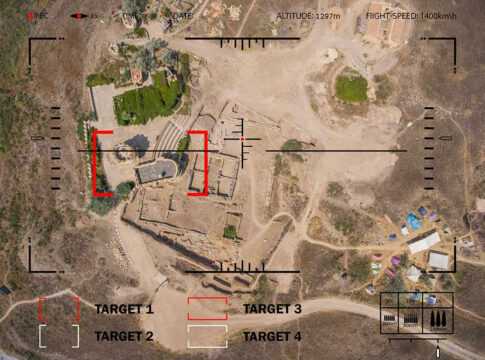
The Sunday morning attack on Barakah arrived from the west, a direction that points across the Saudi border. UAE air defenses tracked three unmanned aerial vehicles and destroyed two. The third slipped through and struck an electrical generator just inside the plant’s outer security perimeter, igniting a fire that operators quickly extinguished. Korea Electric Power Corporation, which built and operates the 20-billion-dollar complex, moved swiftly to reassure the world that the reactors themselves remained untouched, radiation levels stayed normal, and no one was hurt. Yet the very fact that a hostile drone penetrated defenses at a nuclear site sent shockwaves through capitals from Washington to Riyadh.
What makes Barakah a crown jewel also makes it a target. The facility supplies roughly a quarter of the UAE’s electricity from four South Korean-designed APR-1400 reactors, the first of which went commercial in 2021. Abu Dhabi framed its nuclear program as transparent and civilian, complete with IAEA oversight and a legal ban on enrichment or reprocessing, deliberately setting itself apart from Iran’s opaque atomic ambitions. That contrast now underscores the bitter irony: a state that renounced nuclear weapons finds its peaceful reactors under fire, while suspicion falls on adversaries who have weaponized drone swarms across the region.
The Phantom Attackers and Their Flight Path
No one has stepped forward to claim credit, which itself tells a story. In the hours after the strike, the UAE Ministry of Defence issued a terse statement confirming drones had come from the “western border direction” but named no state or militia. Presidential adviser Anwar Gargash spoke in terms elliptical enough to hint at Iran-linked proxies without triggering an immediate escalation. Saudi Arabia added a crucial data point by disclosing it had intercepted three drones entering its airspace from Iraq around the same time, sketching a likely route: Iraq to Saudi Arabia to the UAE. The geography points to Iran-backed Iraqi militias such as Kataib Hezbollah or other “Islamic Resistance” factions, groups with a demonstrated appetite for long-range drone strikes and a motive to punish Abu Dhabi for its American ties and normalization with Israel.
Yemen’s Houthis also fit the profile. Ansarallah has hit Saudi and Emirati infrastructure before with drones and missiles; Houthi media even claimed in 2017 to have targeted Barakah with a missile, though no evidence of that strike ever surfaced. Whether the perpetrators hail from Iraq, Yemen, or another Iranian proxy network, the attack advertises a new level of risk: hostile actors are willing and able to strike nuclear facilities across international borders, using cheap, proliferated technology that traditional air defenses struggle to stop every time.
Diplomatic Tightropes and Regional Solidarity
Within twenty-four hours, UAE Foreign Minister Sheikh Abdullah bin Zayed had worked the phones, speaking with counterparts in Qatar, Jordan, Saudi Arabia, Kuwait, Morocco, Egypt, and Bahrain. Each conversation yielded public condemnations and affirmations of the UAE’s “full and legitimate right to respond.” IAEA Director General Rafael Grossi weighed in emphatically, declaring that nuclear installations must never become targets in any conflict. His statement carried extra weight after the world watched Russia and Ukraine trade accusations over shelling at the Zaporizhzhia plant; Barakah now joins that grim roster of atomic sites touched by war.
Yet Abu Dhabi has calibrated its response with care. The UAE has invested years in de-escalation with Tehran since 2022, opening back-channels and dialing down confrontation even as it hosts U.S. forces and participates in American-aligned security arrangements. Explicitly blaming Iran could slam those channels shut and invite retaliation that neither side can afford. So the investigation proceeds, evidence is gathered, and the language remains just vague enough to leave diplomatic room. It is a high-wire act: signal strength and resolve to deter future strikes, reassure a nervous public and international partners that the plant is secure, and avoid handing Iran’s hardliners a pretext for wider conflict.
What This Means for Gulf Security and Nuclear Norms
The Barakah strike rewrites threat assessments across the Gulf. Analysts have long warned that sprawling energy infrastructure, oil refineries, desalination plants, and nuclear reactors make lucrative but difficult-to-defend targets for cheap drones. The 2019 Abqaiq and Khurais attacks on Saudi Aramco proved the point for hydrocarbons; Barakah proves it for nuclear power. Modern air-defense systems can intercept many threats, but saturation tactics, decoys, and sheer numbers create gaps. The fact that one drone got through at Barakah, despite layers of detection and interception, will prompt urgent reviews of radar coverage, intercept protocols, and layered defense architectures at every critical facility in the region.
Beyond hardware, the incident challenges international norms. The IAEA and the broader non-proliferation community have worked for decades to establish that civilian nuclear sites sit outside the bounds of legitimate military targeting. Grossi’s swift condemnation aimed to reinforce that redline. But redlines only hold if violators face consequences, and the anonymity of drone warfare makes attribution and accountability maddeningly difficult. If hostile actors calculate they can strike nuclear plants with impunity, hidden behind proxies and plausible deniability, the norm erodes and the next attack becomes more likely.
Unanswered Questions and the Investigation Ahead
The UAE’s investigation continues, piecing together radar tracks, debris from the intercepted drones, and intelligence sharing with Saudi and American partners. Forensic analysis of the wreckage may reveal signatures, Iranian components or design features seen in previous militia strikes, that point investigators toward a specific group. Saudi reports of drones transiting from Iraq narrow the search, but proof sufficient to justify public attribution or kinetic retaliation remains elusive. Until Abu Dhabi names names or presents evidence, speculation will fill the void and the mystery will deepen.
Meanwhile, plant operator KEPCO and UAE nuclear regulators face their own reckonings. Safety systems worked as designed; the fire was contained, reactors stayed offline from the incident, and radiation never spiked. Yet the breach of the outer perimeter will demand answers about sensor placement, response times, and whether additional physical or electronic countermeasures can close the gap that one drone exploited. International partners and investors will scrutinize those answers, because the credibility of the entire Gulf nuclear project rests on the promise that these facilities can operate safely even in a conflict zone.
The clock now ticks on two parallel tracks: the investigative hunt for perpetrators and the strategic calculus of response. Abu Dhabi must decide whether to strike back overtly, ramp up covert pressure on militia networks, or absorb the blow in exchange for maintaining fragile détente with Tehran. Each option carries risk. Retaliation could spiral into tit-for-tat strikes that endanger more infrastructure and lives; inaction could invite further attacks by signaling weakness. The UAE’s careful language and diplomatic outreach suggest leaders are buying time, hoping that evidence, regional solidarity, and behind-the-scenes pressure will deter the next drone swarm without lighting the fuse on a wider war. Whether that strategy succeeds will shape not only the security of one nuclear plant, but the stability of the entire Gulf for years to come.