
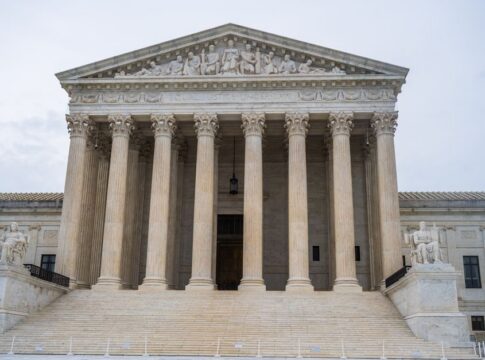
Photo: Guohua Song / Pexels
By New Way News Newsroom, National Desk — Published November 14, 2026
Table of Contents
- Key Takeaways
- The Background & Context
- Why This Matters
- Reactions & Analysis
- What Happens Next
- Frequently Asked Questions
Justice Samuel Alito has issued a stark warning about the Supreme Court‘s institutional vulnerability, suggesting the nation’s highest court finds itself trapped between executive power and congressional control over its basic operations. The conservative justice’s remarks come at a moment of heightened political tension, arriving just days after Democrats secured control of Congress. Alito says Supreme Court justices face a precarious position: dependent on Congress for funding while simultaneously charged with checking both legislative and executive overreach.
The comments raise fundamental questions about judicial independence in an era of intense partisan division. Can the court maintain its constitutional role when lawmakers control whether to keep the lights on?
According to reports, Alito’s warning centers on Congress’s power of the purse—the legislative branch’s constitutional authority to fund or defund government operations, including the federal judiciary. This power, while long-standing, takes on new significance as political battles over court composition, ethics rules, and controversial decisions intensify.
Key Takeaways
- Justice Samuel Alito warned that Congress possesses the power to “turn off the lights” at the Supreme Court, highlighting the judiciary’s financial dependence on the legislative branch
- The remarks surfaced days after Democrats won control of Congress, a timing that underscores the political context surrounding judicial independence debates
- Alito framed the Supreme Court as caught between presidential authority and congressional funding power, illustrating the delicate constitutional balance among the three branches
- The warning reflects broader concerns about institutional checks and balances during a period of significant political polarization
- The comments bring attention to often-overlooked aspects of how the federal government operates, particularly the judiciary’s reliance on legislative appropriations
The Background & Context
The Supreme Court occupies a unique position in American government. Article III of the Constitution establishes the judicial branch as coequal with Congress and the presidency, tasked with interpreting law and checking the other branches when they exceed constitutional bounds. Yet this independence exists within a framework of interdependence.
Congress controls the federal budget. Every year, lawmakers must appropriate funds for judicial operations—salaries, building maintenance, security, technology, staff. While the Constitution protects judicial salaries from reduction during a justice’s tenure, it says nothing about funding for the lights, heat, or personnel that make the court function.
This financial reality has always existed. What makes Alito’s warning notable is the current political climate. Recent years have seen unprecedented public battles over Supreme Court nominations, ethics controversies involving justices’ travel and financial disclosures, and deeply divisive rulings on abortion, affirmative action, and presidential power. Progressive lawmakers have floated proposals ranging from court expansion to mandatory ethics codes with enforcement mechanisms.
The court’s conservative majority, secured through Republican appointments, has issued rulings that Democrats view as threatening fundamental rights and decades of precedent. Meanwhile, conservatives argue the court is simply returning to proper constitutional interpretation after years of judicial activism.
Into this charged environment, Alito’s remarks about congressional power land with particular force. They suggest a justice acutely aware of his institution’s vulnerability—not to legal arguments or public opinion, but to the basic mechanics of government funding.
Why This Matters
For ordinary Americans, the concept of judicial independence might seem abstract. It isn’t. The courts serve as the final arbiter when citizens challenge government actions, when states dispute federal authority, when individuals assert constitutional rights against majority rule.
A judiciary financially beholden to Congress faces obvious conflicts. What happens when the court must rule on the constitutionality of a law passed by the same Congress that controls its budget? The Framers understood this tension, which is why they guaranteed judicial salaries. But they lived in an era of far simpler government operations.
Today’s Supreme Court requires sophisticated security in response to threats against justices. It needs modern technology to manage an enormous caseload. It employs law clerks, administrative staff, police officers, and maintenance workers. All of this costs money that Congress must authorize.
Alito’s warning also highlights the court’s position between two political branches. The president nominates justices and holds executive power the court must sometimes constrain. Congress writes laws the court must sometimes invalidate. Both branches have tools to pressure the judiciary—the president through appointments and enforcement decisions, Congress through funding and jurisdiction.
This triangular relationship defines American government. When it functions properly, each branch checks the others’ excesses. When it breaks down, the results can threaten constitutional governance itself.
Reactions & Analysis
The timing of Alito’s remarks has not gone unnoticed. Coming days after Democrats secured congressional control, the warning reads as both constitutional commentary and political signaling. It reminds the new majority that while they may pursue court reform, the judiciary retains its constitutional role—and that threats to institutional independence cut both ways.
Democrats have grown increasingly frustrated with the conservative court majority. They point to the reversal of Roe v. Wade, the weakening of federal regulatory authority, and decisions they view as favoring corporate interests over workers and consumers. Some progressive lawmakers have called for expanding the court’s size, imposing term limits, or establishing binding ethics rules.
Republicans, meanwhile, celebrate what they see as a restoration of constitutional originalism and textualism. They argue the court is correcting decades of liberal overreach and returning power to elected representatives and state governments.
Alito himself has become a lightning rod in these debates. His opinions often provide the intellectual framework for conservative rulings, and his public comments occasionally venture into territory other justices avoid. This latest warning fits that pattern—a senior justice willing to speak bluntly about institutional concerns.
Legal scholars note that while Congress has never actually defunded the Supreme Court, the theoretical power exists. The Constitution requires a Supreme Court but says little about how it must be funded. Historical precedent and political norms have protected judicial budgets, but norms have weakened across American government in recent years.
What Happens Next
The immediate future likely holds continued tension rather than dramatic confrontation. Congress is unlikely to literally turn off the Supreme Court’s lights, but the power dynamic Alito describes will shape upcoming battles over judicial ethics legislation, court security funding, and potential reform proposals.
Democrats now control the legislative agenda and appropriations process. They can hold hearings on judicial ethics, investigate court operations, and attach conditions to funding bills. Republicans, whether in the minority or through Senate filibuster rules, can block major changes. The result may be gridlock rather than revolution.
The court itself faces a busy term with high-stakes cases on executive power, administrative law, and individual rights. Each decision will occur against the backdrop of these institutional tensions. Justices must balance their interpretive philosophy against awareness of their institution’s political vulnerability.
Longer term, Alito’s warning may prove prescient. As political polarization deepens and norms erode, the informal protections that have shielded judicial independence may weaken. Future Congresses, facing a court that blocks their agenda, might prove less restrained than their predecessors.
The alternative is a renewed commitment to institutional boundaries and mutual restraint. That requires both political branches to respect judicial independence even when they dislike specific rulings, and it requires the judiciary to exercise its power with awareness of its institutional limits.
Frequently Asked Questions
Can Congress actually defund the Supreme Court?
Constitutionally, Congress controls federal appropriations, including funding for the judiciary. While the Constitution protects judicial salaries from reduction, it does not explicitly guarantee funding for court operations, staff, or facilities. However, no Congress has ever attempted to defund the Supreme Court, and doing so would trigger a constitutional crisis. The practical and political barriers to such action remain formidable, though the theoretical power exists.
Why did Alito make these comments now?
The timing, coming days after Democrats won congressional control, suggests Alito is addressing current political dynamics. With progressive lawmakers discussing court reform proposals, the justice appears to be reminding them of the delicate constitutional balance between branches. His comments may serve as both a warning about threats to judicial independence and a statement about the court’s vulnerability to political pressure from either party.
What does this mean for separation of powers?
Alito’s warning highlights the complex interdependence among government branches. While the Constitution establishes three coequal branches, each depends on the others in practical ways. The judiciary needs congressional funding and executive enforcement of its decisions. This creates tension with the court’s role as a check on both branches. The system works when all parties respect institutional boundaries, but breaks down when political conflict overrides constitutional norms.
How does this affect ordinary Americans?
An independent judiciary protects individual rights against government overreach and majority rule. When courts face political pressure or financial threats, their ability to serve this function weakens. For citizens challenging unconstitutional laws, asserting civil rights, or seeking fair treatment from government, judicial independence is not abstract—it determines whether they receive justice. The tensions Alito describes could ultimately affect how effectively courts protect constitutional rights for all Americans.
Justice Alito’s warning serves as a reminder that constitutional government depends on more than parchment guarantees. It requires ongoing commitment from all branches to respect institutional roles and limitations. Whether that commitment survives our current era of political combat remains an open question—one with profound implications for American democracy.