
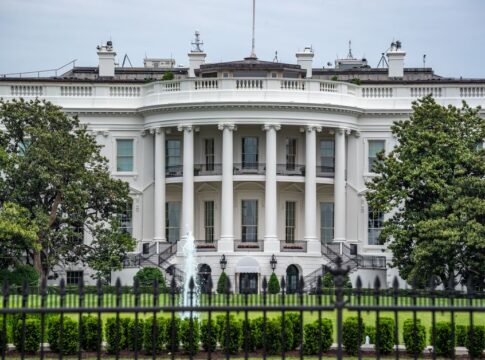
Photo: Dominik Gryzbon / Pexels
By New Way News Newsroom, Politics Desk — Published September 7, 2026
Table of Contents
- Key Takeaways
- The Background & Context
- Why This Matters
- Reactions & Analysis
- What Happens Next
- Frequently Asked Questions
The White House has launched an unusual digital initiative that’s drawing attention across the political spectrum. A new “arcade” website features games that invite users to participate in activities themed around immigration enforcement and the administration’s policy priorities. The white house arcade includes titles that challenge players to “build the wall” and “fill a Trump account,” according to multiple news reports.
The gaming platform represents an unconventional approach to political messaging, one that blends entertainment with policy advocacy. Reports indicate the site features games based on Immigration and Customs Enforcement operations and the “Make America Healthy Again” movement. This digital venture arrives at a time when the administration faces ongoing debates in Congress over border security legislation and campaign promises from the 2024 election cycle.
The arcade marks a departure from traditional White House communications strategies. Whether it signals a new direction in how federal officials engage with the public—or simply a novelty that will fade—remains to be seen.
Key Takeaways
- The White House has created an arcade-style website featuring games centered on administration policy priorities and campaign themes.
- Games reportedly include activities focused on border security, with players invited to “build the wall” and block what’s described as a border “siege.”
- Additional games reference ICE enforcement operations and the “Make America Healthy Again” initiative, expanding the scope beyond immigration alone.
- The platform includes a game inviting users to “fill a Trump account,” blending governance messaging with what appears to be financial or support-related themes.
- The initiative represents an unconventional communications approach that merges digital entertainment with political advocacy.
- The arcade arrives amid ongoing congressional debates over border security legislation and campaign commitments.
The Background & Context
Political campaigns and administrations have long experimented with digital outreach. From social media to mobile apps, officials seek new channels to connect with constituents, particularly younger voters. But a White House-branded arcade takes this strategy into uncharted territory.
The concept of gamification in politics isn’t entirely new. Campaign organizations have used game-like elements—leaderboards, challenges, rewards—to motivate volunteers and donors. What distinguishes this arcade is its official White House branding and its focus on specific policy areas that remain contentious in American politics.
Border security has dominated political discourse for years. The phrase “build the wall” became synonymous with the 2016 campaign and subsequent legislative battles over funding for physical barriers along the southern border. Congress has repeatedly clashed over appropriations for border infrastructure, with debates extending through multiple election cycles. The issue remains central to campaign messaging and voter concerns about immigration policy.
ICE operations similarly occupy a polarizing space in American politics. Supporters view enforcement actions as necessary for national security and rule of law. Critics raise concerns about civil liberties, family separations, and the treatment of asylum seekers. Turning these operations into game content represents a bold—some might say provocative—communications choice.
The “Make America Healthy Again” movement, another theme featured in the arcade, reflects broader administration priorities around public health, food policy, and wellness initiatives. This suggests the arcade isn’t limited to immigration themes but encompasses a wider policy agenda.
Why This Matters
For American citizens, this arcade raises questions about how government communicates with the public. Taxpayers fund White House operations. Should those resources support entertainment platforms that promote specific policy positions?
The intersection of governance and gamification deserves scrutiny. Games simplify complex issues. A border security challenge reduced to a wall-building game doesn’t capture the nuances of immigration policy—visa systems, asylum law, economic factors driving migration, diplomatic relations with neighboring countries. Critics may argue this trivializes serious policy debates that affect millions of lives.
Supporters might counter that the arcade makes political engagement more accessible. If games attract attention to policy priorities, they serve a democratic function. Voter turnout and civic participation remain persistent challenges in American democracy. Unconventional outreach could energize constituencies who don’t follow traditional news sources or congressional proceedings.
The “fill a Trump account” element adds another dimension. If this refers to campaign fundraising or political donations, it blurs lines between official government communications and electoral activity. Federal ethics rules strictly regulate how government resources can be used for campaign purposes. The specifics of this game—and whether it directs users toward campaign infrastructure—will likely draw legal and ethical scrutiny.
For Congress, the arcade may complicate already tense negotiations over border security legislation. Lawmakers working toward bipartisan compromise on immigration reform might find their efforts undermined by messaging that frames border policy in stark, game-like terms. Legislation requires nuance, negotiation, and compromise—qualities difficult to convey through arcade entertainment.
Reactions & Analysis
Public response to the white house arcade will likely split along familiar political lines. Supporters of the administration’s border policies may view the games as creative engagement tools that highlight important issues. The interactive format could energize base voters and keep policy priorities in public conversation.
Opposition voices will probably raise concerns about the appropriateness of gamifying sensitive policy areas. Immigration enforcement affects real families and communities. ICE operations have generated documented controversies over detention conditions, due process, and enforcement priorities. Presenting these operations as game content may strike critics as callous or tone-deaf.
Media analysts and political strategists will watch whether the arcade generates meaningful engagement or becomes a brief curiosity. Digital campaigns live or die by metrics—traffic, time spent, sharing, conversion to action. If the games attract substantial user participation, other political organizations may adopt similar tactics. If engagement proves minimal, the arcade becomes a footnote in the history of political communications experiments.
Legal experts may examine whether the platform complies with federal regulations governing government communications. The Hatch Act restricts political activity by federal employees. If the arcade promotes electoral outcomes rather than policy information, it could face legal challenges. The “fill a Trump account” game appears particularly vulnerable to such scrutiny.
Technology and ethics scholars might analyze how gamification affects political discourse. Does interactive entertainment help citizens understand policy, or does it reduce complex governance to oversimplified narratives? The arcade becomes a case study in how digital tools shape democratic participation.
What Happens Next
The arcade’s longevity depends on multiple factors. User engagement will determine whether the White House expands or abandons the platform. Low traffic might lead to a quiet shutdown. Viral popularity could inspire additional games or features.
Congressional oversight committees may investigate the arcade’s development costs, funding sources, and compliance with ethics regulations. Lawmakers have authority to question whether taxpayer resources were appropriately used. If the platform involved private contractors or campaign-affiliated developers, those relationships will face scrutiny.
Campaign finance watchdog groups will likely examine the “fill a Trump account” game closely. If it directs users toward political contributions, enforcement actions could follow. The Federal Election Commission oversees coordination between official government activities and campaign operations. Complaints filed with the FEC could trigger investigations.
The arcade may influence how future administrations approach digital communications. Success could normalize gamification in government outreach. Backlash might discourage similar experiments. Either way, the platform sets a precedent that political communicators will study.
Broader implications extend to how Americans consume political information. If citizens increasingly encounter policy through entertainment formats—games, memes, viral videos—rather than traditional journalism or official documents, democratic discourse changes fundamentally. The arcade represents one data point in this larger transformation.
Frequently Asked Questions
What is the White House arcade?
The White House arcade is a recently launched website featuring games themed around administration policy priorities. According to reports, it includes games that invite players to “build the wall,” block border crossings described as a “siege,” participate in activities based on ICE enforcement operations, and “fill a Trump account.” The platform represents an unconventional approach to political communications, blending entertainment with policy messaging.
Is the arcade an official White House project?
Reports describe the arcade as a White House initiative, suggesting official government involvement. However, the specific details about who developed the platform, how it was funded, and whether it involved campaign-affiliated entities remain unclear from available information. These questions will likely become subjects of public interest and potentially congressional oversight.
What games are included in the arcade?
Based on reports, the arcade features games focused on border security, including wall-building activities and blocking border crossings. Additional games reference ICE enforcement operations and the “Make America Healthy Again” movement. One game invites users to “fill a Trump account,” though the specifics of what this entails have not been fully detailed in available reports.
Could the arcade violate federal ethics rules?
Legal experts may scrutinize whether the arcade complies with regulations governing government communications and campaign activity. The Hatch Act restricts political activities by federal employees, and rules exist about using government resources for campaign purposes. The “fill a Trump account” game could raise particular concerns if it directs users toward political contributions or campaign infrastructure. Any violations would depend on the platform’s specific design, funding, and operational details.
The White House arcade stands as a curious experiment in political communications. Whether Americans view it as innovative engagement or inappropriate gamification of serious policy will shape its legacy. For now, it adds another unusual chapter to the ongoing story of how government and citizens interact in the digital age.