
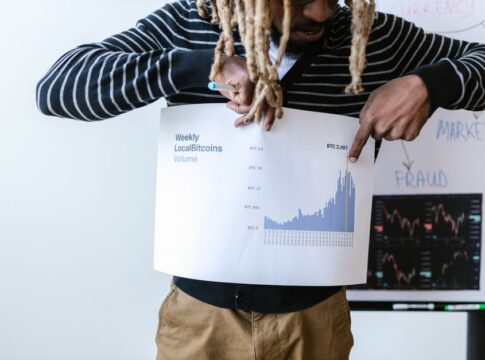
Photo: RDNE Stock project / Pexels
By New Way News Newsroom, Economy Desk — Published October 10, 2026
Table of Contents
- Key Takeaways
- Wall Street Posts Gains Amid Economic Crossroads
- Why This Matters
- Reactions & Analysis
- What Happens Next
- Frequently Asked Questions
Wall Street posts weekly gains as investors brace for a critical convergence of corporate earnings reports and fresh inflation data that could reshape the trajectory of the U.S. economy. Markets closed higher across major indices, reflecting cautious optimism despite lingering concerns about interest rates and the Federal Reserve‘s next moves. The week’s performance comes at a pivotal moment when every data point carries outsized weight for households, businesses, and policymakers alike.
The gains signal a market caught between hope and uncertainty. Traders are parsing signals from both Main Street and the Federal Reserve, trying to gauge whether the economy can achieve a soft landing or whether inflation remains too stubborn to ignore. For ordinary Americans, these market movements translate into real-world consequences: retirement account balances, job security, and the cost of borrowing for homes and cars.
This week’s upward momentum sets the stage for what many analysts consider a make-or-break period. Earnings season will reveal whether corporate America can maintain profitability amid elevated costs, while inflation readings will test whether price pressures are truly moderating or merely pausing before another surge.
Key Takeaways
- Wall Street posted gains across major indices for the week, reflecting investor optimism ahead of crucial economic data releases
- Corporate earnings reports and inflation data are expected to provide critical insights into the health of the U.S. economy
- The convergence of these data points could influence Federal Reserve policy decisions on interest rates
- Market participants remain divided on whether the economy can avoid recession while taming inflation
- The week’s performance comes as Americans continue grappling with elevated costs for essentials and uncertainty about job markets
- Investors are closely watching for signals that could determine market direction through the remainder of the year
Wall Street Posts Gains Amid Economic Crossroads
The financial markets have entered a critical juncture where corporate performance meets macroeconomic reality. Wall Street’s weekly gains reflect more than simple buying pressure. They represent a collective bet by investors that the worst may be behind us, even as fundamental questions about inflation and economic growth remain unanswered.
Markets have spent the past year navigating one of the most aggressive interest rate hiking cycles in modern history. The Federal Reserve raised rates repeatedly to combat inflation that reached four-decade highs, forcing investors to recalibrate expectations for everything from stock valuations to bond yields. Now, with rates at elevated levels, the question shifts from how high they’ll go to how long they’ll stay there.
The upcoming earnings season carries particular significance. Companies will reveal not just their quarterly profits but also their outlook for the months ahead. Can businesses maintain margins when consumers are stretched thin? Are they still hiring, or are layoffs on the horizon? These aren’t abstract Wall Street concerns. They directly affect whether your neighbor keeps their job, whether local businesses expand or contract, and whether your own financial security improves or deteriorates.
Inflation data, meanwhile, remains the North Star for Federal Reserve policymakers. Every percentage point matters. If prices continue moderating, the central bank may feel comfortable pausing or even cutting rates, which would lower borrowing costs for mortgages, car loans, and credit cards. But if inflation proves sticky, rates could stay higher for longer, squeezing household budgets and potentially tipping the economy into recession.
Why This Matters
For most Americans who don’t spend their days watching stock tickers, Wall Street’s movements might seem distant from daily life. That perception misses the mark. The stock market serves as a real-time referendum on economic health, and its performance ripples through communities in tangible ways.
Consider retirement savings. Roughly half of American households own stocks either directly or through retirement accounts like 401(k)s. When Wall Street posts gains, those nest eggs grow. When markets tumble, retirement dreams can be deferred or diminished. The elderly couple planning to retire next year watches these movements with particular intensity, as does the middle-aged worker trying to recover from losses during previous downturns.
The jobs picture connects even more directly to corporate earnings. Companies that report strong profits typically hire and expand. Those posting losses often cut staff and freeze wages. The upcoming earnings reports will signal whether businesses see enough demand to justify keeping workers on payroll or whether belt-tightening lies ahead. In an economy where layoff announcements have already rattled the tech sector and other industries, this matters profoundly.
Inflation data affects every household budget. Grocery bills, gas prices, rent, healthcare costs—all respond to broader inflationary pressures. When inflation runs hot, paychecks don’t stretch as far. Parents struggle to afford school supplies. Seniors on fixed incomes face impossible choices between medications and meals. The data expected this week will help determine whether relief is coming or whether Americans must continue adjusting to a higher-cost reality.
Interest rates tie it all together. The Federal Reserve uses rates as its primary tool to manage inflation, but those rates determine how much you pay to borrow money. A quarter-point difference in mortgage rates can mean tens of thousands of dollars over the life of a home loan. Credit card rates, auto loans, small business financing—all move in response to Fed policy, which in turn responds to the very inflation data investors are anticipating.
Reactions & Analysis
Market participants have displayed a complex mixture of optimism and caution. The weekly gains suggest investors believe the economy retains underlying strength, but trading volumes and volatility patterns reveal persistent anxiety about what lies ahead.
Professional investors are positioning portfolios defensively while maintaining exposure to potential upside. This hedging reflects uncertainty about whether corporate earnings will meet expectations that have already been revised lower multiple times. Analysts have spent months downgrading profit forecasts, yet even these reduced expectations may prove optimistic if consumer spending weakens further.
The Federal Reserve faces its own balancing act. Central bankers have repeatedly stated their commitment to bringing inflation back to the two-percent target, even at the cost of economic pain. Yet they also recognize the dangers of overtightening, which could trigger unnecessary job losses and financial instability. The upcoming inflation data will either validate their current stance or force yet another policy recalibration.
Economic observers note that this moment resembles a high-stakes waiting game. Everyone—from Wall Street traders to Main Street business owners—is watching the same data releases, trying to divine what comes next. The problem is that different indicators point in different directions. The labor market remains relatively strong even as manufacturing shows weakness. Consumer spending holds up even as savings rates decline. Housing markets cool while service sector inflation stays elevated.
What Happens Next
The coming weeks will provide crucial clarity, though perhaps not the kind of definitive answers investors crave. Earnings season will unfold company by company, sector by sector, gradually revealing the true state of corporate America. Some businesses will exceed expectations; others will disappoint. The aggregate picture will emerge slowly, like a photograph developing in a darkroom.
Inflation data will arrive on a predetermined schedule, each release scrutinized for signs of progress or stagnation. Markets will react, sometimes violently, to numbers that differ even slightly from expectations. A tenth of a percentage point can trigger billions in trading activity as algorithms and humans alike adjust positions.
The Federal Reserve will absorb this information and signal its intentions, though central bankers have learned to speak carefully, knowing their words move markets. Future interest rate decisions will depend on the totality of incoming data, not any single report. This measured approach frustrates those seeking certainty but reflects the genuine complexity of managing a twenty-five-trillion-dollar economy.
For ordinary Americans, the implications will manifest gradually. If the economy continues its current trajectory—slowing but not collapsing, with inflation moderating but not vanishing—life will likely feel much as it does now. Budgets will remain tight. Job security will feel uncertain. Planning for the future will require more caution than in easier times.
Should the data surprise decisively in either direction, consequences will accelerate. Unexpectedly strong inflation could force the Fed to raise rates again, potentially triggering recession. Surprisingly weak corporate earnings could spark layoffs and market selloffs. Conversely, clear evidence of cooling prices combined with resilient profits could unleash a sustained rally and economic confidence.
Frequently Asked Questions
Why do Wall Street gains matter to people who don’t own stocks?
Wall Street performance affects everyone through multiple channels. Stock market health influences corporate hiring decisions, pension fund stability, and overall economic confidence. When businesses see their stock prices rise, they’re more likely to invest in expansion and job creation. Additionally, many public pension funds rely on market returns to pay retirement benefits for teachers, firefighters, and other public servants. Market downturns can force benefit cuts or tax increases to cover shortfalls.
How do earnings reports affect the broader economy?
Corporate earnings reports provide a real-time snapshot of business health and future expectations. Strong earnings typically lead companies to hire more workers, raise wages, and invest in new projects. Weak earnings often trigger cost-cutting measures including layoffs and reduced capital spending. These reports also influence investor confidence, which affects how much money flows into the economy through investment and spending. When companies project optimism about future quarters, that confidence can become self-fulfilling as they act on growth plans.
What inflation data should ordinary citizens pay attention to?
The Consumer Price Index (CPI) most directly reflects what households pay for goods and services. It measures price changes for everything from groceries to gasoline to healthcare. Core CPI, which excludes volatile food and energy prices, helps identify underlying inflation trends. The Personal Consumption Expenditures (PCE) index is the Federal Reserve’s preferred measure and can signal future interest rate decisions. For practical purposes, watching CPI gives the clearest picture of whether your dollar is stretching further or buying less.
Could the Federal Reserve still raise interest rates again?
Yes, though the likelihood depends entirely on incoming economic data. If inflation proves more persistent than expected or if the labor market remains extremely tight, the Fed could resume rate increases despite recent pauses. Central bankers have repeatedly emphasized they will do whatever necessary to return inflation to their two-percent target. However, they also recognize the risks of overtightening and causing unnecessary economic damage. The decision will balance inflation progress against signs of economic weakening, making future data releases critical to determining the path forward.
Wall Street’s weekly gains offer a moment of relief in an otherwise turbulent economic landscape. Yet relief is not resolution. The hard questions about inflation, growth, and financial stability remain unanswered. The coming days will bring new data, new earnings reports, and new reasons for both hope and concern. For investors and ordinary citizens alike, the only certainty is continued uncertainty—and the need to stay informed as events unfold.