
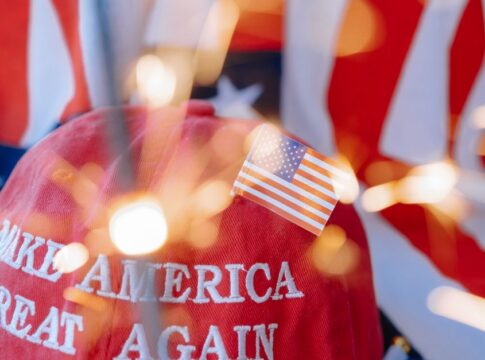
Photo: Polina Zimmerman / Pexels
By New Way News Newsroom, Politics Desk — Published October 1, 2026
Table of Contents
- Key Takeaways on Trump paid customs spending allegations
- The Background & Context
- Why This Matters
- Reactions & Analysis
- What Happens Next
- Frequently Asked Questions
Federal taxpayer dollars meant for border security operations have reportedly been diverted to finance television advertising that promotes President Donald Trump, according to multiple news reports citing government officials. The Department of Homeland Security is said to have spent approximately $20 million in public funds on television ads featuring pro-Trump messaging, raising urgent questions about the appropriate use of agency budgets during an election season and the line between legitimate government communication and partisan campaign activity.
The revelation that Trump paid customs agency money was redirected for what critics characterize as political advertising has ignited a firestorm in Washington. Congressional oversight committees are likely to scrutinize whether federal law was violated and whether taxpayers unwittingly funded what amounts to campaign material. The controversy arrives at a politically charged moment, as debates over government spending, executive authority, and election integrity dominate the national conversation.
At the heart of the matter is a fundamental question: when does government communication cross the threshold into prohibited political activity? Federal agencies routinely produce public service announcements and informational campaigns. But when those messages appear to serve a sitting president’s political interests rather than a clear public service mission, the expenditure becomes constitutionally and legally fraught.
Key Takeaways on Trump paid customs spending allegations
- The Department of Homeland Security reportedly spent $20 million in taxpayer funds on television advertisements that feature pro-Trump content.
- The money allegedly came from Customs and Border Protection budgets, according to officials familiar with the spending.
- Multiple news organizations have confirmed the existence of the ad campaign, raising questions about whether federal law prohibits such expenditures.
- The timing of the advertising during an election cycle intensifies concerns about the misuse of government resources for political purposes.
- Congressional Democrats and government watchdog groups are expected to demand investigations into the legality and propriety of the spending.
- The controversy adds to ongoing debates about executive branch accountability and the enforcement of restrictions on political activity by federal agencies.
The Background & Context
Federal law imposes strict limitations on how government agencies can spend appropriated funds. The Hatch Act, for instance, prohibits federal employees from engaging in political activities while on duty or using government resources. Separate statutes restrict agencies from using taxpayer money for publicity or propaganda purposes that are not clearly justified by legitimate government functions.
Customs and Border Protection, a component of the Department of Homeland Security, receives billions of dollars annually to secure America’s borders, inspect cargo, and enforce immigration laws. Its budget is meant to fund personnel, technology, infrastructure, and operations directly related to those missions. Public information campaigns about border security policies or traveler requirements fall within the agency’s legitimate communications mandate.
However, when such campaigns feature messaging that appears designed to bolster a president’s political standing or advance his reelection prospects, legal and ethical red flags emerge. The distinction between informing the public and promoting a political figure can be subtle but carries significant legal weight. Previous administrations have faced scrutiny for similar concerns, though the reported scale of this spending appears unusually large.
The reported $20 million figure represents a substantial commitment of resources. For comparison, that sum could fund hundreds of border patrol agents, advanced screening technology, or infrastructure improvements at ports of entry. The decision to allocate such funds to television advertising rather than operational needs will likely fuel criticism from those who argue the administration has misplaced its priorities.
Why This Matters
American taxpayers have a fundamental right to expect that their money will be spent on legitimate government functions, not on promoting individual politicians. When federal agencies blur the line between public service and political advocacy, they undermine public trust and potentially violate the law. This matters profoundly in a democracy where the integrity of elections and the neutrality of government institutions are essential to legitimacy.
The allegations also raise questions about oversight and accountability within the executive branch. If Homeland Security officials approved the expenditure of $20 million on what critics characterize as political advertising, who authorized it? What review process, if any, was conducted to ensure compliance with legal restrictions? And what mechanisms exist to prevent similar spending in the future?
For voters, the controversy speaks to larger concerns about fairness in elections. Incumbent presidents already enjoy significant advantages, including name recognition, media coverage, and the ability to make policy announcements that generate favorable headlines. If they can also harness the vast resources of the federal government to produce campaign-style advertising, the playing field tilts even further. Challengers cannot compete with the U.S. Treasury.
Congress holds the power of the purse and has a constitutional duty to ensure appropriated funds are spent as intended. Lawmakers from both parties have historically defended their prerogatives when presidents overstep spending authority. This case will test whether that institutional pride outweighs partisan loyalty, particularly among members of the president’s own party who might be reluctant to challenge the administration.
Reactions & Analysis
News of the spending has prompted immediate calls for investigation from government watchdog organizations and opposition lawmakers. Critics argue that the use of Customs and Border Protection funds for pro-Trump television ads violates both the letter and spirit of federal appropriations law. They contend that no legitimate government purpose is served by advertising that promotes a president rather than educating the public about specific policies or programs.
Defenders of the administration might argue that the ads serve a valid informational purpose, perhaps highlighting border security achievements or explaining immigration enforcement policies. If the content focuses on government programs and policies rather than explicitly urging support for Trump, the legal analysis becomes more complex. Courts have recognized that agencies may communicate about their work, even when such communication indirectly benefits a president politically.
The reported involvement of Homeland Security money adds another layer of concern. The department oversees critical national security functions, from counterterrorism to disaster response. Diverting resources from those missions to produce television advertising strikes many observers as a misallocation of priorities, particularly during a time of heightened security challenges and budget constraints.
Legal experts will likely debate whether the spending violates specific statutes or merely represents poor judgment. The distinction matters for accountability purposes. If laws were broken, officials could face consequences ranging from reprimands to criminal prosecution. If the spending was merely inappropriate but technically legal, the remedy may be political rather than judicial.
What Happens Next
Congressional oversight committees, particularly those controlled by Democrats, are expected to demand documents and testimony about the advertising campaign. Investigators will want to know who approved the spending, what justification was provided, and whether legal counsel reviewed the decision. They may also seek copies of the advertisements themselves to assess whether the content crosses the line into prohibited political activity.
The Government Accountability Office, Congress’s investigative arm, could be asked to review the expenditure and determine whether it violated the law. GAO has authority to issue legal opinions on the propriety of agency spending, though its findings are not binding on the executive branch. Still, a negative GAO determination would carry significant weight and could fuel further legislative action.
Depending on the findings, Congress might consider legislation to tighten restrictions on agency communications during election years or to require additional oversight of major advertising campaigns. Appropriations committees could also insert language in future spending bills explicitly prohibiting the use of funds for purposes deemed political.
The controversy may also become an issue in the broader political landscape, with opposition candidates citing it as evidence of corruption or abuse of power. Voters will ultimately decide whether the alleged misuse of taxpayer funds affects their electoral choices, though partisan polarization may limit the political impact.
Frequently Asked Questions
Is it illegal for federal agencies to run television advertisements?
No, federal agencies are permitted to run public information campaigns and advertisements that serve legitimate government purposes, such as educating the public about programs, policies, or services. However, the law prohibits using taxpayer funds for publicity or propaganda that primarily serves political rather than informational goals. The legality of any specific ad campaign depends on its content and purpose.
How much money was reportedly spent on the pro-Trump advertisements?
According to news reports citing government officials, the Department of Homeland Security spent approximately $20 million in taxpayer funds on television advertising that featured pro-Trump messaging. This money allegedly came from Customs and Border Protection budgets intended for border security operations and related functions.
What is the Hatch Act and does it apply to this situation?
The Hatch Act restricts federal employees from engaging in political activities while on duty, in government buildings, or using government resources. While the Act primarily governs individual employee conduct rather than agency spending decisions, it reflects the broader principle that taxpayer resources should not be used for partisan political purposes. The legality of the advertising expenditure would be assessed under appropriations law and anti-propaganda statutes as well.
Could anyone face legal consequences for approving this spending?
If investigations determine that the spending violated federal law, officials who authorized or approved the expenditure could potentially face administrative discipline, civil penalties, or in extreme cases, criminal prosecution. However, such outcomes would depend on the specific findings, the evidence of intent, and whether prosecutors determine that violations warrant charges. Political consequences, including congressional censure or loss of position, are also possible.
The reported use of Customs and Border Protection money for pro-Trump television advertising represents more than a budgetary irregularity. It touches fundamental questions about the proper role of government, the integrity of elections, and the accountability of those entrusted with taxpayer dollars. As investigations proceed and more facts emerge, Americans deserve clear answers about whether their money was spent lawfully and appropriately. The outcome will help define the boundaries of acceptable government communication in an age when the line between information and persuasion grows ever thinner.