
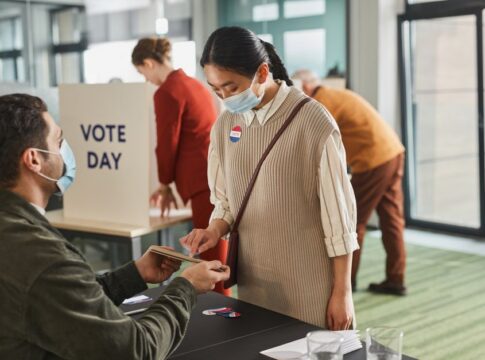
Photo: Edmond Dantès / Pexels
By New Way News Newsroom, National Desk — Published October 3, 2026
Table of Contents
- Key Takeaways
- The Background & Context
- Why This Matters
- Reactions & Analysis
- What Happens Next
- Frequently Asked Questions
The Department of Justice has launched a sweeping effort to obtain voter registration data from states across the country, igniting a fierce debate over election integrity, privacy rights, and federal overreach. This tracking effort of voter information represents one of the most contentious federal-state conflicts in recent memory, with officials from both major political parties pushing back against what they view as an unprecedented intrusion into state-managed election systems.
The Trump administration’s demands for comprehensive voter files have met resistance that crosses party lines. State officials are refusing to hand over sensitive data that includes not just names and addresses, but potentially Social Security numbers, voting history, and other personal details of millions of Americans.
At stake is the delicate balance between federal authority and state sovereignty over elections, a tension woven into the fabric of American democracy since its founding. The controversy raises fundamental questions about who controls voter data, how it should be protected, and what role the federal government should play in overseeing state election systems.
Key Takeaways
- The Department of Justice is actively seeking to acquire voter registration data from state governments nationwide in an effort that has drawn bipartisan opposition.
- Resistance to the Trump administration’s demands spans the political spectrum, with both Republican and Democratic state officials refusing to comply with requests for voter files.
- The controversy centers on concerns about privacy, federal overreach, and the potential misuse of sensitive personal information belonging to millions of registered voters.
- Legal and advocacy organizations, including Protect Democracy and the Brennan Center for Justice, are tracking and analyzing the administration’s attempts to collect state voter data.
- The dispute highlights fundamental tensions in American federalism regarding who controls election administration and voter information.
- The outcome could set precedents affecting election security, data privacy, and the relationship between federal and state governments for years to come.
The Background & Context
Election administration in the United States has historically been a state and local responsibility. Each state maintains its own voter registration system, sets its own rules for voter eligibility, and manages its own election infrastructure. This decentralized approach was intentional, designed by the framers to prevent any single entity from controlling the democratic process.
Voter registration databases contain extensive personal information. Names, addresses, dates of birth, and voting history are standard. Some states collect driver’s license numbers or partial Social Security numbers. This data is valuable for legitimate purposes like maintaining accurate rolls and preventing fraud, but it’s also sensitive enough to raise serious privacy concerns if mishandled.
The current push by the DOJ to obtain this information isn’t happening in a vacuum. It follows years of heated national debate about election security, voter fraud claims, and access to the ballot box. Previous federal efforts to collect voter data have met similar resistance, but the scope and persistence of the current campaign appears to be testing new boundaries.
States guard their voter files carefully, with laws varying widely on who can access the data and for what purposes. Some states make basic information publicly available. Others restrict access severely. Most have never faced a systematic federal demand for wholesale transfer of their voter databases.
Why This Matters
For ordinary Americans, the implications are both immediate and far-reaching. Your voter registration contains personal details you provided to your state government with the expectation it would be used for election purposes. The prospect of that information being transferred to federal databases raises questions about how it might be used, who else might gain access, and what protections would apply.
Privacy advocates warn that centralized voter databases create new vulnerabilities. A single breach could expose millions of voters’ personal information. The data could potentially be cross-referenced with other federal databases in ways voters never anticipated or consented to when they registered.
There’s also a chilling effect to consider. If voters believe their registration information will be scrutinized by federal authorities, some may choose not to register at all. This could particularly affect vulnerable communities, immigrants who are legal residents, and anyone concerned about government surveillance. The fundamental right to vote depends on people feeling safe exercising it.
The federalism angle matters too. The Constitution gives states primary responsibility for running elections. When the federal government demands state-held data without clear legal authority, it shifts power away from state capitals toward Washington. That precedent could extend beyond elections to other areas of traditional state control.
For state officials, the dilemma is acute. They face pressure from federal authorities demanding compliance, but they also have duties to their own citizens and state laws that may prohibit releasing the data. Some have the resources to mount legal challenges. Others may feel compelled to comply even if they have reservations.
Reactions & Analysis
The resistance to these federal demands has proven remarkably bipartisan. Officials from states led by both parties have expressed concerns and refused to hand over voter files in their entirety. This unity is unusual in today’s polarized political environment, suggesting the concerns transcend partisan politics.
According to reports, the widespread nature of the pushback has slowed the DOJ’s efforts considerably. States aren’t simply saying no; they’re questioning the legal authority for the requests, the purpose behind them, and the safeguards that would protect the data once transferred. Some have offered limited information while withholding the most sensitive details.
Civil liberties organizations have mobilized to support states in resisting the demands. Groups like Protect Democracy are providing legal analysis and resources to help state officials understand their options. The Brennan Center for Justice has documented the scope of state resistance, creating a public record of which jurisdictions are complying and which are standing firm.
Legal experts point out that the federal government’s authority to demand state voter data is not unlimited. While certain federal laws allow for data collection in specific circumstances, a blanket demand for comprehensive voter files may exceed statutory authority. Courts could ultimately be asked to resolve these questions if the DOJ pursues legal action against non-compliant states.
Election security professionals have raised technical concerns as well. Transferring large databases creates opportunities for interception. Storing them centrally creates attractive targets for hackers. And ensuring the data remains accurate when duplicated across systems presents logistical challenges that could actually undermine election integrity rather than strengthen it.
What Happens Next
The immediate future likely involves continued standoffs between federal and state authorities. Some states may negotiate compromises, providing limited data while protecting the most sensitive information. Others may refuse categorically and prepare for potential legal battles.
If the DOJ escalates by filing lawsuits or withholding federal funding, the conflict could reach the Supreme Court. Such a case would force the justices to clarify the boundaries of federal power over state election systems, potentially creating precedents that outlast any single administration.
Congress could intervene by passing legislation that either authorizes the data collection with specific safeguards or explicitly prohibits it. Given the bipartisan nature of state resistance, there might be appetite for statutory clarity. However, in the current polarized environment, consensus may prove elusive.
Public pressure will play a role too. As more voters learn their personal information is being sought by federal authorities, they may demand their state officials protect their data. Alternatively, if the administration successfully frames the effort as necessary for election security, some voters might support compliance.
The long-term implications extend beyond this particular controversy. How this dispute resolves will signal whether states retain meaningful autonomy over election administration or whether federal control will expand. It will affect how voter data is protected and used. And it will shape the relationship between citizens and government regarding privacy and surveillance.
Frequently Asked Questions
What specific voter information is the DOJ requesting from states?
While the exact scope varies by request, the DOJ is generally seeking comprehensive voter registration data that states maintain in their databases. This can include names, addresses, dates of birth, voting history, party affiliation, and potentially sensitive identifiers like driver’s license numbers or partial Social Security numbers. The breadth of the requests has alarmed privacy advocates and state officials who view the data as belonging to their citizens under state protection.
Do states have to comply with federal requests for voter data?
The legal obligation is complex and contested. States have their own laws governing voter data, and many prohibit releasing certain information without specific legal authority. While the federal government has some powers to request information, those powers aren’t unlimited. States can and are challenging whether the DOJ has statutory authority for these particular demands, and some are refusing to comply pending legal clarification. The question may ultimately require court resolution.
Why are both Republican and Democratic officials resisting these requests?
The bipartisan resistance reflects concerns that transcend party politics. Officials from both parties worry about voter privacy, the security of centralized databases, federal overreach into state responsibilities, and the potential for data misuse. State election officials, regardless of party, tend to be protective of their systems and skeptical of federal intervention. The widespread nature of the resistance suggests the concerns are rooted in principles of federalism and data protection rather than partisan positioning.
Could this affect my ability to vote or my privacy as a registered voter?
The direct effect on your ability to vote should be minimal, as the dispute is about data sharing rather than voter eligibility. However, privacy implications are real. If your state transfers your voter registration information to federal databases, it could be used in ways you didn’t anticipate when you registered. There’s also concern that some eligible voters might be discouraged from registering if they fear federal scrutiny of their information. The outcome of this controversy will determine how your voter data is protected going forward.
As this tracking effort continues to unfold, Americans are watching a fundamental test of democratic principles. The tension between security and privacy, federal power and state sovereignty, plays out not in abstract terms but through the personal data of millions of voters. How we resolve this conflict will say much about the kind of democracy we choose to maintain.