
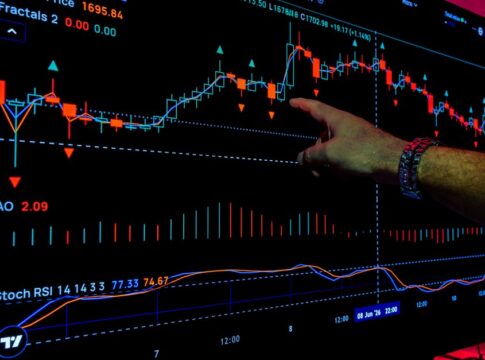
Photo: Rafael Minguet Delgado / Pexels
By New Way News Newsroom, Economy Desk — Published October 30, 2026
Table of Contents
- Key Takeaways
- The Background & Context
- Why This Matters
- Reactions & Analysis
- What Happens Next
- Frequently Asked Questions
For millions of Americans saving for retirement, the past several years have felt like a winning streak. Markets rewarded retirement investors with steady gains that padded 401(k) balances and brightened prospects for a comfortable exit from the workforce. But that success story carries a hidden danger: when portfolios grow year after year, it becomes easy to forget that risk still lurks beneath the surface.
Financial advisers across Wall Street are now fielding anxious questions from clients who wonder whether their nest eggs are properly positioned. The economy has delivered a confusing mix of signals—stubborn inflation one quarter, cooling price pressures the next, and interest rates that have climbed to levels not seen in decades. Jobs data swings from robust to worrying and back again, leaving even seasoned investors uncertain about what comes next.
This disconnect between recent rewards and future uncertainty is forcing a national conversation about how Americans judge risk in their retirement accounts. When markets climb steadily, human nature tempts us to assume the good times will roll on indefinitely. That’s precisely when danger grows.
Key Takeaways
- Extended market gains have created a false sense of security for many retirement savers, making it difficult to accurately assess portfolio risk
- Financial advisers report a surge in fundamental questions about investment strategy as economic signals become harder to read
- The interplay of inflation, interest rates, and employment data has created an unusually complex environment for retirement planning
- Mutual funds remain a central vehicle for retirement investing, yet many savers lack clarity on how to evaluate and select appropriate options
- The challenge now is balancing the desire to capture further gains against the need to protect accumulated wealth as retirement approaches
- Understanding personal risk tolerance and investment timelines has become more critical as market volatility returns to the conversation
The Background & Context
The American retirement system places enormous responsibility on individual workers. Unlike previous generations who could count on defined-benefit pensions, today’s employees must navigate a do-it-yourself landscape of 401(k) plans, IRAs, and investment choices that would baffle even sophisticated investors. The shift began decades ago, but its full weight has become apparent only as the first generation of 401(k)-dependent workers reaches retirement age.
For much of the past decade, this system appeared to work remarkably well. Equity markets delivered returns that exceeded historical averages. Bond portfolios, while less exciting, provided steady income. Real estate investment trusts and other alternative assets added diversification. The result was a rising tide that lifted most retirement boats, creating a generation of investors who came to expect annual gains as a normal feature of financial life.
But markets are cyclical by nature. What goes up can—and eventually does—come down. The challenge is that human memory is short and selective. Investors who watched their accounts grow by double-digit percentages in 2023 may have already forgotten the stomach-churning losses of 2022, when both stocks and bonds fell simultaneously in a historically rare dual decline. That brief bear market erased trillions in paper wealth before the rebound began.
The economic backdrop has grown more complex. Inflation surged to forty-year highs before moderating, but remains above the Federal Reserve‘s target. Interest rates climbed from near-zero to levels that make borrowing expensive for businesses and consumers alike. The jobs market has shown resilience, yet cracks appear in the form of slower hiring and rising unemployment claims in certain sectors. Wall Street analysts debate whether the economy will achieve a soft landing or slip into recession.
Against this uncertainty, retirement investors face a fundamental problem: how to judge whether their portfolios match their actual risk tolerance. It’s easy to feel comfortable with an aggressive stock allocation when markets are climbing. It’s far harder when volatility returns and account balances swing wildly from month to month.
Why This Matters
The stakes could hardly be higher for ordinary Americans. Retirement security determines whether people can maintain their standard of living in old age or face financial hardship when they’re least able to recover. Unlike institutional investors or the wealthy, middle-class savers typically get one shot at building a sufficient nest egg. There are no do-overs if they misjudge risk and suffer catastrophic losses just before retirement.
The problem extends beyond individual finances to touch the broader economy. A generation of retirees who find themselves financially insecure will strain social safety nets, burden family members, and reduce consumer spending that drives economic growth. The ripple effects touch everything from healthcare costs to housing markets to government budgets already stretched thin.
Yet many Americans lack the financial literacy to make informed decisions about their retirement accounts. They don’t understand the difference between growth stocks and value stocks, can’t explain what a bond duration means, and have never calculated whether their savings rate will actually fund the retirement lifestyle they envision. When markets are rising, these knowledge gaps seem unimportant. When markets turn, they become critical vulnerabilities.
Financial advisers play a crucial role in bridging this gap, but access to professional guidance remains uneven. Workers at large corporations may have access to workplace financial wellness programs. Those at small businesses or in the gig economy often navigate alone, relying on internet research and advice from friends who may be equally uninformed. The democratization of investing through low-cost index funds and user-friendly apps has made participation easier, but hasn’t necessarily made decision-making better.
The current moment demands particular attention because multiple risk factors are converging. Geopolitical tensions create uncertainty. Technological disruption is reshaping entire industries. Demographic shifts are altering the ratio of workers to retirees. Climate change poses long-term economic risks that are difficult to quantify. Each of these factors can affect investment returns in ways that historical models may not capture.
Reactions & Analysis
Financial professionals report that clients are asking more fundamental questions about investment strategy than they have in years. These aren’t sophisticated queries about tax-loss harvesting or alternative investments. They’re basic questions about how to start investing, how to evaluate mutual funds, and whether current allocations make sense given individual circumstances.
This return to basics reflects both increased anxiety and growing awareness that past performance doesn’t guarantee future results. Investors who felt confident when markets were soaring now want reassurance that they haven’t taken on more risk than they can handle. They’re questioning assumptions that seemed self-evident during the bull market.
The questions advisers field most frequently reveal common pain points. People want to know how much they should save, how to balance competing financial goals, when to adjust their portfolios, and how to evaluate whether they’re on track for retirement. They struggle with the tension between fear of missing out on gains and fear of losing what they’ve already accumulated.
Industry experts emphasize that risk assessment must be personal and dynamic. A 30-year-old with decades until retirement can weather market volatility that would devastate a 65-year-old planning to retire next year. Yet many investors maintain the same allocation for years without reconsidering whether it still fits their circumstances. Life changes—marriage, children, divorce, health issues, career shifts—all should trigger portfolio reviews.
The challenge is compounded by the sheer volume of investment options. Modern retirement plans may offer dozens of mutual funds spanning every conceivable asset class and investment strategy. Without clear guidance, participants often default to whatever option sounds safest or simply divide contributions equally across available choices, creating accidental portfolios that match no coherent strategy.
What Happens Next
The coming years will test whether Americans have learned the right lessons from recent market history. As the Federal Reserve navigates the delicate balance between controlling inflation and supporting economic growth, interest rate policy will continue to influence investment returns across asset classes. Higher rates have already made bonds more attractive relative to stocks than they’ve been in years, forcing investors to reconsider allocations that made sense in a zero-rate environment.
Demographics will play an increasing role. The oldest Baby Boomers are now in their late seventies, and the youngest are approaching traditional retirement age. This massive cohort will shift from accumulation to distribution mode, potentially creating sustained selling pressure in markets as retirees convert investments to income. Younger workers, meanwhile, face the challenge of building wealth in an economy where housing costs, student debt, and childcare expenses consume larger shares of income than previous generations experienced.
Technology will continue to reshape how Americans invest for retirement. Robo-advisers and artificial intelligence tools promise to democratize sophisticated portfolio management, but also risk oversimplifying complex decisions or creating new forms of herd behavior. The key will be using technology to enhance human judgment rather than replace it entirely.
Regulatory changes may also affect retirement investing. Policymakers periodically propose reforms to the 401(k) system, from automatic enrollment to required minimum distributions to fiduciary standards for advisers. Each change ripples through millions of accounts and affects how Americans save and invest.
Most importantly, investors themselves must develop better risk awareness. That means regularly reviewing portfolios, stress-testing plans against adverse scenarios, and maintaining the discipline to rebalance when allocations drift. It means understanding that markets reward patience and punish panic, but also recognizing that sometimes tactical adjustments are necessary.
Frequently Asked Questions
How do I know if my retirement portfolio is too risky?
The simplest test is to imagine how you’d feel if your account balance dropped by 20% or 30% over a few months. If that scenario would cause you to panic and sell, your allocation is probably too aggressive for your risk tolerance. A more formal approach involves assessing your time horizon until retirement, your ability to replace losses through additional savings, and your need for portfolio income versus growth. Financial advisers typically recommend that equity exposure should decline as retirement approaches, though the exact glide path depends on individual circumstances.
Should I change my investment strategy because of current economic conditions?
Market timing—trying to jump in and out based on economic forecasts—rarely works well for individual investors. The better approach is to maintain a strategic allocation aligned with your goals and timeline, then rebalance periodically to maintain those targets. That said, major life changes or significant shifts in your financial situation may warrant portfolio adjustments. The key is distinguishing between reacting to short-term market noise and making thoughtful changes based on your personal circumstances.
What role should mutual funds play in my retirement savings?
Mutual funds remain a core building block for most retirement investors because they provide instant diversification and professional management at relatively low cost, especially in the case of index funds. They allow small investors to access asset classes and strategies that would be impractical to replicate individually. The challenge is selecting appropriate funds from the often overwhelming array of choices. Focus on low-cost options, understand what each fund actually holds, and ensure your overall mix of funds creates a coherent portfolio rather than a collection of overlapping positions.
How often should I review my retirement investments?
Most financial professionals recommend a comprehensive portfolio review at least annually, with more frequent check-ins during periods of market volatility or when your personal circumstances change significantly. However, reviewing too frequently can be counterproductive, tempting you to make emotional decisions based on short-term market movements. A quarterly glance to ensure nothing has gone wildly off track, combined with an annual deep dive to rebalance and adjust for life changes, strikes a reasonable balance for most investors.
The paradox of successful investing is that good times plant the seeds of future problems. When markets reward retirement investors consistently, the natural human response is to grow complacent about risk. Breaking that cycle requires conscious effort, honest self-assessment, and sometimes professional guidance. The goal isn’t to avoid risk entirely—that’s impossible and undesirable for long-term investors. The goal is to understand exactly what risks you’re taking and ensure they align with risks you’re actually prepared to bear. In an uncertain economic environment, that clarity matters more than ever.