
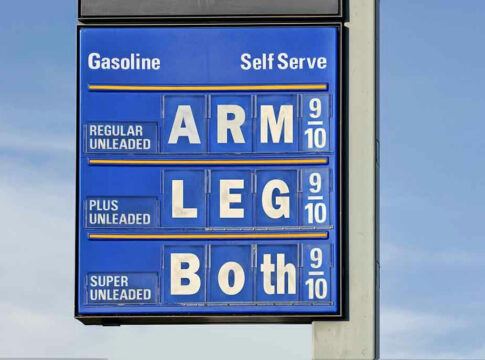
The trucking industry just told a sitting president to keep his populist relief scheme because saving 30 cents a week at the pump isn’t worth crippling America’s highways.
When the Road Warriors Say No
President Trump floated his gas tax suspension plan on May 11, 2026, as fuel prices climbed amid escalating tensions with Iran. The proposal would eliminate the 18.4 cents per gallon federal tax on gasoline and 24.4 cents per gallon on diesel. Within 24 hours, the American Trucking Associations, Truckload Carriers Association, and National Tank Truck Carriers released a joint statement rejecting the idea. The American Society of Civil Engineers piled on with its own opposition. These aren’t fringe activists or political opponents. These are the boots-on-the-ground professionals who depend on functional highways for their livelihoods and economic survival.
Trucking, construction trade groups voice opposition to Trump's proposed gas tax holiday https://t.co/N1AMvOOC6C
— Just the News (@JustTheNews) May 13, 2026
The Math That Exposes Political Theater
The average American driver would save roughly $1.63 per week in federal fuel taxes, totaling about 30 cents weekly when accounting for typical consumption patterns. The University of Pennsylvania’s Wharton School estimates historical gas tax holidays deliver only 60 to 72 percent pass-through to consumers at the pump, with the rest absorbed by suppliers and wholesalers. Meanwhile, a four-month suspension from June through October would drain approximately $11.5 billion from the Highway Trust Fund, representing 19 percent of its annual $62 billion budget. The trucking coalition labeled this trade-off absurd, arguing that minimal short-term relief for voters creates catastrophic long-term damage to infrastructure that moves 70 percent of America’s freight.
Follow the Money to the Real Stakeholders
Federal fuel taxes have funded highway construction and maintenance since the 1956 Interstate Highway System Act. The gas tax rate hasn’t budged since 1993, while the diesel rate generates disproportionate revenue from commercial trucks. The trucking industry contributes 45 to 50 percent of all Highway Trust Fund dollars despite operating only four percent of vehicles nationwide. This outsized contribution gives trucking groups extraordinary credibility when opposing policies that threaten the fund’s solvency. The Highway Trust Fund already faces chronic shortfalls, with projections showing insolvency by 2028 without reform. Trucking executives describe highways as “the shop floor” for their industry, making infrastructure investment a direct business imperative rather than abstract policy concern.
History Repeats as a Warning
Gas tax holiday proposals surface regularly during fuel price spikes, then collapse under scrutiny. John McCain floated the idea during the 2008 presidential campaign to widespread ridicule from economists. The Biden administration considered similar pauses in 2022 but abandoned them. Kentucky actually cut its state fuel tax on May 12, 2026, the same day the federal opposition erupted, highlighting the patchwork responses states employ versus federal policy. Highway Trust Fund shortfalls between 2011 and 2013 forced delayed payments to contractors and halted projects. Trucking lobbies pushed for a five-cent federal gas tax increase in 2019 to shore up the fund, demonstrating their willingness to accept higher costs for infrastructure certainty.
The Infrastructure Debt Bomb
The American Society of Civil Engineers grades U.S. roads at D-plus based on its 2021 infrastructure report card. A backlog exceeding $100 billion in deferred highway maintenance sits unfunded while the Highway Trust Fund teeters toward insolvency. The construction industry depends on predictable federal highway spending to sustain five million direct trucking jobs and countless contractor positions. ASCE estimates infrastructure disruptions cost the economy more than $1 billion monthly through supply chain delays, vehicle damage, and accident expenses. Trump’s proposal threatens to accelerate the deterioration rather than address root causes. The trucking coalition argued that Congress should pursue “meaningful relief without undermining transportation investments,” acknowledging voter frustration while rejecting false solutions that mortgage future mobility for trivial present savings.
Trucking, construction trade groups voice opposition to Trump's proposed gas tax holiday https://t.co/jMsb9lc3GT
— John Solomon (@jsolomonReports) May 13, 2026
When Populism Collides With Reality
Trump positioned the tax suspension as wartime economic relief, tapping into legitimate anger over Iran-driven fuel prices. The proposal polls well superficially because voters see “tax cut” and assume benefit. The trucking industry’s resistance exposes the gap between political messaging and operational reality. These trade groups represent core Trump constituencies from 2016 and 2024, rural and blue-collar workers who prize functional infrastructure over symbolic gestures. Their unified opposition suggests the proposal lacks the votes to pass Congress even with Republican majorities. The standoff reveals a rare instance where industry self-interest aligns perfectly with sound policy, as the economic damage from a gutted Highway Trust Fund would dwarf any savings from suspended fuel taxes over time.
Sources:
Politifact: Trump’s gasoline and diesel tax proposal and Highway Trust Fund implications
CCJ Digital: Trucking groups oppose suspending fuel tax
The Trucker: Trucking industry responds to Trump’s fuel tax suspension proposal
ENR: Gas tax holiday push collides with Highway Trust Fund fears
Truckers News: Trucking organizations oppose Trump’s proposed fuel tax suspension
Transport Topics: Trump floats gas tax suspension
Overdrive Online: Kentucky cuts fuel tax as trucking groups oppose federal fuel tax suspension